

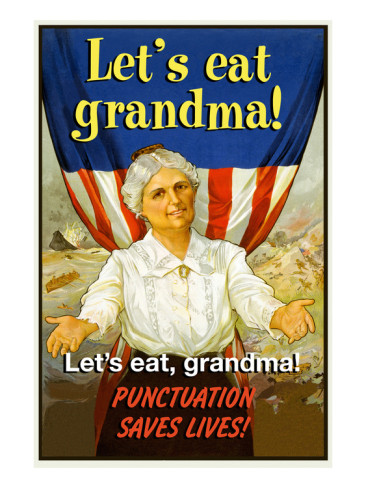
There’s more to punctuation, of course, than periods and question marks. Most of us know how to use those marks with our eyes closed. But I’m amazed at how often I see problems with apostrophes and hyphens and how few people actually know what an em dash or an ellipsis is. It’s also somewhat alarming how often commas are used when a semicolon should be used instead. To improve visual literacy (or, perhaps, just to help squelch a pet peeve of mine), I thought I’d list my top 10 most annoying misuses of punctuation.
For a bit of humor, you might check out a few more funny misuses of punctuation.
For tips on how to use punctuation marks check out our Punctuation Portal.
#10: Using Quotation Marks Inappropriately
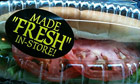
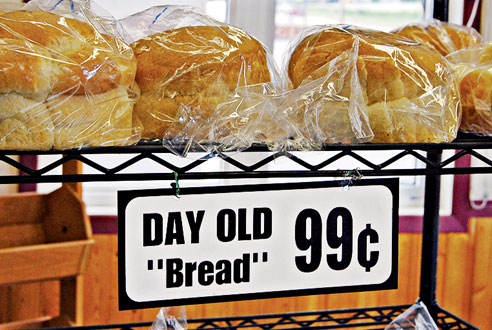
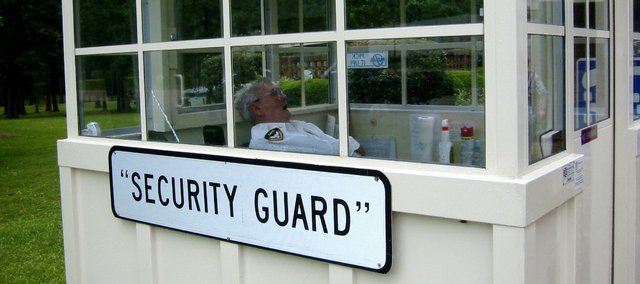
Quotation marks have a cool and unique ability to imply sarcasm or to encourage readers to interpret the information for themselves. When used correctly, they are a valuable asset for humor and reader engagement. When used incorrectly, quotation marks raise suspicion and cause unintended gaffes. If a sign reads, Day Old “Bread”, example, you might wonder if it is actually bread, or some other substitute concoction. Here are a few glimpses into how quotation marks can sure make information seem goofy:

#9: Adding Extra Dots to Ellipses (…)
Ellipses are a valuable tool in writing. They allow the writer to omit words from direct quotes (not to change meaning of course, but to clarify and condense). When omitting text, three and only three dots should be used unless the omitted text coincides with the end of your sentence (then, there should be a fourth dot, which is actually a period). Where writers usually go wrong with ellipses is when they want to indicate trailing off in thought (as if going on some rant about misused punctuation…) When using the ellipsis to do that, still only use three dots! Trailing off with more than three is just plain tacky……
#8: Not Using En Dashes or Em Dashes (or using hyphens in their place)
En dashes are longer than hyphens but shorter than em dashes. En dashes are used to indicate a period of time, usually in place of the word “to”. So, if your résumé says you worked 2010 to 2012, it should look like this: 2010 – 2012. It should NOT look like this: 2010-2012. Em dashes—which are a sophisticated and useful form of punctuation to create sentence complexity—are longer than an en dash, usually the width of two hyphens, or the length of a capital “M”. Em dashes are often used like parentheses, but they emphasize information, rather than make it a side note (see previous sentence for its use).
#7: Not Hyphenating Two-Word Adjectives (modifiers)
Consider this sentence: “Please bring me a hot water bottle.” If someone wrote me that as instructions, I’d be confused. Do they need a bottle that holds hot water, or do they need a heated bottle? Technically, the way that sentence is written, the person literally needs a hot bottle. If they need a bottle that is made for holding hot water, however, there should be a hyphen between the two modifying terms, “hot” and “water” (a hot-water bottle). See? Confusion erased. Whenever you use multiple words to modify a noun, hyphens should connect the modifiers.
#6: Putting Apostrophes on Acronyms

#5: Overusing Exclamation Marks

#4: Using Colons to Introduce Items
Colons are tricky but they definitely have a purpose if used well. But there is a misconception that every time you list a few items, a colon should go in front. You can reword the phrase to include a colon, but it changes the way the sentence is read. Here is an example of where most people go wrong and two ways to fix it (and notice my colon usages here as well):
INCORRECT: “I’m going to buy some: milk, flour, eggs, and soap.”
CORRECT: “I’m going to buy some milk, flour, eggs, and soap.”
CORRECT: “I need to buy a few key things: flour, milk, eggs, and soap.
#3: Putting Apostrophes on Last Names (when there shouldn’t be one)

#2: Putting Apostrophes on Years
#1: Using Commas Instead of Semicolons
The number-one, most problematic punctuation problem I see is when two independent clauses (complete sentences) are connected with a comma. Yuck. Connecting two sentences with a comma is called a comma splice (a form of run-on sentence) and it makes reading clunky and hard to follow. If you have a subject and verb on one side of the sentence and a subject and verb on the other side, there needs to either be a semicolon or a period to separate the two. Example:
INCORRECT: The sun is bright today, we need to put on some sunscreen.
CORRECT: The sun is bright today; we need to put on some sunscreen.
Related Articles
The Periodic Table of Punctuation
The 15 Punctuation Marks
How Many Punctuation Marks Can You Accurately Place in a Row?