



My Rating: 5/5
About the Book
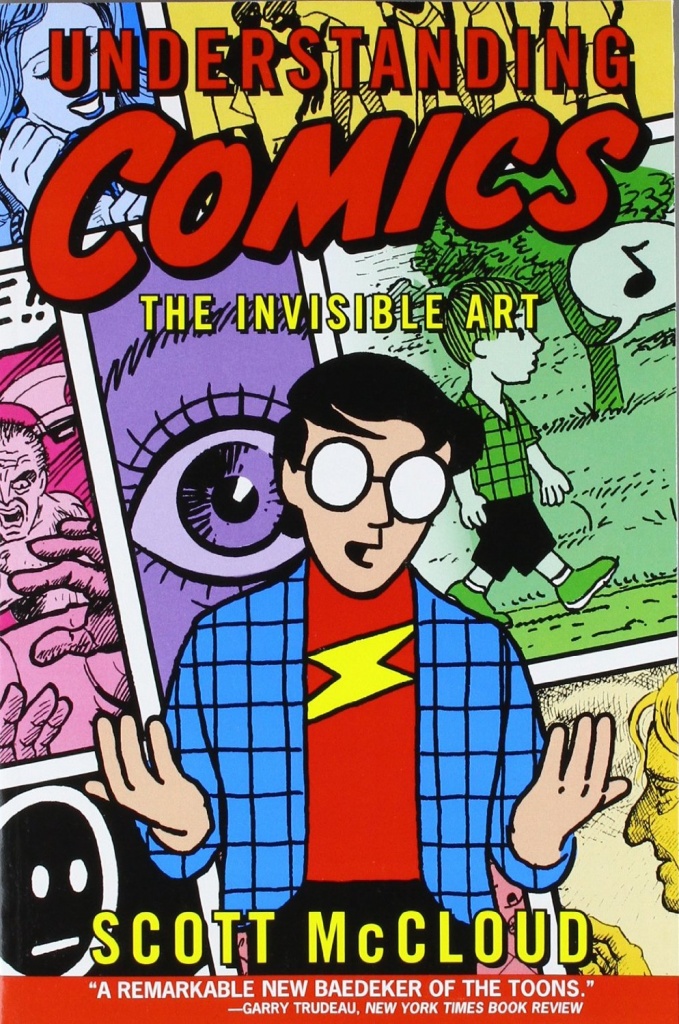
Understanding Comics is a book about the art of creating visualizations to tell a story. Perhaps a misnomer of a title, this book covers far more about visualization and communication than it does about the comics industry. Written entirely in comic book form, the author addresses complex and fascinating theories on visual communication and design principles such as gestalt theory, closure, and amplification through simplification. Readers learn about how visual ambiguity is a powerful narrative tool; how using bleeds extend space; and how frames can be manipulated to reconstruct a viewer’s perception of time.
Author: Scott McCloud
Publisher: William Morrow Paperbacks
Cost: about $17 on Amazon
ISBN: 978-0321767530
What I Liked
A visual marvel in itself, this is a book that can be read and re-read multiple times. In reality, it ought to be re-read, if for nothing else to reflect on the visual complexity that McCloud is able to insert about his theories of comics and visual communication. The example of the picture plane (which shows visualization’s paradoxical transcendence from reality to meaning) shown here is one example of such interesting and complex insight.

What I Didn’t Like
I would love to see a newer edition of this book come out. Published in 1993, McCloud’s book is feeling a bit dated. After receiving much acclaim from disciplines outside of comics (one chapter is even published in Carolyn Handa’s sourcebook Visual Rhetoric in a Digital World), this book is asking to be repurposed for a broader audience and to include perspective on the internet’s role in visual communication. Perhaps another (small) shortcoming of the book is the chapter on color, which feels rushed and incomplete. McCloud would do well to provide more insight into the psychology of color and the complexity of the color wheel. He might also rearrange his chapters, which don’t seem to make a strong logical progression. But the shortcomings are easily forgiven and forgotten thanks to the many strengths.