


This article was written by one of our amazing contributors! Content may include promotional links.
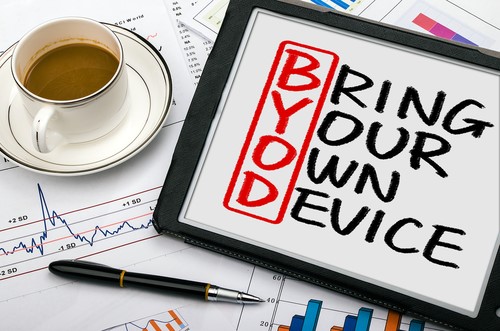
As technology is ever-changing, so is the way we work and collaborate in our work environments. Many companies have started to adopt BYOD, or “bring your own device” policies for their employees. BYOD policies allow for employees to bring their own smartphone, tablet or laptops for work purposes instead of being issued a company-owned device. Let’s take a closer look at the benefits of BYOD approach, how to best introduce the new policy to employees and what types of rules should be implemented in accordance with this new way of using technology in the workplace.
What Are the Benefits of BYOD?
BYOD policies can be beneficial for both employers and employees in several ways. The first is by helping boost employee productivity. According to a recent finding, the average employee saves nearly 40 minutes per week by using his or her own device at work, with a high of 81 minutes per week in the U.S. alone. Bringing their own device to work allows employees to be more flexible and work at any time, whether or not they’re physically in the office. This promotes a better work-life balance and will keep employees happy, which can mean an increase in retention. Another BYOD benefit is the money it saves. By bringing his or her own device, employers won’t have to spend their budgets on computers and tools in order for employees to get their work done. By the same token, employees don’t have to spend unnecessary time learning how to use unfamiliar work devices or software programs. This means that employees will spend less time on training, on more time on their actual work when they get to use their own devices.
Introducing Your New Policy
If you don’t already have a BYOD plan in place, you may be worried about how to go about implementing one and introducing the policy to your employees. First, it’s important to develop a plan that “balances the needs of the employer with the employee,” according to Fred Mouawad the CEO of TaskWorld. This means that you should implement a policy that is both easy and effective for all parties involved. Perhaps you want to start off with an option BYOD policy first, to ease into the idea and not completely nix company-issued devices. This will ensure that all employees are able to bring their own device, while still having the option to work from a company-owned tablet or computer.
Setting the Rules
Once you have your game plan, you’ll want to set some ground rules for your employees to avoid any issues with your new BYOD policy. With a personal device, the hardware may not always be supported by your IT team, so you will have to make sure everyone has access to the appropriate programs and company resources. To avoid this, you can standardize the programs that your employees use and require a preferred operating system for the entire company. For example, Windows 10 is a common OS choice since it can be integrated with several popular laptop platforms like Snapdragon. This type of platform can power laptops like always connected PCs, which offer constant connectivity, longer battery life, faster processing and tons of user-friendly features. This is just one of many routes employers can take to standardize the OS and main programs employees use.
Another important rule to set with BYOD is ensuring that employees keep their personal data separate from their work data. This means when using their own devices during work hours, employees should not engage in any activity that is distracting or non-work related (i.e., using their device to access social media). Employers can even go as far as completely restricting employees from accessing certain websites via their network.
Overall, incorporating a BYOD plan for your employees can be beneficial for the entire company. Whichever route you decide to take, make sure to keep these factors in mind when introducing or even revamping your BYOD policy in the workplace.