


This article was written by one of our amazing contributors! Content may include promotional links.
You think about it every time you watch a disaster unfold on TV. Seemingly every month, there is new footage of people living in the dark quiet of destruction. They have no power and, more pressing, no assurance of when they’ll get it back.
So the thought crosses your mind: Should I have some sort of back up? What would I do in that situation? Yikes, what about my business?!
And this terrifying thought is probably what got you poking around the internet and landed you here. Now you’re serious, it’s time to look into a commercial backup generator for my business.
But what should you consider when choosing the right one for your business’s needs? Keep reading and let us help you stay plugged in.
What are the Advantages?
Consider this – In just one hour, the average small to medium commercial customer loses $1,800 with the loss of power on a summer day. For most businesses, this amount ranges from a nuisance to a potentially burdensome amount of money.
Your business going down for longer could have catastrophic results.
So let’s explore the benefits of having a power backup generator.
You Won’t Lose Contact with Your Customers
This alone sets you apart from your competition. When everyone else is scrambling to get the lights on, you’re running smoothly: answering phones, emails, and fulfilling orders the way you should be. You have now projected an image of strength and resiliency to your customers… and your competition.
It Keeps Your Security In Tact
Your lighting, locks, and security protocols all remain operational. This is a massive preventative measure against looting and theft.
Prevents Data Loss
Have you ever had to go back and input customer information or orders into your system? It’s a painstaking endeavor. Not to mention, if you’ve lost data all together you’ve essentially lost money the second that power went out.
Business Income Continues to Flow
Cash flow is king and any interruption in that can send ripples months down the line. Having the ability to receive payment is absolutely paramount in the solvency of your organization.
Establishes Essential and Non-Essential Sectors
A backup commercial generator is extremely customizable. When implemented, you can establish which aspects of your business are vital to operation while letting non-essential areas wait for full power to be restored.
A commercial backup generator can even protect your pipes from freezing or rooms from flooding.
Most Importantly, Comfort!
It might sound trivial, but keeping your employees and customers comfortable during a small or large-scale disruption is a huge morale booster. It creates a sense of consistency and normalcy that will encourage everyone and keep stress to a minimum. You might even become a place of refuge for potential customers!
Prevent a Crisis
Though everyone relies on power, certain businesses and industries simply cannot function without it during a disaster.
Take a restaurant or grocery store, for instance. Without power, the food not only spoils in the cooler and freezers, but existing food cannot be cooked. The dishes won’t be washed and cleaning the facilities becomes nearly impossible.
This can have lingering effects for the establishment and take weeks to get up and running again.
Grocery stores face an even larger challenge by being some peoples’ only lifeline. If the grocery store loses power, so many of the essential items the surrounding citizens rely on could be completely useless. Anything perishable is out the window.
Sadly, healthcare facilities bear the brunt of power loss harder than anyone else. With critical care on the line, patients who are particularly susceptible to the elements could endure life-threatening conditions.
One recent example occured in Florida during the wake of Hurricane Irma. 12 patients in a nursing home died when temperatures skyrocketed to 99 degrees on the second floor after the backup generators couldn’t provide all of the power needs. This simple oversight will echo through dozens of families for decades.
How to Choose the Best Fit
In order to choose the perfect generator, you need to do some prep work regarding your business. Consider these three factors:
- Calculate the power demands of your business
- Predict how your business could lose power
- Estimate when and how long you could potentially be without power
Backup power generators fall into two initial camps: permanent and portable. With the information you just gathered above, here are the differences to consider:
Portable
- Shorter running times
- Smaller fuel capacity
- Mostly for small to mid-sized businesses
- Not ideal for sensitive equipment
Portable units can be brought in on a flatbed truck and/or delivered where you need them. They tend to be a little more nimble but not as robust in their power abilities. In some instances, you may have areas of your business that are spread out, in which case the installation of multiple portable backups might suffice.
Permanent
- Higher fuel capacity and longer run times
- Ability to be hardwired into your system
- Activated with an automated switch that detects outages
- Can be programmed to detect emergency wiring for essential functions
A permanent backup generator is a fail-proof way to maintain continuity in your business. Once installed, you will enjoy the automated ability to power any sized need for your organization.
Commercial Backup Generator – Diesel vs Natural Gas
The two main fuels of power generators for sale are diesel and natural gas. While other fuels exists, these two fuels occupy the top spots for their abilities in efficiency and availability.
Here are the pros and cons of both:
Pros of Natural Gas
Natural gas is the cleanest of the “non-renewables.” It’s delivered by pipeline, making it readily accessible in urban areas. This also means there is no need for a storage tank. It’s odorless, affordable, and very efficient.
Cons of Natural Gas
While its pipeline delivery method is convenient, it also makes it prone to disruptions. Storms and weather are the main causes of pipeline breakages. Because natural gas is extremely flammable, line breaks usually result in some sort of fire.
Also, in rural areas, natural gas simply may not be available.
While it emits no odor, it does emit carbon dioxide. Your safety protocols will have to be adjusted for this.
Natural gas itself is less expensive than diesel fuel but the generators cost more to operate due to their maintenance needs.
Pros of Diesel
Diesel can be used in any location because there is no set pipeline delivering it. This is ideal for remote locations. With diesel, you can officially be “off-grid” without feeling like it.
Diesel generators are less expensive to operate because they require less maintenance. You can enjoy a very long lifespan with them as well.
Diesel fuel is also less explosive.
Cons of Diesel
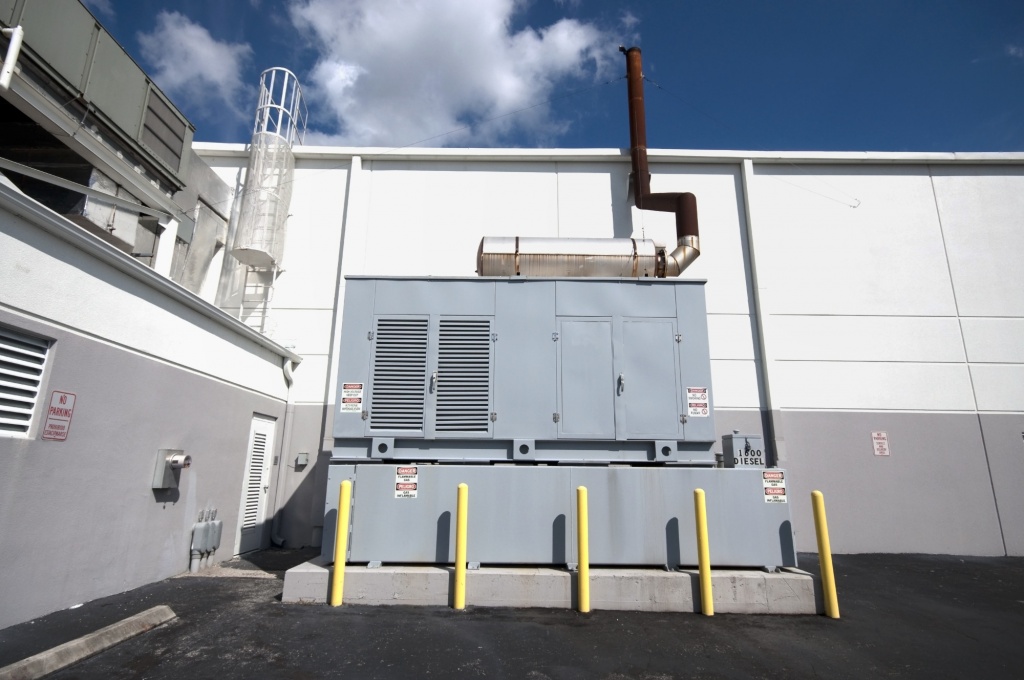
To install a diesel backup generator will require larger upfront costs. The units are typically louder and much less portable than other generators. Simply put – pick a spot because it’s most likely staying there.
If environmental concerns are at the top of your list, it should be known that diesel is one of the largest pollutants when it comes to fuel.
Further Things to Consider When Choosing Fuel
Your business is unique and you should ask yourself a few questions when choosing between diesel and natural gas.
- Do I need to run if the grid happens to go down – long or short term?
- Is a portable unit better for me?
- How much space do we have for a permanent unit?
- Are we equipped with a sufficient maintenance staff?
- Do we have the ability to up our safety protocols?
- Would we rather spend more money up front or over time?
- How important is our environmental impact?
Terrorist Attacks
No, seriously. This might seem like a curveball, but the increasing presence of terrorists threatens the protection of the power grid and, more importantly, your personal power needs.
The US Council of Foreign Relations released a report in 2017 outlining just how a threat would affect the United States’ power grid. Given that the U.S. has over 200,000 miles of high voltage power lines, the impact would be hard to measure in a scenario.
What they did find in one scenario was a hypothetical situation where 15 states and Washington, DC lost power due to an attack. This resulted in 93 million people without power.
And the question is – For how long?
With health and safety systems failing in the wake of a power outage, the fatality rate could have devastating results.
Final Thoughts
The truth is that energy demands increase every year and show no sign of slowing. As more and more industries release manual control of their operations and rely on connected power, the greater the potential for massive disruption.
Managing a small business’s finances is a laborious, full-time job. While a large purchase like a commercial backup generator might not be at the top of your list, it’s clear that this is something worth considering.
Want even more great business tips? Continue to arm yourself with the information you need to make your business thrive by visiting us here daily.