


This article was written by one of our amazing contributors! Content may include promotional links.
Wanting to work in the creation, or Production, as it’s called in the industry, of TV shows and films, is a very desirable career choice. So if you are to look to a career in this field then it would pay to firstly have a good and thorough understanding of what the different job roles and career paths are available to you as when going for your first jobs it’s important to be aware of your desired career path as there are certain experiences that can help or hinder a particular choice. Even at entry-level jobs such as work on low or no budget projects and working as a runner you should be clear as to what you are looking to do in the future so you can ask for experience in that side of things. So here are the main types of roles that come together in the creation of a visual product. Here we are giving the example of a fictional production, so a drama or comedy rather than a factual or documentary film, although many of the roles crossover to both.
Technical Crew
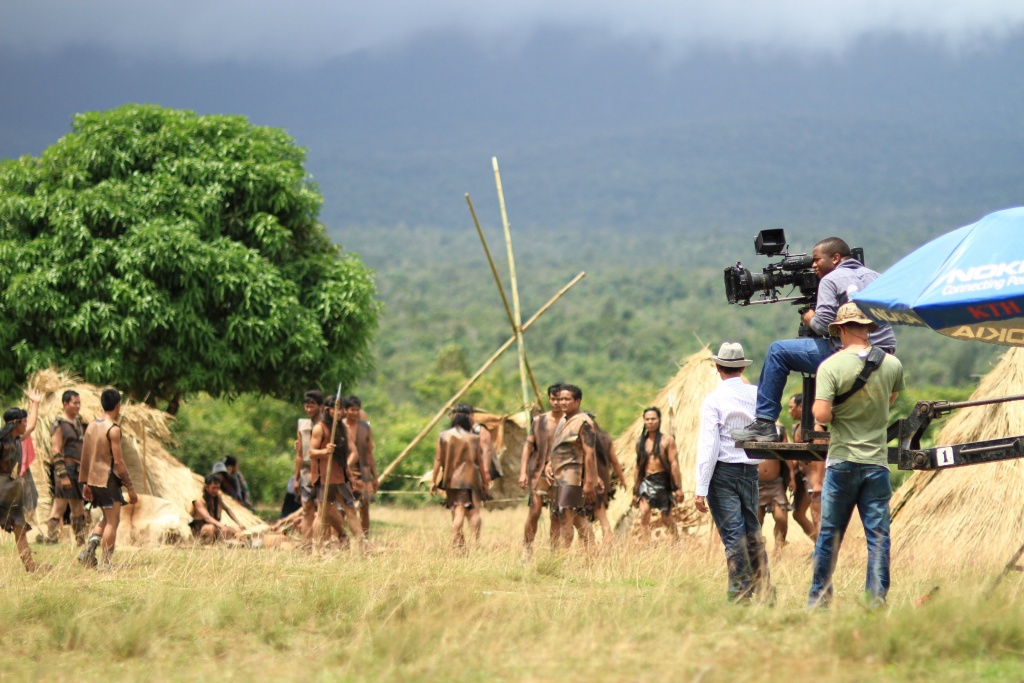
Technical crew are responsible for all the physical recording on the shoot, either on location (out in the real world somewhere) or in a studio (which can also be referred to as a sound stage). This includes camera operators, fairly obvious what they do, and camera assistants who are responsible for the set-up, maintenance and looking after of the cameras. Also sound recordists, including boom mic operators who hold those long microphones on poles, which are called booms. Those in charge of lighting are called Gaffers. There are also electricians, carpenters, and other tradespeople as well as working in dozens of roles on the production.
Production Staff
At first, it’s easy to mix up what technical crew and production staff are, but they are very different roles, production staff produce the program or film in a more organized way rather than technically produce it. The production staff includes Production Assistants, who are like general admin staff, they report to Production Co-ordinators usually. There are Researchers, who can be asked to find out facts or background info, Location Scouts who find locations for shoots and so many more.
Directors & Producers
These are in some ways very similar but also very different roles. The Producer and Director are essentially the bosses of the shoot. The Director is in charge of bringing the artistic vision of the project to life and will direct the actors and all action on screen as it happens. The Producer is in charge of the organizational tasks, including hiring the rest of the staff, often including the director and keeping on top of every aspect of production from finance, to schedules to the promotion of the finished product and beyond.
Writers
The script doesn’t come from no-where and there has to be a writer, or often a team of writers. Film and TV scripts are written in a particular format and include both dialogue and direction as well as a description of the scene and surroundings. Even when the production is an adaptation of a prior piece of work such as a novel a screenwriter is required. The Writer often works closely with others such as a Storyboard Artist or the Cinematographer.
Post-Production
Post-production is what happens after the project has been physically filmed and it is the process of putting everything together in the way that the audience will see it in its final format. The Editor puts together the images in the correct order and works with other post-production staff, such as the sound designer who inserts sound effects from things as small as footsteps up to big things like explosions. Some digital effects experts have studied on a VFX course to be able to create stunning digital visuals to supplement the real-world actors and scenery. There are also Music Supervisors that are in charge of adding music and score to the film, which need to be put in at exactly the right points to ensure mood and narrative are correctly achieved. Then there is the Colorist making sure that the tone, contrast, and exposure are kept continuous from one shot to the next.
Hair, Make-Up & Costume
The world of any film or TV program has to be made to be realistic otherwise the illusion of reality to the audience and this means getting a whole number of things correct. In a period drama, the clothes and hair-style need to be period-appropriate. Even in any other production, it is essential that the makeup is good enough to portray the actors well in the large production lights while also keep the character looking natural. For complicated characters in such productions as horror or Sci-Fi, the makeup costume and hair can be a large and complex part of the process often taking hours to make up one character.
On-Screen Talent
One area that is probably most discussed in the media is on-screen talent, or actors to you and me. Obviously, this is a key role in film production of film and TV. To go for a career on screen there are many routes and it is possibly the most competitive job sector in the industry, if not any industry, and one where it’s fairly all or nothing, there are no real transferrable skills here. But as with anything else experience is the key. Many start young in youth theatres or school plays and beyond that, you can study acting at college which although gives no guarantees is a good grounding. Then it’s pretty much getting as much experience as you possibly can and hope for a large slice of luck as well.
Support Staff
There are so many other support roles that are needed just as with any other industry. Accountants and lawyers are required to take care of all the legal and financial aspects. Drivers and security people, caterers and cleaners and so many others, too many to mention.