


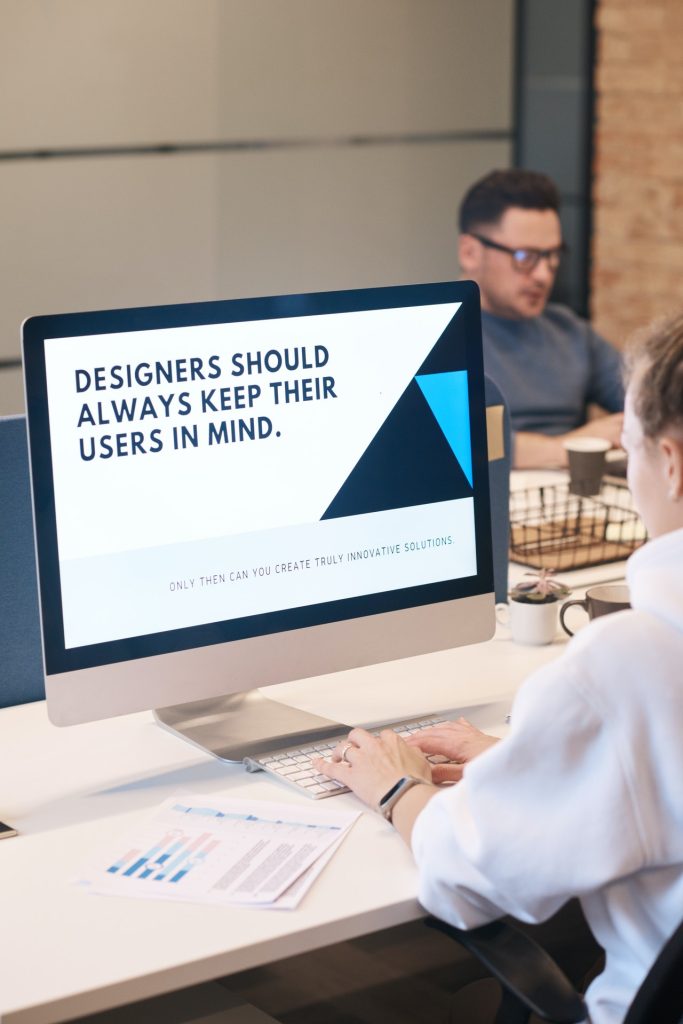
There are aspects of UI and UX for everyone, from wireframing tools to grasp the intricacies of behavioural psychology. While you can certainly become a specialist, it is often advantageous to be a jack of all trades. To do this, you need to master both the soft and hard skills most often associated with modern UX and UI. Below you will find some of the most fundamental and commonly sought out.
The Ability to do Good Research
UX designers must understand what their audiences desire and how they see the world in order to do their jobs effectively. This entails acquiring the capacity to design, conduct, and analyze findings from a variety of research approaches. User testing and analytical research skills are especially beneficial in the world of UX/UI because, ultimately, everything you do is with an eye to making the user experience more pleasurable than the one provided by the competition.
Developing your research skills early on, in both an academic and professional setting, is one of the most important things you can do to put yourself in good stead for a successful UX career track. This would include your ability to quickly search for reliable information, take notes, time management, problem-solving, attention to detail and your ability to effectively communicate results.
Prototyping
Designers can test functionality using prototypes. They assist designers in ensuring that a system and its users are a good fit before development on the final product begins. Designers can use prototypes to test both page functionality and overall navigation and, after identifying challenges, the UX designer may go through numerous iterations before arriving at a design that fits both business and user goals.
UX designers must be able to prototype rapidly and efficiently and, additionally, must be able to incorporate feedback and constructive criticism into reworks and changes. Prototyping is a specialization in and of itself, but if you have it as part of a larger arsenal, you are a very attractive employee indeed.
Wireframing
A wireframe is a blueprint for each interface screen. Its primary objective is to demonstrate how something works rather than how it seems.
The elements that must be present from page to page are defined by wireframing, containing all of the interface components required for all conceivable interactions and are often created in grayscale with boxes and lines. Familiarizing yourself and practicing with the most popular wireframing tools is always a good place to start.
Visual Communication
Because design is predominantly graphic in nature, UX designers must be fluent in visual language. Visual communication proficiency entails a comprehension of topics such as layouts, colour, icons, typography, images and theoretical design. Being a good visual communicator may require you to make use of both text and video and to be able to explain with data and graphics how your ideas work and will come to fruition.
Curiosity
Curiosity allows professionals to engage with clients, products, and challenges in meaningful ways and lends itself to inquisitive questioning, active listening, and a deeper engagement with situations. UX is a constantly evolving field, so coming in with an innate curiosity and desire to learn is fundamental to staying current. For this reason, curiosity is frequently one of the most prized qualities in a candidate.
And, since UX and UI designers are always looking for new ways to improve the user environment, a never-ending interest and desire to learn is an essential component of the job. UX designers must be willing to look for methods to improve their users’ lives without necessarily informing them how and stay on top of trends and best practices to ensure their firm remains competitive and cutting edge.
Collaboration
Incorporating the ideas of developers, clients, and team members are essential for good UX design. To build the greatest products possible, UX designers must successfully provide and receive feedback, explore ideas, and combine the knowledge and needs of everyone engaged in a project.
In most cases, UX team members worked with business stakeholders (such as product/project management and business analysts) to develop requirements and assess design concepts in an informal context. Being able to have these conversations and brainstorm remotely, and often across different time zones, is also critical.
Conclusion
UX/UI is an exciting career track and one with very solid future potential and job security, but in order to make an impression on interviewers and establish yourself as a high-performing key team member, you need certain things. These include both the hard and soft skills mentioned above. Master all of these and you will be in great stead for a long and fruitful career in UX/UI.