


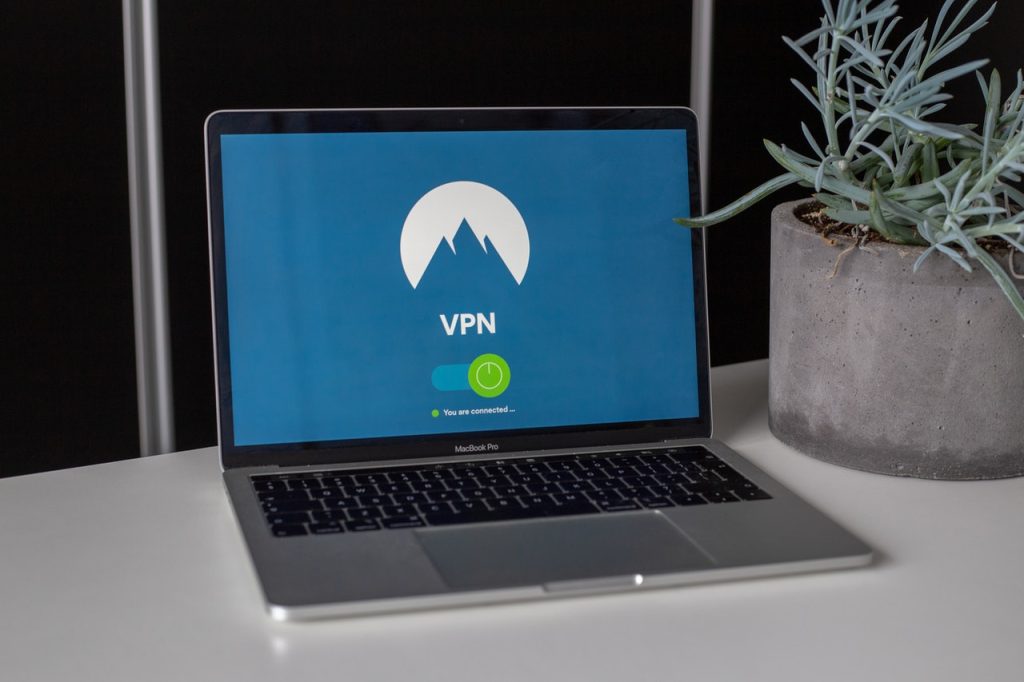
If you watch YouTube videos or read articles in the tech space you would have seen the army of paid shills claiming that VPNs are the be-all and end-all of internet security.
The problem with these claims is that they are either bending the truth or outright lying. Recently, it’s gotten so bad that VPN providers have even been hit with lawsuits for their overzealous advertising practices.
It’s resulted in a knee-jerk reaction that’s spawned a counter-culture of VPN haters who are as against VPNs as the shills are for them.
The reality requires a little nuance. VPNs aren’t the turnkey solution for perfect internet privacy and security, nor are they a worthless gimmick.
As it often does, the truth lies somewhere in the middle. In this article, we won’t focus on what a VPN is. You can click here if you’d like to read up on that. But we will talk about 4 reasons that a VPN is still worth it in 2022.
VPN Encryption: Does A VPN Really Protect You Online?
Sorta.
In 2020 the vast majority of the internet is already encrypted. Anytime you see a padlock in the corner of the URL bar, it means that this website is using HTTPS encryption.
The S in HTTPS stands for secure. The protocol encrypts the traffic before it leaves your computer and exchanges keys with a chain of trusted certificate authorities built into your browser to ensure that you’re conversation is private.
All browsers have a list of authorities that they know are trustworthy. And when accessing a site that’s not on that list then it will use an authority on the list as an intermediary to secure the connection. Unless a hacker is intercepting this communication via a very complex man-in-the-middle attack, you are safe.
You are safe on public Wi-Fi and when entering your username and passwords, providing you are communicating via HTTPS.
1 Not Every Site Uses HTTPS
80% – 90% of the internet is HTTPS. Every online bank, cryptocurrency exchange, and marketplace you’re likely to enter your credit card details is using HTTPS and is secure.
However, there are still millions of websites that use good old HTTP and that’s a problem. When you log in to these websites your credentials are sent as plain text over the public internet for anyone to read. If you’re on public Wi-Fi, there are free-to-use, readily available tools that will sniff your traffic for passwords. If you recycle passwords, please don’t, then your login information can be used to gain access to your online banking.
A VPN will force encryption before the traffic leaves your computer. There’s still a risk that a VPN server steals your credentials, but that’s why you need to choose a trusted VPN, preferably one which costs money.
2. Watch Movies, Series, and Sports That Aren’t Available In Your Region
The world is stuck with archaic broadcasting laws that require different licenses to distribute content in different countries.
This made sense in the age of the living room television but with fiber optic cables under the ocean that are able to beam content around the world in a fraction of a second, it doesn’t.
If you miss shows from home, or you want to stream from the larger US Netflix catalog, a VPN is the easiest way to achieve that.
VPNs first route your traffic to a server in the US, Mexico, Canada, Germany, or any country, and then forward it on to the end destination. The site you’re visiting then believes you’re located in that country because all it can see is the VPN’s public IP address.
SkySports, Hulu, Disney Plus, Medium, and Amazon Prime are all either blocked in certain regions or have slimmed-down libraries. If you pay for a service, you should get full access. There’s no point waiting for broadcasting laws to catch up.
3. Trade Cryptocurrency with Leverage or Withdraw to a Bank
Many crypto exchanges won’t let customers in the US, China, Turkey, or Iran trade with leverage, or trade at all.
US customers can’t access Bitmex at all, while Binance and Coinbase offer a slimmed-down product to US IP addresses.
Several exchanges don’t offer withdrawals to customers in Australia and New Zealand because of difficult legislation and tax reporting obligations that make it not worth their while.
A VPN is a way to get around all of this. US customers can continue to access sites that let them trade in derivative markets. FYI, none of this is legal advice. While unlikely to be enforced there are penalties for US residents who trade assets the SEC has deemed they shouldn’t. In China, Iran, and other countries the penalties are more serious and can land you in jail. Proceed at your own risk.
4. Localize the Internet
If you travel overseas often you may have encountered frustrations trying to access your accounts.
You aren’t in the country that the website expects you to be, so to make sure it’s really you, the site will ask you to enter 2FA codes that are sent to your phone or email.
This is a pain when you first land, or when you’ve got another sim card in your phone.
Another advantage of using a VPN overseas is that you’ll localize the internet. You’ll see news from home and get served the English version of websites by default
In Summary
A VPN isn’t the be-all and end-all of internet security but can help you watch movies and access sites that are blocked in your area.