


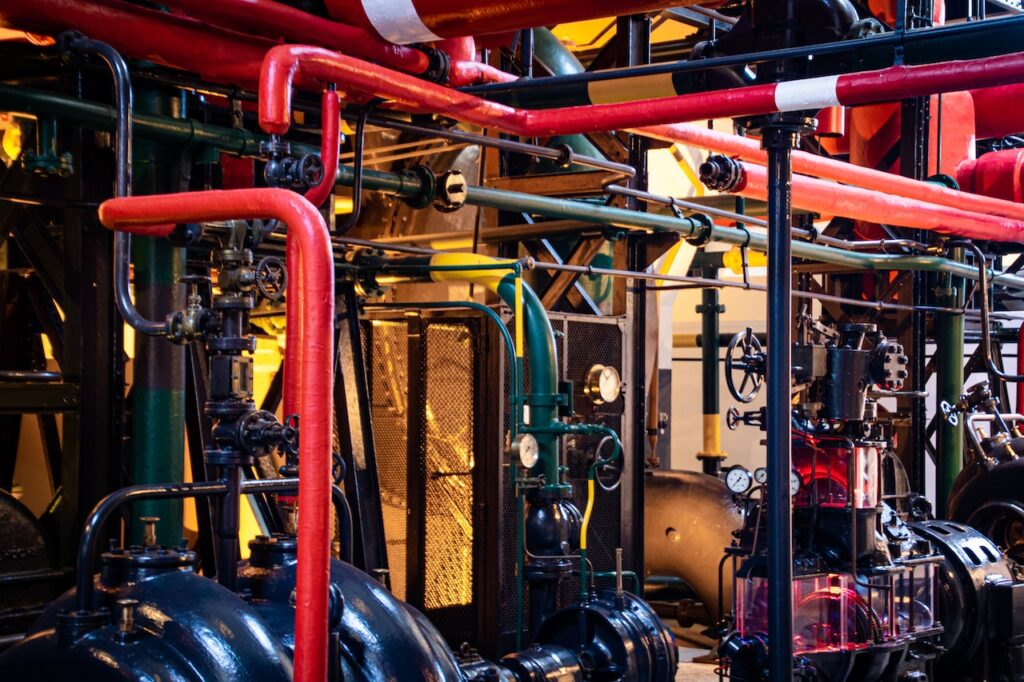
Imagine your heart, beating steadily in your chest, propelling life-giving blood throughout your body. In a similar way, industrial pumps, unseen and often overlooked, tirelessly support the workings of countless industries, pushing vital liquids from one location to another. Let’s explore the key types of industrial pumps and their uses in various sectors.
Centrifugal Pumps: The Workhorses of Industry
When it comes to the most popular industrial pumps, centrifugal pumps take the lead. These workhorses are known for their simple design, efficiency, and versatility. At their heart is an impeller, spinning rapidly to impart velocity to the fluid, which then converts to pressure in the volute.
Centrifugal pumps serve a multitude of purposes, from powering the process industries to supplying water in municipal services. They are indispensable in power plants, where they manage boiler-feed water, and in wastewater treatment faculties, where they keep the flow of waste materials steady.
Positive Displacement Pumps: The Power Players
Positive displacement pumps, the power players of the pump world, operate differently from their centrifugal counterparts. They work by capturing a fixed volume of fluid, then forcing (displacing) that trapped volume into the discharge pipe. They often play a crucial part, specially when it comes to the need to maximize HPLC performance.
You’ll find these stalwarts in industries where high pressures and low flow rates are the norm, such as chemical processing, oil and gas, and food and beverage manufacturing, where hygienic pumps are needed. In these applications, precise, consistent fluid handling is paramount, and that’s exactly what positive displacement pumps deliver.
Submersible Pumps: The Silent Workers
Submersible pumps, sometimes known as silent submersibles due to their underwater operation, are designed to prevent pump cavitation – a problem that can occur when a pump’s elevation is excessive relative to the fluid surface.
These pumps are invaluable across industries, not least in the mining sector where they dewater mine shafts and in oil industries for offshore drilling rigs. Plus, they are an integral part of wastewater management, helping to mitigate the risk of flooding and environmental contamination.
Diaphragm Pumps: The Reliable Reciprocators
Diaphragm pumps, or reciprocators, are another category of positive displacement pumps. Characterized by a reciprocating diaphragm and check valves, these pumps offer an exceptional level of reliability, making them a favorite in industries that handle corrosive or hazardous materials.
Their most prominent application is in the chemical industry, where they safely transport acids, caustics, and solvents. But their use isn’t limited there – they also find a home in the food industry, easily handling everything from syrups to sauces.
Self-Priming Pumps: The Independent Operators
In the world of industrial pumps, self-priming pumps stand out as the independent operators. They have their unique ability to rid their suction line of air and draw the fluid into the pump on their own. This is a significant advantage, especially in applications where the pump needs to be located above the fluid level or dealing with volatile liquids.
These pumps are commonly utilized in industries like mining and construction, where dewatering operations are critical. They also play a key role in the agricultural sector and are used extensively in marine applications. From the everyday workhorse that is the centrifugal pump to the silent strength of submersible pumps, industrial pumps, much like a heart, are key to keeping things moving. They deliver fluids to where they’re needed most, offering reliability, efficiency, and often a quiet, unheralded strength.