


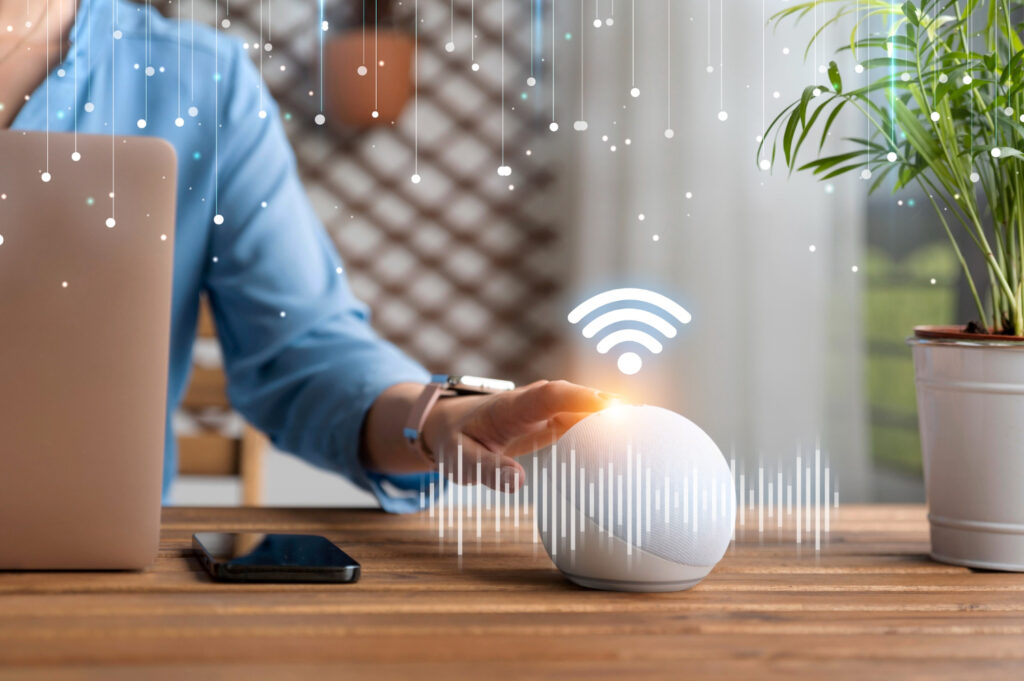
The landscape of technology has been drastically reshaped with the rise of the Internet of Things (IoT). Today, its incorporation in various sectors has not only enhanced operational efficiency but also opened up a new realm of possibilities. As businesses look for customized and scalable solutions, expertise in this field has become increasingly valuable. Renowned for pioneering sophisticated digital solutions, IoT in Vakoms offers a comprehensive suite of services to cater to the evolving demands.
In this expansive guide, we’ll delve deep into what it takes to develop IoT applications and the intricate development process. We will explore its fundamentals, the challenges faced, cutting-edge technologies, and forecast the future of this transformative industry.
What is IoT?
IoT stands for the Internet of Things, a system of interrelated computing devices, mechanical and digital machines, objects, or people provided with unique identifiers (UIDs). These devices have the ability to transfer data over a network without requiring human-to-human or human-to-computer interaction.
The Pillars of IoT Application Development
IoT app development revolves around several key tech pillars:
- Sensors/Devices: Collecting data is the first step, often accomplished through sensors and devices distributed in various environments, from urban spaces to remote landscapes.
- Connectivity: Devices need to send the gathered data to a cloud infrastructure, requiring some level of internet connectivity which could be via cellular, satellite, WiFi, Bluetooth, low-power wide-area networks (LPWAN), or connecting directly to the internet via Ethernet.
- Data Processing: Once the data arrives at the cloud, software processes it and might decide to perform an action, such as sending an alert or automatically adjusting the sensors/devices without the need for manual intervention.
- User Interface: The information becomes available to the end-user in some way, either through an alert to their phone, an email, or a report.
The Stages of IoT Application Development Process
The Internet of things app development process encompasses several critical stages, from the initial concept to the ultimate deployment and ongoing maintenance. This systematic process ensures that IoT applications not only meet the specific needs of their intended users but also adhere to high standards of security, reliability, and scalability. Let’s delve deeper into each phase to understand the intricacies involved in developing IoT applications.
1. Conceptualization and Planning
This foundational stage is where an idea takes its first real step towards becoming a tangible product. It involves:
- Identifying the Problem: What specific problem will the IoT application solve? How will it improve operations or enhance lives?
- Market Research: Is there a demand for this application? Who are the competitors, and what can be learned from them?
- Feasibility Study: Assess the technical feasibility and economic viability of the proposed IoT solution.
2. Requirement Analysis
In this stage, developers, alongside stakeholders, define the detailed requirements of the application. It entails:
- Functional Requirements: What are the tasks and functions the IoT application must perform?
- Non-functional Requirements: What are the security, performance, and reliability standards the application must meet?
- Technology Stack Selection: Deciding on the sensors, communication protocols, platforms, and software languages to be used.
3. Design Phase
The design phase addresses how the application will accomplish the requirements outlined previously. Key activities include:
- Architecture Design: Crafting a robust architecture that defines how the IoT devices will interact with each other and with the backend system.
- User Interface Design: Designing the user interface and experience for both the end-users and administrators of the IoT system.
- Data Flow Design: Mapping out how data will flow through the system, including data collection, processing, and storage.
4. Development
With designs in hand, the development phase transforms ideas and blueprints into a working application through:
- Coding: Writing the application code in chosen programming languages.
- Integration: Integrating the software with hardware components, such as sensors and devices.
- Development Testing: Performing initial tests to ensure the application’s components interact correctly.
5. Testing
This critical phase involves rigorous testing to identify and fix any bugs or issues. Testing types include:
- Functional Testing: Ensuring the application performs its intended functions correctly.
- Security Testing: Identifying vulnerabilities and ensuring data is securely handled and transmitted.
- Performance Testing: Testing the application’s performance under various conditions and loads.
6. Deployment
Once testing is satisfactorily completed, the IoT application is released for use. Deployment may be gradual, starting with a pilot phase to monitor real-world usage and performance.
7. Maintenance and Updates
After deployment, the application requires ongoing maintenance to fix any arising issues, improve performance, and add new features based on user feedback. This phase ensures the application remains relevant and useful over time.
8. Monitoring and Scaling
Continuous exhibition of monitoring capabilities is essential for anticipating performance bottlenecks and security threats. As usage grows, scaling the infrastructure to meet demand becomes necessary to ensure seamless operation.
Key Technologies in IoT Development
The Internet of Things application development relies on a range of cutting-edge technologies to provide smart features and autonomous operations. Below, I’ve detailed four key technologies that play integral roles in the development of IoT solutions:
Wireless Sensor Networks (WSN):
Wireless Sensor Networks are an essential component of IoT. They consist of spatially distributed autonomous sensors that monitor physical or environmental conditions, like temperature, sound, pressure, etc., and cooperatively pass their data through the network to a main location. Some key features and considerations of WSN in IoT development are:
- Interconnectivity: WSN enables connectivity among various sensors and devices without the need for physical linkages, which allows for greater flexibility and scalability.
- Energy Efficiency: Sensors typically require low power to function, making them suitable for long-term usage in remote or hard-to-reach locations.
- Real-time Data: WSNs are designed to deliver data in real-time, facilitating immediate analysis and response.
Edge Computing:
Edge computing refers to distributed computing frameworks that bring computation and data storage closer to the devices or data sources to minimize latency and bandwidth use. In IoT:
- Speed: Edge computing can process data locally, which decreases the latency experienced when data is sent to the cloud for processing.
- Reduced Bandwidth: By processing data locally, edge computing reduces the amount of data that needs to be transmitted, saving bandwidth and reducing costs.
- Security and Privacy: Local data processing can mitigate some security and privacy concerns, with sensitive information not having to travel over the network.
Machine Learning (ML):
Machine Learning is a subfield of artificial intelligence that focuses on systems that learn from data and improve over time. ML in IoT can be used for:
- Predictive Maintenance: Analyzing data from sensors to predict when a machine will need maintenance before it breaks down.
- User Behavior Analysis: Understanding patterns in user behavior to improve the user experience or offer personalized services.
- Anomaly Detection: Identifying unusual patterns that may indicate a security breach or system failure.
Wearable Technology:
Wearable technology encompasses electronic devices that can be worn on the body, often with smart sensors that connect to the IoT. Notable aspects:
- Health Monitoring: Devices like smartwatches and fitness trackers monitor health metrics such as heart rate and activity levels.
- Accessibility: Wearables can improve quality of life for individuals with disabilities or health conditions by offering features tailored to their needs.
- Consumer Integration: These devices often integrate closely with users’ smartphones for notifications, calling, and more.
Challenges in IoT Application Development
IoT application development is an intricate process that presents a unique set of challenges. These hurdles arise from the multifaceted nature of IoT systems, which integrate diverse technologies, devices, and platforms. Addressing these challenges effectively is crucial for creating robust, reliable, and user-friendly IoT applications. Below are some of the key challenges encountered in IoT application development:
1. Security and Privacy Concerns
In an interconnected ecosystem, each device becomes a potential entry point for cyber-attacks. Security challenges include:
- Ensuring data privacy and protection across devices.
- Preventing unauthorized access to IoT devices.
- Securing data transmission between devices and servers.
The sheer volume of data collected by IoT devices also raises significant privacy concerns, necessitating stringent data protection measures.
2. Interoperability and Standardization
With a myriad of manufacturers, standards, and protocols, ensuring seamless communication and interoperability among different IoT devices and systems can be daunting. This challenge involves:
- Working with different communication protocols and standards.
- Developing applications that can operate across various platforms and ecosystems.
- Ensuring that devices from different manufacturers can work together harmoniously.
3. Data Management and Analysis
IoT applications generate vast amounts of data, which need to be managed, stored, and analyzed effectively. Challenges here include:
- Efficiently collecting, processing, and storing large volumes of data.
- Analyzing big data to extract actionable insights.
- Managing the real-time flow of data from numerous sources.
4. Scalability
As IoT applications grow in scope and scale, ensuring that the system can handle an increasing number of devices without performance degradation is crucial. Scalability challenges involve:
- Developing systems that can easily accommodate growth.
- Ensuring that infrastructure can handle increased data volumes and device connections.
5. User Experience (UX) Design
Creating intuitive and user-friendly interfaces for diverse users while managing the complexity of IoT systems is a significant challenge. This includes:
- Designing interfaces that are accessible to users with varying levels of technical expertise.
- Ensuring consistent, seamless user experience across different devices and platforms.
- Integrating complex functionalities into simple, easy-to-use applications.
6. Network Connectivity and Power Consumption
Ensuring reliable network connectivity and managing power consumption are critical for the effectiveness of IoT devices, particularly those deployed in remote or inaccessible locations. This encompasses:
- Developing low-power devices that can operate for extended periods.
- Ensuring devices can maintain connectivity in different environments.
- Balancing the power consumption of devices to enhance battery life without compromising on functionality.
7. Regulatory and Compliance Issues
IoT developers must navigate a complex landscape of regulations and standards, which can vary significantly across regions and industries. Managing compliance involves:
- Staying abreast of relevant laws and regulations.
- Ensuring that IoT applications and devices comply with regional and industry-specific standards.
What is an example of an IoT Application?
IoT (Internet of Things) applications span across various sectors, demonstrating the versatility and impact of this technology. The integration of IoT in daily activities and industrial operations enhances efficiency, personalization, and data-driven decision-making. Here are examples of IoT applications across different domains:
1. Smart Homes
IoT brings convenience and enhanced control to homeowners through smart devices that automate and monitor home environments. Examples include:
- Smart Thermostats: Devices like Nest allow users to control home temperatures remotely, learning user preferences over time for energy efficiency.
- Smart Security Systems: Cameras, motion sensors, and locks that can be monitored and controlled from anywhere via smartphones.
2. Wearable Technology
Wearables have become popular for health and fitness monitoring, as well as for integrating technology into everyday life. Examples are:
- Fitness Trackers: Devices like Fitbit track steps, heart rate, and sleep patterns, promoting healthier lifestyles.
- Smartwatches: Products from Apple and Samsung facilitate notification management, calls, and health monitoring directly from the wrist.
3. Healthcare
IoT in healthcare improves patient monitoring, treatment outcomes, and operational efficiency, including:
- Remote Patient Monitoring: Devices that monitor vital signs in real time for chronic conditions, alerting healthcare providers to potential issues.
- Smart Pills: Ingestible sensors that track medication adherence and bodily responses.
4. Agriculture
IoT transforms farming practices, increasing efficiency, yield, and sustainability through:
- Precision Farming: Sensors that monitor soil moisture, crop health, and weather conditions, allowing for precise irrigation and fertilization.
- Livestock Monitoring: Wearables that track health and location of livestock, optimizing herd management.
5. Smart Cities
IoT applications in urban development aim to enhance quality of life, optimize resource use, and improve sustainability with:
- Traffic Management Systems: Sensors and cameras that monitor and manage traffic flow, reducing congestion.
- Smart Lighting: Street lights with sensors that adjust based on natural light availability, movement, saving energy.
6. Industrial IoT (IIoT)
Industrial applications of IoT enhance operational efficiency, safety, and maintenance processes, such as:
- Predictive Maintenance: Sensors on machinery that predict failures before they occur, reducing downtime.
- Supply Chain Optimization: Trackers that monitor the location, condition, and progress of goods throughout the supply chain.
7. Energy Management
IoT devices help in monitoring and managing energy use in both residential and industrial settings to improve efficiency and reduce costs:
- Smart Grids: Systems that collect data from various sources to optimize the production, distribution, and consumption of electricity.
- Smart Meters: Devices that provide real-time information on energy use, allowing for better energy management.
8. Automotive
IoT enhances vehicle functionality, safety, and user experience through:
- Connected Cars: Vehicles equipped with internet access, allowing them to share data with devices both inside and outside the vehicle, enhancing navigation and diagnostics.
- Autonomous Vehicles: Cars that use IoT sensors and systems to drive without human input, promising to revolutionize transportation safety and efficiency.
Future of IoT and Its Applications
The future of IoT portrays an even more interconnected world. Advancements in IoT technology will drive innovation in smart cities, autonomous vehicles, and more. Machine Learning (ML) and AI will further enhance the predictive capabilities of IoT systems. For businesses looking to navigate the expansive realm of Internet Application Development, partnering with a knowledgeable and innovative provider is key. With a trusted name like Vakoms software, companies can leverage custom iot application development to drive growth and innovation.