


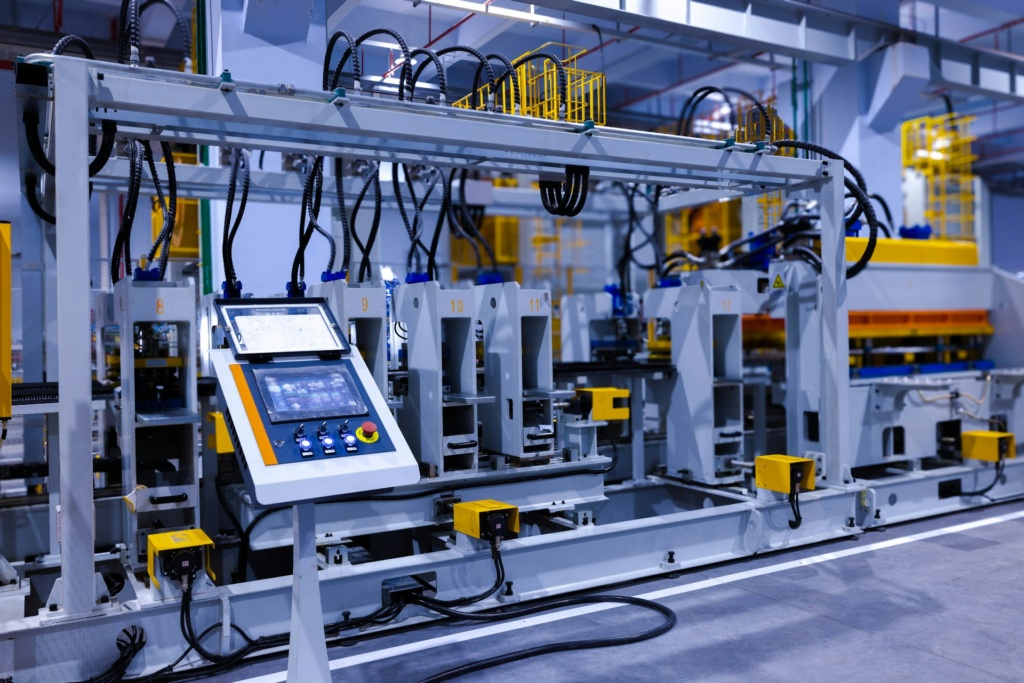
In today’s rapidly evolving industrial landscape, businesses need to stay competitive by optimizing processes and cutting costs. Modern technology offers powerful tools to achieve these goals, particularly in manufacturing. Innovations like the Internet of Things (IoT), digital twin services, and artificial intelligence (AI) are revolutionizing the way manufacturers operate, making production more efficient and cost-effective. Let’s explore the top three tech secrets that can help manufacturers reduce costs while boosting productivity.
IoT: Predictive Maintenance and Real-Time Monitoring
The Internet of Things (IoT) is transforming manufacturing by enabling machines to communicate and share data in real time. IoT sensors embedded in manufacturing equipment can continuously collect performance data such as temperature, pressure, vibration, and other critical indicators. This real-time data can be monitored to ensure that machines are operating within optimal parameters.
One of the most significant cost-saving applications of IoT in manufacturing is predictive maintenance. Instead of waiting for machines to break down and cause unplanned downtime, IoT allows businesses to predict when equipment will fail and schedule maintenance before a problem occurs. By doing so, manufacturers can reduce costly repairs, minimize downtime, and extend the lifespan of their equipment.
Digital Twin Services: Process Simulation and Optimization
Digital twin technology is another game-changer for cost reduction in manufacturing. A digital twin is a virtual replica of a physical asset, process, or system, as explained here https://mosimtec.com/digital-twin-services/. It enables businesses to simulate real-world conditions and gain insights into how different variables affect performance, without disrupting the actual production line.
By creating a digital twin of manufacturing processes, companies can run simulations to test various scenarios, optimize workflows, and spot inefficiencies. This allows businesses to improve production speed, product quality, and energy usage without the trial-and-error approach on the shop floor.
For example, a car manufacturer might use a digital twin of its assembly line to simulate different production schedules, test the impact of new materials, or experiment with equipment configurations. Based on the results of these simulations, the company can make adjustments to the physical production process, reducing material waste and improving throughput.
AI: Advanced Predictive Analytics and Automation
Artificial intelligence (AI) takes cost savings in manufacturing to the next level by using data from IoT sensors and digital twins to drive advanced predictive analytics and automated decision-making. AI can process large volumes of data to identify patterns and trends that humans might miss, allowing for more accurate predictions and process optimization.
AI-powered predictive analytics can forecast future machine breakdowns, optimize production schedules, and even predict market demand, helping businesses better manage their resources. For instance, an AI system might analyze historical production data to predict when specific machines will need maintenance, or it might forecast which materials will be in high demand in the coming months.
AI can also automate routine tasks, such as adjusting machine settings based on real-time conditions, rerouting production flows, or managing supply chain logistics. This automation reduces the need for human intervention in repetitive tasks, lowering labor costs while ensuring higher accuracy and efficiency in operations.
By leveraging IoT, digital twin services, and AI, manufacturers can unlock powerful cost-saving opportunities. Together, these technologies offer a modern, data-driven approach to cutting manufacturing costs while improving productivity and staying competitive in a global market.
Implementing these tech-driven strategies can be a game-changer for manufacturers looking to boost profitability while staying agile and innovative in an ever-evolving industry.