


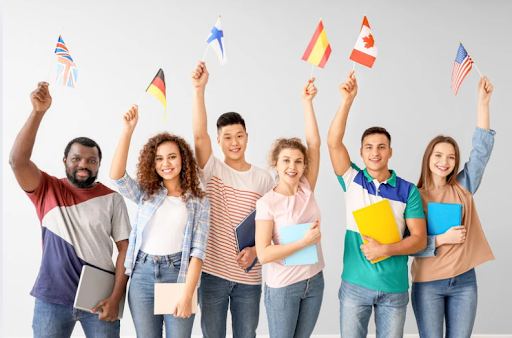
In a globalized world, the ability to communicate across cultures is more important than ever. It’s not just about speaking the same language—it’s about connecting through visuals, tone, and cultural understanding.
When language fails, visual cues often step in to fill the gap. The way we present information visually—through icons, images, color, and layout—can help people from different backgrounds understand each other more clearly.
This article explores how visual and verbal strategies can help new language learners communicate with clarity and confidence across cultural boundaries. We’ll also touch on how combining these tools can support your journey toward global fluency.
Why Cross-Cultural Communication Is Challenging
Even when two people technically speak the same language, misunderstandings can arise. This is often due to differences in tone, rhythm, nonverbal cues, or even the visual symbols people are used to seeing.
Cultural expectations also influence how messages are received. A color that symbolizes luck in one culture may signal mourning in another.
Language learners especially face a double challenge—grasping grammar while interpreting unfamiliar communication norms. That’s why pairing language study with visual strategies can be a powerful solution.
Visual Communication Strategies That Transcend Language
Visual communication uses images, symbols, and spatial arrangements to deliver meaning without relying heavily on words. For new language learners, this can be a game-changer.
Universal icons—like restroom signs, food symbols, or emergency exit images—are recognized across the globe. These help people navigate unfamiliar places even if they don’t speak the local language.
Infographics are another powerful tool. They break complex topics into digestible visuals, making them ideal for explaining grammar rules, vocabulary sets, or cultural tips.
A multisensory approach—where learners engage through both visual and verbal channels—can be especially powerful. According to the Edmonton Public Library, engaging multiple senses improves literacy and retention, especially for early learners and language students.
Color and layout also matter. For example, red might indicate urgency, while green signals safety. Designers use visual hierarchy to guide attention, which can be useful in educational materials for multilingual audiences.
Verbal Tools for Navigating Multilingual Situations
Verbal communication remains essential, but its effectiveness depends on simplicity and clarity. Speaking slowly, avoiding idioms, and choosing common words can make conversations more accessible to non-native speakers.
Tone and pronunciation are equally important. A friendly tone can ease tension, while clear enunciation helps avoid confusion.
If you’re looking for personalized support, working with a private Spanish tutor can help you not only speak the language but also adapt your communication style for different cultural settings.
Combining Visual and Verbal for Global Fluency
The best communicators use both visual and verbal tools together. Visual aids like flashcards, diagrams, or labeled pictures can support spoken conversations, especially when learning a second language.
For instance, showing a timeline while explaining Spanish verb tenses helps learners connect grammar to real-world contexts. Similarly, using gesture or drawing when stuck on a word helps keep the conversation moving.
Cultural Sensitivity in Communication
Understanding culture is just as important as understanding language. A thumbs-up might be encouraging in one culture but insulting in another.
Being culturally aware also means recognizing which visuals and gestures are appropriate. Always approach new cultures with curiosity and a willingness to learn from mistakes.
Many of the best online Spanish tutors use culturally aware communication strategies alongside language instruction. This helps learners develop not just fluency, but global competence.
Conclusion
To become a truly fluent communicator, you need more than just words. You need tools that work across boundaries—visuals that clarify, tone that comforts, and cultural knowledge that connects.
By combining visual and verbal strategies, language learners can gain confidence and communicate more clearly in diverse environments. Whether you’re studying Spanish or preparing to travel abroad, these tools are key to building real-world fluency.