


Bulgaria is now increasingly being called the “new Silicon Valley of Eastern Europe.” This is not just a buzzword, but a real trend, supported by the growth of technology hubs in Sofia, Plovdiv, Varna, and the influx of IT companies, investments, and talent. In this article, we will try to analyze what exactly makes Bulgaria such a powerful player on the map of the global technology industry and how IT companies in Bulgaria attract global brands. We will also mention N-iX as an example of a company that demonstrates many of these advantages.
What Makes Bulgaria Attractive for the IT Industry
Several key factors have secured Bulgaria a place among the technological centers of Eastern Europe:
- Education and qualified personnel
Bulgaria has a long tradition in the field of exact sciences, engineering, and programming. Many universities and technical schools prepare students with a high level of knowledge, often with a good level of English.
This creates a large talent pool. According to sources, the country employs tens of thousands of programmers, and a large number of new specialists graduate every year.
- Favorable geographical and legal position
As a member of the EU, Bulgaria has advantages in the European market, a stable legal framework, access to grants, and European Union funding. In addition, the time zone, proximity to Western Europe, and cultural adjacency simplify cooperation with international clients.
- Cost and quality
Salaries and costs of doing business in Bulgaria are significantly lower than in Western Europe or the USA, but the level of quality of services is high. This combination allows IT companies to offer competitive prices while maintaining standards and quality.
- Startup development, R&D support and infrastructure
Technological ecosystems are growing, there are offices of international companies, startups. There are coworking spaces, incentives for R&D, and good internet infrastructure.
- Presence of large, reliable IT companies
Bulgarian companies not only serve the local market, but many of them work with Western brands, and have international clients. This gives experience, knowledge of standards, and the ability to compete on a global level.
Sofia, Plovdiv, Varna: Key Tech Hubs
Sofia
Sofia, the capital of Bulgaria, is the undisputed leader in the IT sector. It is home to the headquarters of international offices, R&D centers, startups, and a large pool of medium-sized and large IT companies. Sofia offers educational opportunities (universities, courses, accelerators), good infrastructure, and access to the Western market. Talent also flocks here from other regions of Bulgaria and abroad.
Plovdiv
Plovdiv is the second largest technological core in Bulgaria. According to the city authorities and Invest Plovdiv, more than 200 IT and BPO companies operate in the region, creating thousands of jobs; the growth rate is almost double-digit percent every year.
Plovdiv also has a strong university base: several universities train students in technical fields, STEM schools are actively operating, and there is cooperation between business and education.
Additionally, Plovdiv creates a favorable environment for startups: coworking spaces, support from the municipality, investment incentives.
Varna
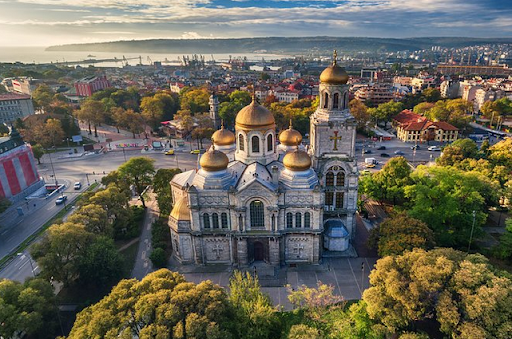
Varna, as a large port city on the Black Sea coast, uses its geographical location, tourist potential, but at the same time develops the IT sector. It is cheaper to live there than in Sofia, and the quality of life is attractive: proximity to nature, the sea, a less stressful pace. This gives an advantage, especially for those who can work remotely or hybridly.
How IT Companies in Bulgaria Attract Global Brands
Trust and standards
IT businesses in Bulgaria prove their competence through international certifications, compliance with data security standards, software quality, ability to work in an aggressive technology environment. For a global brand, it is important to be sure that partners will be able to withstand the requirements for security, confidentiality, and stability.
Specialization and technological diversity
Bulgarian IT companies often offer a wide range of technologies: from classic software development, DevOps, cloud, Big Data to AI/ML, VR/AR, IoT, embedded systems. This allows global brands to find the necessary competencies here without having to involve many different counterparties.
Flexibility and speed of response
Lower barriers to changing directions, less bureaucracy compared to large countries, higher adaptability — all this gives an advantage to companies from Bulgaria when the client wants to quickly change priorities or scale the project.
Competitive prices + high quality
As already mentioned, the price-quality ratio is often very favorable. For global brands that have large budgets, but want to optimize costs, Bulgaria becomes a golden mean.
Success stories and visibility
When one company (or several) successfully implement projects with international brands, it helps pave the way for others. Reviews, cases, participation in global conferences, ratings, all this increases trust. Companies that have been successfully working with Fortune companies for several years become a kind of reference point.
Thus, N-iX illustrates that Bulgaria is not just cheap outsourcing. It is a country where you can have a full-fledged R&D cycle, complex technical solutions, and high quality standards.
Challenges and aspects that need attention
To make the status of the “Silicon Valley of Eastern Europe” more stable and long-lasting, Bulgaria needs to address several challenges:
- Competition among other countries: Romania, Poland, Czech Republic, Ukraine — all of them are also trying to attract the same investments, talents and customers.
- Infrastructure and logistics: not only internet and offices, but also housing, transport, utilities to attract and retain talent.
- Retention of personnel and stimulating innovation: creating conditions for startups, venture capital, accelerators, research, not just to carry out other people’s projects, but also to generate their own products and technologies.
- Regulatory and tax framework: although Bulgaria already has many advantages, it is important to maintain favorable policies, political stability, the fight against corruption, and transparency.
Conclusion
Bulgaria now has all the basic elements to become an important technological “valley” of Eastern Europe. Sofia, Plovdiv, Varna — each of these cities plays its role. Sofia as the center, Plovdiv as a fast-growing center, Varna as an alternative hub with a strong quality of life. Companies like N-iX demonstrate how to successfully combine local advantages with international standards and clientele. If Bulgaria can keep up the pace, rebuild its infrastructure, invest in education and innovation, it can truly become the regional magnet that brands from all over the world will turn to.