


Manufacturing is undergoing a digital awakening. As supply chains grow more complex and customer expectations skyrocket, production teams are realizing that spreadsheets and siloed systems simply can’t keep up. To stay agile and profitable, they need visibility — the kind that comes from a unified system managing everything from shop-floor scheduling to inventory forecasting. That’s why forward-thinking manufacturers are embracing ERP (Enterprise Resource Planning) solutions: to replace guesswork with data, streamline every process, and set a stronger foundation for growth.
But with so many solutions on the market, choosing ERP software for streamlined production can feel like navigating a maze. The good news? The right ERP doesn’t just make your production smoother — it transforms how your entire business runs.
Let’s break down what makes an ERP truly effective, how to evaluate your options, and what steps you can take to ensure your investment drives real results.
What ERP Really Means for Modern Manufacturing
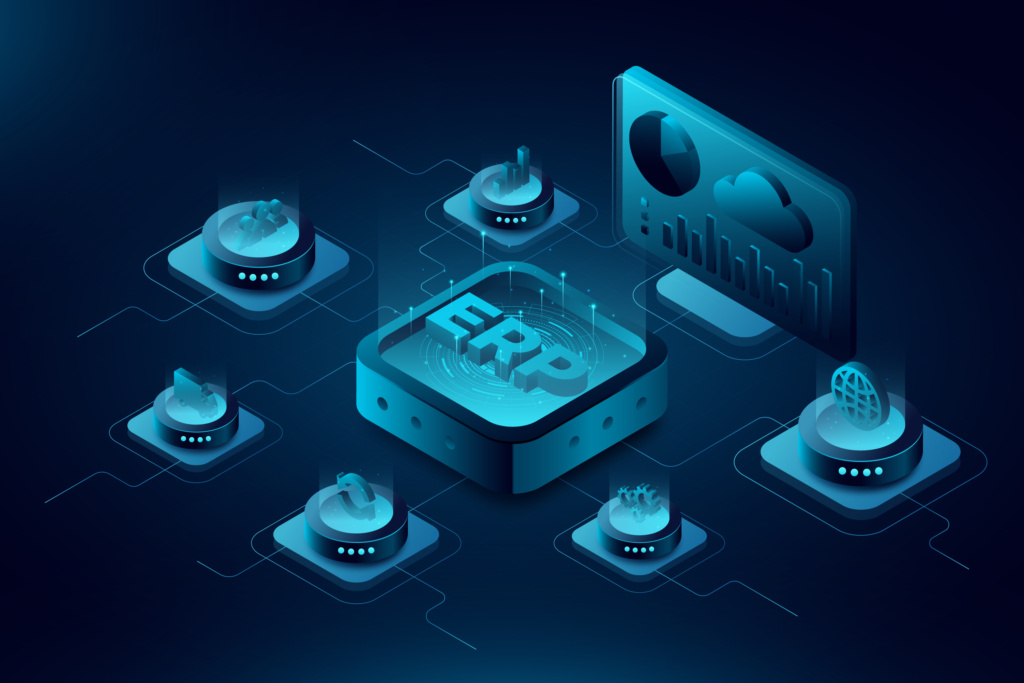
At its core, ERP software is the digital backbone of your organization — connecting your production floor, inventory, supply chain, finance, and customer management into one cohesive system. Instead of juggling spreadsheets or standalone tools, an ERP centralizes your data, enabling real-time decision-making and automation where it matters most.
For manufacturers, this isn’t just about convenience. It’s about visibility. Knowing what’s happening on the shop floor at any given moment — from raw material levels to order status — empowers teams to react faster, forecast better, and deliver consistently.
Imagine a production manager seeing a delay in one workstation and instantly rerouting resources through the ERP dashboard. That kind of agility can mean the difference between meeting a delivery deadline and losing a client.
Why “Streamlined Production” Is the New Competitive Edge
Manufacturing success today depends on doing more with less — fewer errors, less downtime, tighter schedules, and smarter use of data.
ERP systems are built to achieve exactly that by:
- Synchronizing production and supply chain data to prevent bottlenecks
- Automating repetitive tasks, from inventory updates to purchase orders
- Standardizing workflows across departments for consistency
- Reducing downtime through predictive maintenance and real-time monitoring
When these elements work in harmony, the result is a streamlined production environment — one that adapts quickly to change and delivers products on time, every time.
Step 1: Align ERP Selection With Your Manufacturing Type
One of the biggest mistakes manufacturers make is choosing a generic ERP that doesn’t fit their specific operations. A process manufacturer (like a food producer) has vastly different needs from a discrete manufacturer (like an electronics company).
Before even comparing vendors, define where you fall:
- Discrete Manufacturing: Producing distinct items — machinery, electronics, automotive parts. You’ll need ERP features like Bills of Materials (BOMs), routing, and work order tracking.
- Process Manufacturing: Involves formulas and batch production — think chemicals, food, or beverages. You’ll need recipe management, traceability, and compliance controls.
- Mixed-Mode Manufacturing: Many modern operations combine both — and thus require flexibility for hybrid production scheduling.
Choosing an ERP tailored to your manufacturing type ensures you’re not paying for irrelevant features or missing critical functionality.
Step 2: Prioritize Integration and Scalability
Your ERP shouldn’t operate in isolation. It should integrate seamlessly with other tools you use — like MES (Manufacturing Execution Systems), CRM platforms, and IoT devices on the factory floor.
Modern cloud ERPs also make scaling easier. As your business grows — adding plants, expanding into new regions, or adopting new product lines — the system should evolve with you. Look for:
- Cloud-based deployment for flexibility and remote access
- Open APIs for integration with third-party tools
- Modular design so you can add capabilities over time
This ensures that your ERP investment won’t become obsolete as your company expands.
Step 3: Balance Configuration and Customization
Every manufacturer’s workflows are unique. The key is to find software that allows configuration — adjusting settings and workflows — without requiring deep customization, which can lead to complexity, cost overruns, and upgrade issues.
In other words, your ERP should fit your business like a glove, not a straightjacket.
According to industry experts, companies that over-customize their ERP often struggle to adopt future updates or scale efficiently.
Aim for 80% configuration, 20% customization — enough flexibility to tailor the system, but not so much that it becomes unmanageable.
Step 4: Evaluate Vendors Based on Industry Fit
Not all ERP vendors are created equal. Some cater to large, multinational enterprises; others excel at serving mid-market or small manufacturers.
Here’s a quick snapshot based on current market leaders:
- NetSuite – Great for global scalability and cloud-native operations
- SAP S/4HANA – Ideal for large enterprises and heavily regulated industries
- Microsoft Dynamics 365 – Perfect for mid-sized businesses integrated with Microsoft tools
- Acumatica – Cloud-based and flexible for growing manufacturers
- SYSPRO & Epicor – Strong choices for mixed-mode and discrete manufacturing
Step 5: Look Beyond Implementation — Think Transformation
The ERP journey doesn’t end with installation. In fact, that’s where it truly begins.
Many manufacturers underestimate the cultural and process shifts required for ERP success.
Here’s what separates the leaders from the laggards:
- Executive alignment: Leadership must champion ERP adoption as a company-wide initiative.
- Employee training: Empower teams to use the system confidently and see its value.
- Continuous improvement: Use ERP analytics to refine workflows over time.
- Data-driven decisions: Shift from reactive firefighting to proactive management.
When implemented strategically, ERP becomes more than software — it becomes a foundation for continuous improvement and growth.
Step 6: Define Success Metrics From Day One
To measure whether your ERP investment is truly streamlining production, establish clear KPIs such as:
- Production cycle time reduction
- Inventory turnover improvement
- On-time delivery rate
- Downtime reduction
- Labor efficiency gains
Tracking these metrics allows you to quantify ROI and fine-tune the system for even greater performance.
Wrapping Up: Making the Right Choice for Long-Term Efficiency
The decision to invest in ERP isn’t one to rush. It’s a long-term strategic move that will affect every part of your manufacturing ecosystem — from procurement to production to customer delivery.
By following a structured approach — aligning the ERP to your manufacturing type, prioritizing scalability, and embracing change management — you can transform your operations from reactive to proactive, chaotic to coordinated.
In an industry where every second and cent count, choosing ERP software for streamlined production could be the smartest business decision you make this decade.
Author Bio
Vince Louie Daniot is a seasoned SEO strategist and professional copywriter with over a decade of experience creating high-performing digital content for the ERP and B2B technology sectors. He specializes in turning complex business topics into engaging, human-centered stories that rank and convert. When he’s not optimizing words for search, Vince helps brands craft narratives that build trust, authority, and measurable growth.