


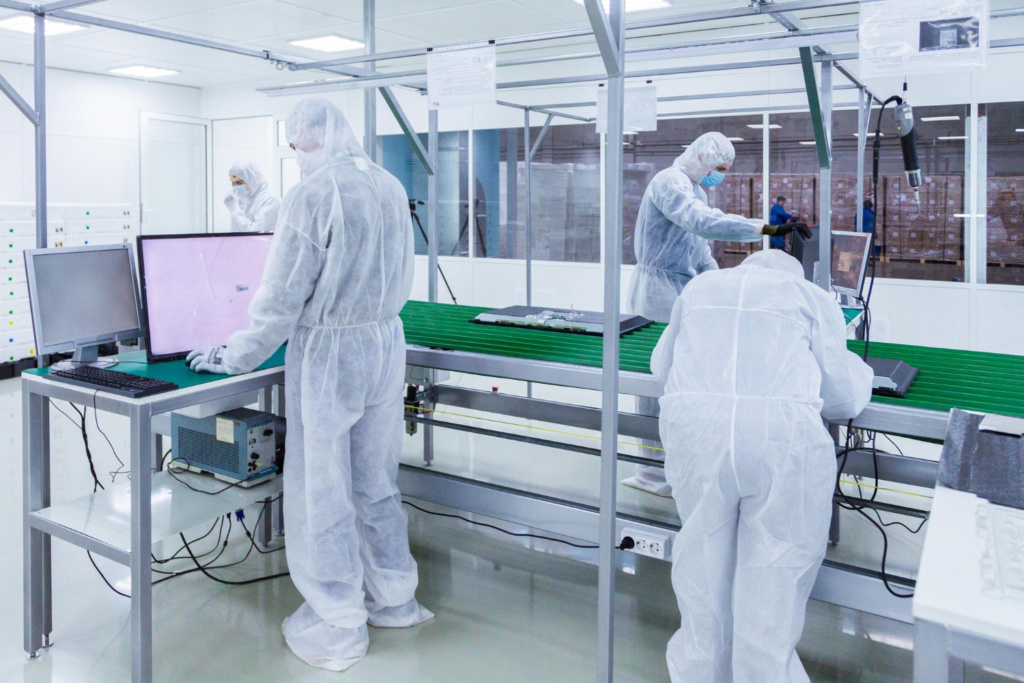
Clean rooms are the blood supply of precision-dependent industries, from pharmaceuticals and electronics to aerospace and healthcare. With the advancement of technology, the operation principle of these controlled environments has also changed. These are six features converging to improve cleanroom operations today.
1. Advanced Air Filtration Systems
Conventional HEPA filters are increasingly being replaced or supplemented by ultra-low particulate air (ULPA) filters, which are capable of capturing even smaller particles.
When compared to older systems, these more recent ones not only help guarantee the highest possible level of contamination. Instead, they also enable you to go even longer without updating your filters.
The addition of intelligent monitoring sensors also makes it possible to monitor the performance of the air in real time. This system immediately notifies team members whenever the air purity level decreases. This enables prompt adjustments, leading to reduced downtime and enhanced operational reliability.
2. Energy-Efficient HVAC Systems
If you want to keep the temperature and humidity within a very narrow band, it is normal for clean rooms to consume a significant amount of energy.
A number of the more recent heating, ventilation, and air conditioning (HVAC) systems have the capacity to modulate the flow of air in response to the activity level of the room. Limited to cleanliness, but a great reduction of power consumption can be achieved.
Such systems also connect with digital monitoring platforms, so drone usage is reported on in terms of how well it performed and how effective it was. It’s a step towards cleaner air and cleaner use of energy—a win for industry and the environment.
3. Automation and Smart Monitoring
For Clean room manufacturing, operators can now track airflow, particle counts, and pressure levels via central dashboards, all thanks to IoT sensors. This helps reduce visual inspection and, subsequently, human error as well, given the enhanced overall accuracy.
Additionally, smart systems enable predictive maintenance. Instead of letting equipment break, sensors catch dips in performance early on, saving time and money spent on repairs.
4. Modular Clean Room Design
A modular system enables you to upgrade the old rig quickly, unlike fixed config-based ones. This is especially handy for businesses that may need to escalate production quickly or change projects frequently.
The walls appear clean and no longer need prefabricated wall panels, lights, or filters, which were part of the dusty traditional manufacturing process. As a result, companies can establish or modify their clean rooms in weeks instead of months, leading to higher-quality operations at lower costs.
5. Sustainable Materials and Practices
Sustainability is also no longer optional—even within high-precision contexts. Numerous newer clean rooms incorporate eco-friendly LED lighting, recycled materials and low-emission flooring. The changes help lower impacts on the environment while meeting tough compliance standards.
Recycling programmes are being implemented for both filters and packaging to help reduce waste. It’s a forward-thinking strategy that marries operational excellence with environmental responsibility—evidence that innovation can be both clean and green.
6. Improved Data Integration and Analytics
Clean rooms are getting data-ier all the time. With integrated software, sites can pull together and parse real-time information from a wide range of systems—air handling, filtration, and temperature control in concert. People claim that this window into one’s operations provides more informed insights and speeds up the process.
AI and analytics engines allow companies to influence performance patterns and predict maintenance needs. It is the conversion of data to insight that you can use and the freeing up for more intelligent management and more efficient workflows.
Cleaner, Smarter, and Ready for the Future
So today’s clean rooms are efficient, precise and sustainable intelligent environments. From modular systems to data-driven monitoring, every new solution is truly pioneering in terms of preventing contamination.