



Cognitive art shapes the way our brains function, not just the images we create. Research shows that engaging with visual art activates multiple areas of the brain at once, strengthening mental processes that influence how we think, feel, and learn.
The relationship between art and neuroscience highlights insights artists have understood for centuries. Scientific studies now confirm that creative engagement can increase empathy, support neuroplasticity, and contribute to overall well-being.
The prefrontal cortex plays a central role in interpreting and evaluating visual information. Both viewing and creating art stimulate this region, leading to measurable gains in cognitive performance. Research in education further shows that visual thinking strategies help students form stronger connections with complex ideas and subject matter.
This article explores the close relationship between drawing and brain function. It examines how artistic activity engages key neural systems and reveals the cognitive and emotional benefits that emerge when creative practice becomes part of everyday life.
The Brain on Art: How Drawing Activates Neural Pathways
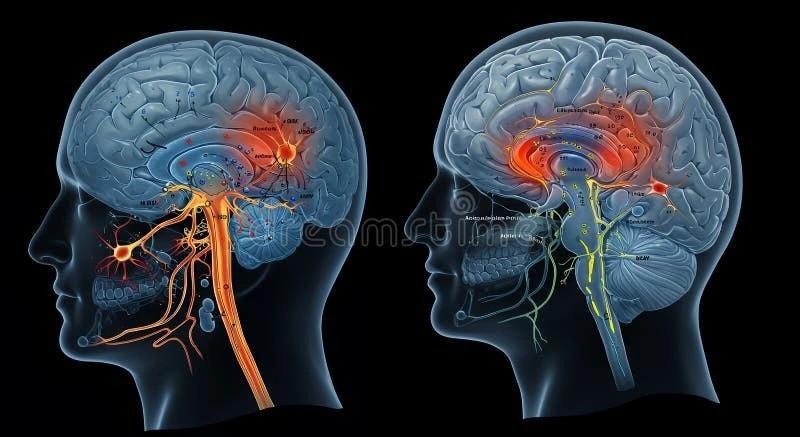
Image Source: Dreamstime.com
Drawing is more than just an artistic activity—it’s a complex neural process that makes multiple regions of your brain work together. Your brain creates a network of neural connections that grow stronger each time you put pencil to paper.
Visual processing and the occipital lobe
The occipital lobe sits at the back of your head and works as your brain’s visual processing center. It makes up about 10-18% of your brain’s volume. This small region handles vital functions every time you draw.
Your brain strengthens the connection between the occipital cortex and parietal cortex when you draw. This improved neural pathway helps visual information flow quickly. Your occipital lobe processes shapes, colors, and spatial relationships that help you transfer what you see onto paper.
The primary visual cortex (V1) picks up the first visual signals. The secondary visual cortex (V2, V3, V4, V5) then refines this information. Your occipital lobe teams up with the temporal lobe to understand written language and recognize objects. This explains why drawing helps you observe and understand your surroundings better.
Motor coordination and the parietal cortex
Your brain activates a specific fronto-parietal network when you draw, especially on the left side. This network helps turn mental images into precise hand movements.
The posterior parietal cortex (PPC) is vital for visuospatial function and sensorimotor coordination. It connects what you see with how you move and coordinates your eye-hand movements precisely. The parietal cortex then adjusts your hand placement, velocity, and trajectory as you draw.
Research using functional magnetic resonance imaging (fMRI) shows that drawing activates the bilateral premotor area (BA 6), inferior parietal lobe (BA 40), and superior parietal lobe (BA 7). The left hemisphere shows stronger activation patterns.
Your brain works differently when you copy an image versus drawing from memory. Copying uses more visual processing areas like the middle occipital gyrus and lingual gyrus. Drawing from memory relies more on frontal and parietal regions to recall and rebuild mental images.
Drawing builds stronger connections between brain regions that handle perception, movement, and reasoning. This makes it an excellent activity to develop your cognitive abilities.
Why Drawing Enhances Cognitive Function
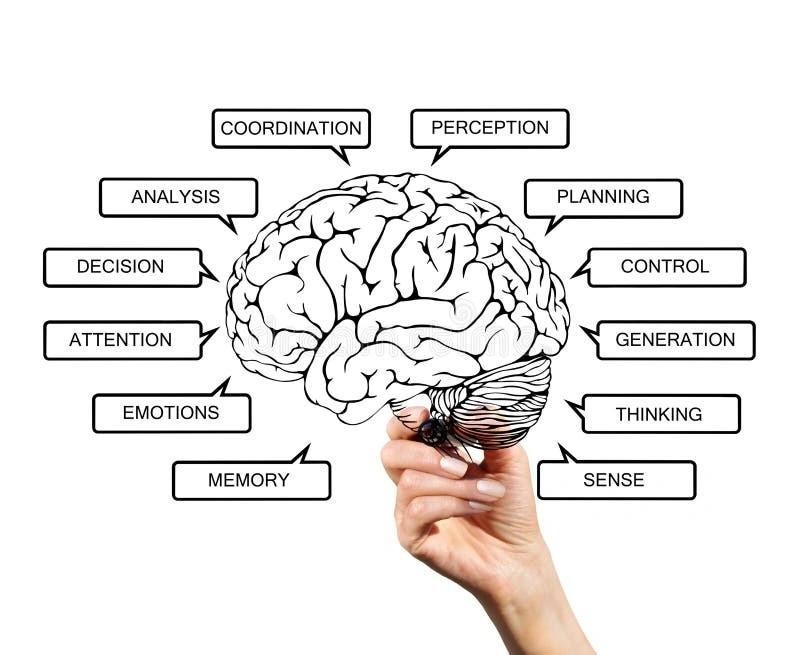
Image Source: Dreamstime.com
Picking up a pencil and putting it to paper does more than create art. Research shows that drawing works as a mental exercise that improves brain function in multiple ways.
Boosting attention and focus
Your cognitive abilities get a boost from drawing, especially when your mind drifts during boring tasks. A study revealed that people who doodled while listening to a monotonous voicemail remembered 29% more details than others. Drawing keeps your brain alert and helps you participate at times when it might shut down from boredom.
Drawing doesn’t distract you – it acts as a “last-ditch attempt at staying awake and attentive”. Your brain gets tired from constant attention, and drawing provides the mental break you need to process information without losing focus.
Improving problem-solving skills
Drawing turns abstract ideas into visual elements that your brain processes better. Students remembered almost twice the information when they drew concepts instead of writing them down.
Your brain processes drawn information in three ways at once:
- Visual processing (creating and seeing the image)
- Kinesthetic activity (hand movements)
- Semantic processing (meaning-making)
This “triple-coding” builds stronger neural pathways that make information stick better in your memory. Biology students showed better problem-solving abilities through drawing compared to regular study methods.
Strengthening visual-spatial reasoning
Drawing helps develop spatial abilities – the skill to mentally manipulate objects and understand how they relate in space. These abilities predict success in STEM fields and improve with regular drawing practice.
Freehand drawing creates results that reflect your personal experiences. Drawing with a handheld stylus challenges your brain more than using software with preset shapes. It makes you think deeper as you convert three-dimensional reality into two dimensions.
Drawing trains your brain to understand spatial relationships better. This fundamental skill helps with daily navigation and advanced scientific thinking.
Emotional and Psychological Benefits of Drawing
Drawing supports emotional well-being in ways that extend beyond cognitive performance. Creative activity offers a structured yet flexible space where emotions can be processed, expressed, and understood.
- Stress reduction and mental calm
Short periods of drawing have been shown to lower cortisol levels and reduce physical stress markers. Both experienced artists and beginners benefit, suggesting that the act of creating matters more than skill level. - Emotional regulation and resilience
Drawing helps people process difficult emotions without suppressing them. Visual expression supports emotional balance and can ease symptoms associated with anxiety and low mood by grounding attention in the present moment. - Self expression beyond language
For individuals who struggle to verbalize feelings, drawing provides an alternative form of communication. Color, shape, and line allow emotions to take form when words feel insufficient. - Empathy and perspective taking
Engaging in visual creation strengthens the ability to recognize and relate to emotional experiences in others. Research suggests that regular artistic practice is associated with higher empathic awareness. - Sense of agency and personal meaning
Creating images gives people a feeling of control and ownership over their inner experience. This sense of agency supports confidence and reinforces personal identity through intentional visual choices.
These benefits become easier to access when drawing feels structured rather than intimidating. For many people, using this creative kit from Number Artist helps remove the pressure of deciding what to draw, allowing attention to shift toward the calming and reflective aspects of the process. That structure supports emotional ease while still leaving room for personal expression.
From Therapy to Innovation: Real-World Uses of Cognitive Art
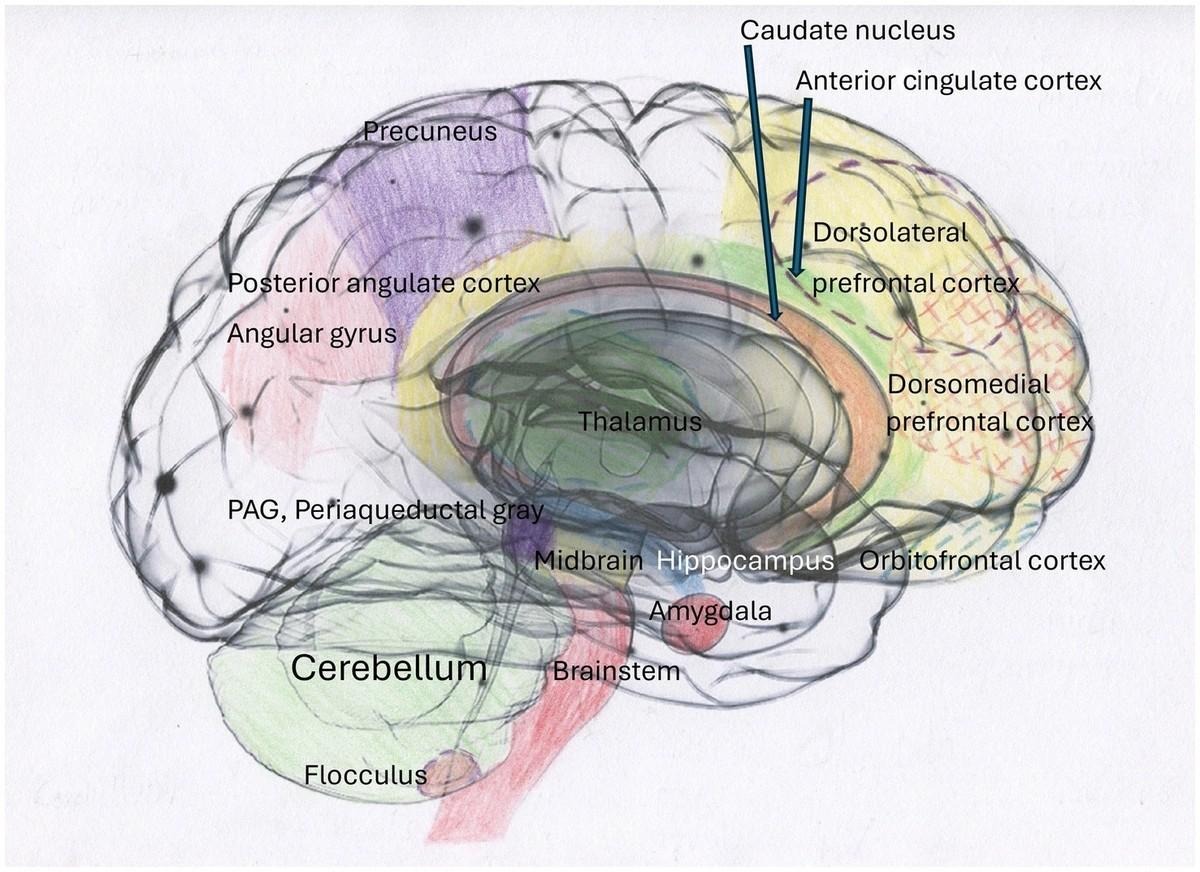
Image Source: Frontiers
Cognitive art extends beyond personal expression and supports practical progress across health, science, education, and creative industries.
- Mental health and therapeutic care
Art therapy is now an established clinical practice that blends creative activity with psychological frameworks. Research links it to reduced symptoms of anxiety, depression, and post traumatic stress, while offering an alternative communication channel when words feel limited. - Medical education and scientific observation
Drawing continues to support learning in medicine and science. Sketching anatomical structures and processes strengthens observation, spatial reasoning, and long term understanding of complex systems. - Neuroaesthetics and public health applications
Neuroaesthetics examines how art affects brain activity and behavior. Studies show that viewing art can increase cerebral blood flow and lower stress, which has encouraged the inclusion of cultural experiences in wellness initiatives. - Neuroscience informed artistic practice
Artists increasingly use insights from cognitive science to guide viewer attention and emotional response. Techniques like extended visual engagement help create deeper and more memorable experiences. - Learning and knowledge retention
Drawing supports comprehension and memory across age groups. Visual creation helps learners organize information, connect ideas, and retain concepts more effectively than text alone.
Conclusion
Cognitive art shows that drawing is not a decorative extra but a powerful way the brain learns to organize experience. Each line placed on paper brings perception, movement, memory, and emotion into conversation. The brain responds to this activity as meaningful work, strengthening connections that support attention, reasoning, and understanding.
What makes drawing especially valuable is its ability to slow thinking without stopping it. Visual creation invites reflection, observation, and interpretation at a pace that modern digital environments rarely allow. This process helps the brain integrate information more deeply and translate abstract ideas into forms that can be examined and refined.
Beyond cognition, drawing offers a space for emotional clarity and human connection. It provides a language that works when words fall short and builds empathy through shared visual experience. In classrooms, clinics, studios, and laboratories, drawing continues to prove its relevance as a tool for insight rather than ornament.
Seeing cognitive art through a neuroscientific lens reinforces a simple truth. Making images changes how we think. When drawing becomes part of daily practice, it supports a more attentive, flexible, and visually literate mind.