


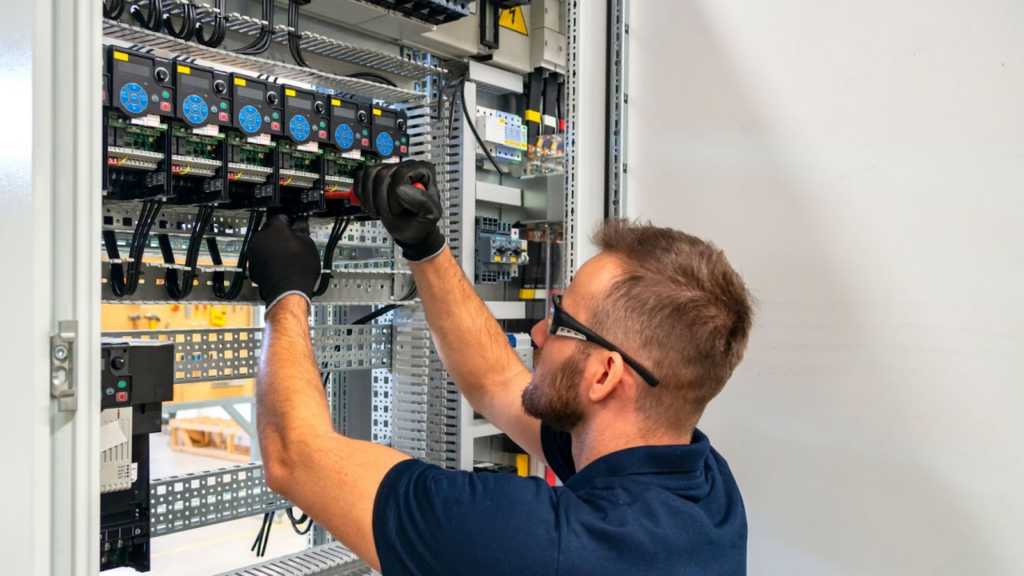
Every modern building depends on a stable and well-organized electrical distribution system. Power has to move from the source to lighting, outlets, HVAC equipment, elevators, and specialized loads without creating confusion, overload risk, or maintenance issues. When distribution is poorly planned, even a minor fault can lead to downtime, safety concerns, or expensive troubleshooting.
That is why the CHINT panel board matters in practical building design. A panel board acts as the control center that receives incoming power and distributes it to branch circuits in an organized and protected way. In modern low-voltage systems, CHINT positions its main, sub, and final distribution solutions around safe power management, modular design, and support for commercial, industrial, and building applications.
Why Panel Boards Matter in Building Distribution
A panel board does much more than hold breakers. In everyday operation, it serves as the point where electrical distribution becomes manageable.
Key problems a panel board helps solve
- It organizes multiple outgoing circuits in one location.
- It supports fault isolation instead of forcing building-wide shutdowns.
- It makes inspection, maintenance, and upgrades more practical.
- It improves coordination between incoming supply and final loads.
CHINT’s official product pages describe final distribution boards as serving the role of safely distributing electrical power to various circuits within a building or facility while providing essential protection and control. Its sub-distribution pages position these systems as tools for sectional power management and easier system integration.
How a Panel Board Functions as a Central Hub
A building electrical system needs a place where energy can be routed, divided, protected, and monitored. That is exactly what a panel board does.
Main functions of a panel board
- Power reception: The panel board receives power from the upstream source or main distribution point.
- Circuit distribution: It divides that power into smaller circuits for different parts of the building.
- Protection coordination: It works with protective devices such as MCBs, MCCBs, and other breakers to isolate faults.
- Operational access: It gives technicians a central place for control, inspection, and maintenance.
This centralization is one reason panel boards remain essential in residential towers, offices, industrial buildings, and mixed-use developments. CHINT’s product catalog pages for main and final distribution systems emphasize centralized energy control, safe power management, and scalable distribution for building use.
Main, Sub, and Final Distribution Levels
Not all panel boards perform the same role. In a building, they usually exist in a hierarchy.
Main distribution boards
These are the highest-level boards in the building distribution chain. They receive power from the utility or transformer and supply major sections of the facility.
CHINT’s main distribution board pages describe these products as designed for centralized energy control, safe power management, and system scalability. Some CHINT main distribution products also highlight modular design, advanced protection, and smart monitoring support.
Sub-distribution boards
These boards divide power further for zones, departments, floors, or operational sections.
CHINT’s sub-distribution pages describe them as built for durability, easy system integration, and sectional power management. The NGL5 low-voltage panel board is described by CHINT as a power and lighting distribution solution for systems up to AC 690V, with modular design and broad application across sectors such as high-rise buildings and industry.
Final distribution boards
These are closest to the end circuits and often handle terminal distribution to lighting, sockets, and smaller load groups.
CHINT’s final distribution box pages state that their primary function is to safely distribute electrical power to various circuits within a building or facility while providing protection and control.
Why Modularity Is So Important
One of the most practical qualities of a modern panel board is modularity. A modular structure makes the system easier to adapt as the building changes.
Benefits of modular design
| Benefit | Why it matters |
| Easier expansion | Supports future circuit additions |
| Faster maintenance | Simplifies replacement and servicing |
| Better organization | Keeps components and circuits structured |
| Improved customization | Matches different project requirements |
CHINT’s official descriptions of products like the NGC5 and NGL5 emphasize standardized and modular functional units or modular design, which supports customization and reliable distribution performance.
In real projects, this means you can adapt a board to changing tenant needs, load profiles, or building upgrades without redesigning the whole distribution strategy.
Panel Boards and Protection Coordination
A panel board is only as useful as the protection system integrated into it. That is why layered protection matters.
Protective functions commonly associated with panel boards
- Overload protection
- Short-circuit isolation
- Sectional fault management
- Circuit segregation for targeted shutdowns
CHINT’s low-voltage power distribution pages note that its main power distribution products support safety and reliability through protective devices such as ACBs, MCCBs, MCBs, and RCCBs, while smart monitoring supports diagnostics and system health awareness.
This matters because a well-designed panel board does not simply distribute energy. It helps limit the consequences of faults by ensuring that only the affected part of the system is interrupted.
Building Performance, Maintenance, and Scalability
As buildings become more complex, electrical infrastructure must support more than basic power delivery. It must also support maintenance access, monitoring, and future growth.
Why panel boards support better building performance
- They centralize key distribution points.
- They make troubleshooting faster.
- They support organized circuit labeling and control.
- They allow phased upgrades or expansion over time.
CHINT’s official materials emphasize not only safety and reliability, but also energy efficiency, ease of maintenance, and support for upgrades in sub-power distribution systems.
That makes panel boards especially important in:
- commercial offices
- residential towers
- industrial sites
- institutional buildings
- infrastructure and energy projects
Practical Design Considerations
When selecting or specifying a panel board in a building project, it helps to focus on operational needs rather than only physical size.
Points to consider
- Load distribution: Match the board to expected current levels and future expansion.
- Application type: Main, sub, and final distribution levels require different design priorities.
- Protection integration: Ensure compatibility with circuit protection and monitoring devices.
- Environmental conditions: Consider enclosure strength, ingress protection, and operating environment.
- Maintenance access: Boards should support practical inspection and service over the life of the installation.
CHINT’s EnergiX-M distribution board page, for example, highlights IEC 61439-2 compliance, large current capacity, and options such as IP54 and Form 4b for demanding main distribution applications.
The Role of Smart Monitoring in Modern Boards
Modern buildings increasingly require visibility into power usage and system condition. Panel boards are becoming part of that shift.
CHINT’s main distribution pages mention smart monitoring capabilities and real-time tracking of power usage and system health, while the NGC5 product page refers to networked and intelligent communication monitoring functions in a modular switchgear structure.
For building owners and operators, that can mean:
- better maintenance planning
- faster fault response
- improved energy visibility
- stronger support for digital building management systems
Putting It All Together
A panel board is not just a cabinet full of breakers. It is the point where electrical design becomes usable, maintainable, and scalable for the whole building.
In practical terms, the CHINT panel board matters because it supports organized distribution, layered protection, modular expansion, and clearer operational control. Across its main, sub, and final distribution categories, CHINT presents panel boards as central tools for safe and reliable low-voltage distribution in buildings and facilities.
In the broader context of building infrastructure, solutions from CHINT sit within a low-voltage distribution portfolio that includes main distribution boards, sub-distribution boards, final distribution boxes, and associated protective devices.
Conclusion
Panel boards serve as the operational center of building electrical distribution. They receive power, divide it into manageable circuits, coordinate protection, and create an organized structure that supports both safety and daily functionality. Without them, even a well-supplied building would lack the control and reliability needed for modern electrical use.
As buildings grow more connected and demanding, the panel board becomes even more important. A well-designed system supports not only present-day distribution, but also maintenance efficiency, fault isolation, future expansion, and smarter building management. When you understand panel boards as central hubs rather than passive enclosures, their value in electrical design becomes much clearer.