


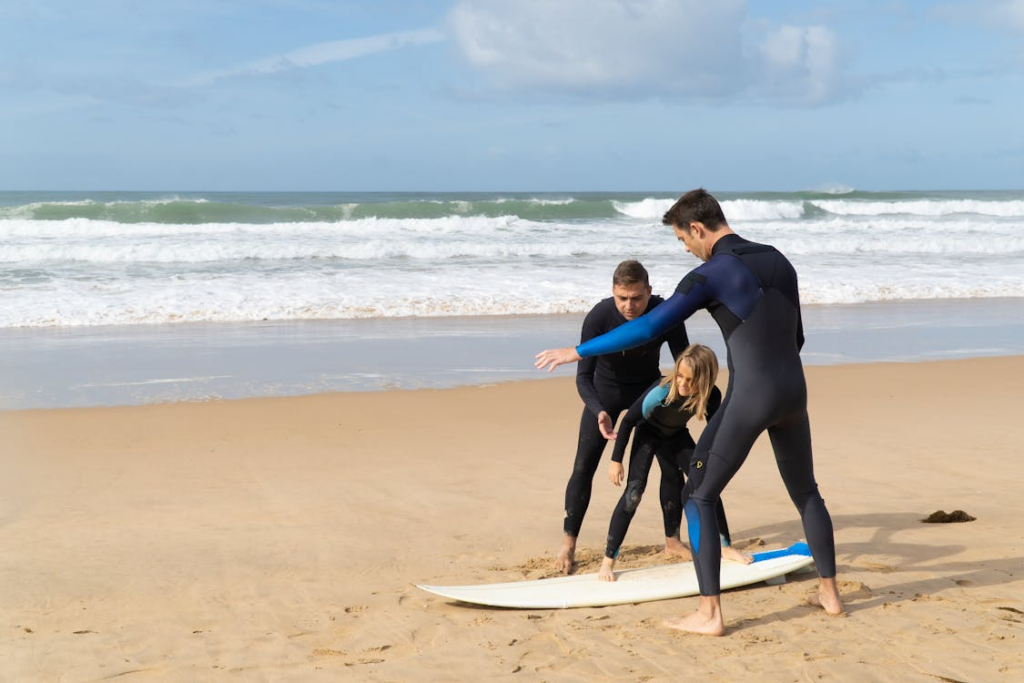
Okay, so you’ve been looking through holiday snaps of people zooming along blue waves and you’ve been thinking “Yeah, that’s gotta be me.” Great decision. Surfing is one of those outdoor pursuit activities that grabs you quickly and never lets go. It’s part workout, part therapy, part complete madness. There’s no need to be a sporting pro to give it a go. Just a board, a bit of patience and an ability to swallow seawater.
Welcome to the new no-nonsense, just-the-basics guide for new surfers. To skip all the background and get the main points, the five most important things to know before paddling out are:
- Surfboards and fin setups vary widely for good reasons. Make sure you understand the principles of how they work.
- You must protect your board with surf leash etiquette.
- Learn the in-water rules so you don’t get a rip for something you didn’t know you were doing.
- Knowing a bit about surf spots and how to read them will give you more confidence when things feel a bit wild.
- Surf etiquette on the sand, in the water, and while catching waves matters.
Now surf on…and enjoy!
Quick Look at What’s Coming Up
- Why surfing is exploding right now
- The gear you actually need (and what you can skip)
- Picking the right beach so you don’t get smashed
- How to read waves without overthinking it
- Pop-up technique broken down step by step
- Surf etiquette so nobody hates you in the water
- Staying safe out there
Why Surfing Is Having a Moment
Surfing is not a fringe activity. It is massive. The worldwide surfing tourism market was at USD 68.3 billion in 2024 and is expected to grow to USD 95.93 billion by 2030. A lot of people are buying plane tickets to surf. Duh. Surfing is one of those things people are desperate to experience after all this indoor time. They’re after real, salt, sting-in-the-eye experiences.
Surfing in the UK is punching well above its weight. The sport adds more than £1.8 billion to the UK economy every year, and people surf between Cornwall and Scotland. Of course, the heartland is Cornwall. The waves are reliable, the water is way better than you’d think (with a wetsuit), and there is actual surf culture baked into the scene.
If you want to learn how to surf the right way, then booking lessons with a surf school newquay is the best first step. Trying to pick up surf skills from YouTube videos on a blustery beach while also fending off waves with your board is a waste of time. You will become frustrated, pick up poor habits that take years to undo, and not make much progress. A certified instructor will have you standing up quickly and safely, and keep you in good conditions while you understand what’s going on in the ocean around you. Newquay has plenty of waves suited to beginners, and instructors that have taught thousands of students like yourself.
The Gear You Actually Need
Surfing is one of those sports with a reputation for being an expensive hobby. It is. But not for beginners. The truth is you do not have to spend half a paycheck on fancy equipment to get started.
A soft-top board. Essential for newbies. Hard fibreglass boards are tippy, unforgiving and will bang your face in. Soft-tops (aka foamies) are floaty, stable and won’t break your nose. Most lessons come with one. Win.
A wetsuit. The water in the UK is cold. Properly cold, even in August. A 4/3mm wetsuit will be fine most of the year, and a 5/4mm with boots and hood will cope with the winter. Rentals are ubiquitous, so you don’t need to rush out and buy one.
Wax or a deck pad. Stop your feet sliding off the board. Cheap, simple.
Leash. The cord that keeps your board attached to your ankle. Wear it. Always. A loose board is dangerous for you and everyone else.
That’s really all there is to it. Leave the rashguards and surf watches and marketing hype aside for the moment. Go in the water.
Picking the Right Beach
No part is as important as most people give it credit for. It’s paddling out at a big reef break on day one that lands you in the emergency room for stitches. A beginner beach has certain characteristics: a sandy bottom, easy whitewater waves that slowly roll, a lifeguard on duty and a lineup that isn’t crowded with experienced surfers.
Ask locals, ask instructors, or look at surf forecast apps for “small” or “1-2ft” days when getting started. Anything much bigger than waist-high will absolutely humble you. There’s no shame in starting small. Even the pros started in ankle slop.
Reading Waves Without Overthinking It
The first question every beginner asks: “How do I know which wave to catch?” A lot easier than you think. During your first 12 sessions you won’t be catching unbroken waves. You’re catching the white foamy stuff after the wave breaks. That’s the trick.
Sit in waist deep water. Watch the foam roll towards you. As a good line of whitewater nears, point your board to shore and paddle hard. Ride it in. Do it again and again… a thousand times.
Don’t go in green until you can reliably stand up in foam, then get into green.
The Pop-Up: Your New Best Friend
The pop-up is the move that takes you from lying on the board to standing. Most beginners try to make it too complicated. Don’t.
Lie on your board with hands flat on the board, by your chest in a push up position. As the wave catches you, explode up with your chest, slide your back foot forward, and set both feet simultaneously. Bend your knees, look forward (not at your feet, ever) and put your arms out for balance.
Pop up on dry sand first. 20 before touching the water. Muscle memory will thank you when adrenalin takes over.
Surf Etiquette Nobody Tells You About
That’s when new surfers unknowingly become foes. The lineup has its own code and you learn to follow it quickly when you break the rules and get yelled at.
Big one: don’t drop in. If someone is on a wave, it’s theirs. Paddling for it and cutting them off is the cardinal sin of surfing. Wait for the next one. Waves come in sets. Be patient.
Don’t ditch your board. If a wave is on you, paddling out, don’t bail and throw your board behind you on the leash. There’s probably someone behind you. Hang on or duck under.
And smile. Surf communities are usually welcoming if you’re respectful and willing to learn.
Staying Safe in the Ocean
Quick reality check. The ocean is not a swimming pool. Rip currents, moving sandbars and changing tides are real dangers. According to a national UK Surfing and Health survey with over 1,300 participants, most people surf just 45.7 times per year on average, which means even regulars need to stay sharp each and every session.
Only surf at lifeguarded beaches. Never paddle out alone until experienced. If caught in a rip, relax and don’t fight it. Paddle parallel to the beach until out of the rip, then paddle in. It is panic that drowns surfers, not waves.
Know your limits. If it looks gnarly, call the session. There will be more waves tomorrow.
Calling It a Day
Few outdoor pursuits make you view the ocean, your body and your weekends in a new way like surfing. The first session will be a wrestle with a foam plank. The tenth one will be a flight. Persist.
Find the proper equipment, go to the proper beach, take a proper lesson, pay proper respect to the lineup and have proper patience. The waves will still be there. Get salty.