


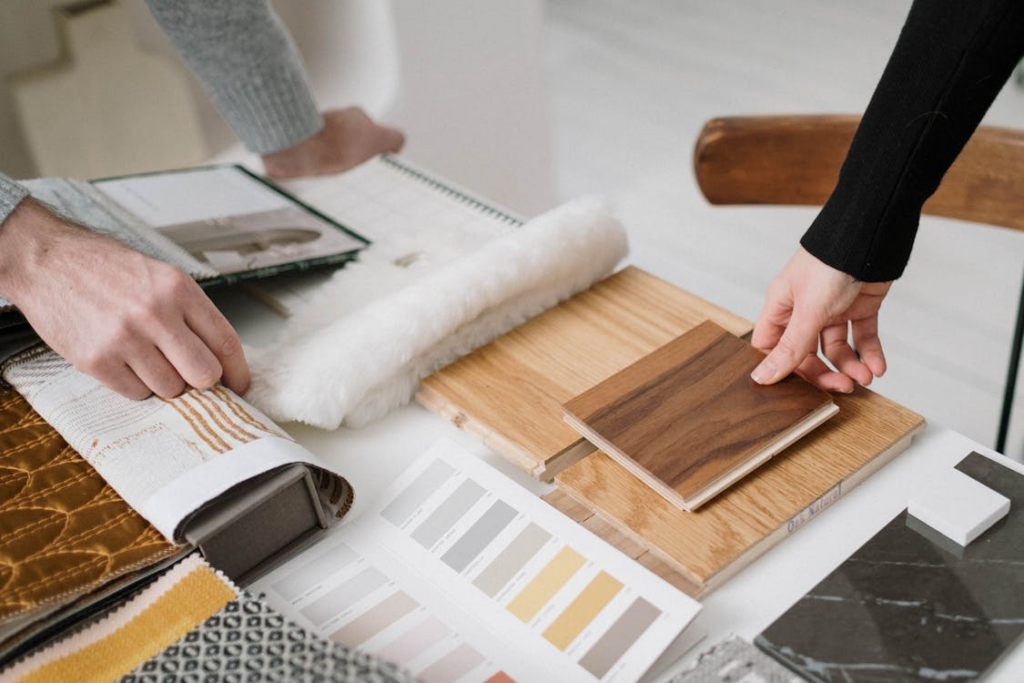
Texture is one of the most overlooked parts of interior design.
Surface texture subtly influences the ambiance of a room, how light reflects, and how each surface communicates visually. Done correctly the room sings. Done incorrectly and the space is dull… even if you spend a fortune on materials.
Here’s the thing:
Hard surfaces carry a lot of weight. Literally and figuratively. They set the mood. Direct focus. And when it comes to kitchen renovations, they often become your home’s visual centre piece.
Here’s What’s Inside:
- Why Texture Speaks Louder Than Colour
- How Hard Surfaces Shape A Room
- The Visual Power Of Stone In Kitchens
- Smooth vs Rough: The Balancing Act
- Why Kitchens Get So Much Texture Attention
- Practical Texture Tips For Homeowners
Why Texture Speaks Louder Than Colour
Colour gets all the credit. But texture?
Texture is what your eye FEELS first. A glossy marble slab and a matte concrete countertop can be the same COLOR… but they tell totally different stories.
Shiny surfaces bounce light, brighten a space and skew formal. Texture that’s rough or matte absorbs light, softens the space and feels more intimate. That texture talked about visually.
A few quick examples of what hard textures say:
- Polished granite: Luxe, formal, classic
- Honed marble: Soft, refined, modern
- Leathered stone: Tactile, earthy, organic
- Brushed quartz: Smooth, clean, minimalist
Each surface communicates something different before anyone even touches it.
How Hard Surfaces Shape A Room
Hard surfaces aren’t just for function. They’re a design statement.
When renovating a kitchen, the countertop often becomes its defining visual feature. Houzz research indicates that countertops are upgraded in 91% of kitchen remodel projects, making it the largest individual material commitment for homeowners. Plus, the texture of the countertop will communicate to everyone who walks into your kitchen the style you’re going for.
Want a sleek, well lit modern vibe? Consider granite and quartz countertops with minimal veining and a high gloss finish. Prefer something more homey and cozy? Honed or leathered finishes will take your room in a completely different direction.
The point is…
The texture you pick changes how the whole kitchen reads.
That’s why so many designers agonize over slab selection more than cabinet colour. The countertop is what establishes the palette for everything else: backsplash, flooring, lighting…even hardware finish.
The Visual Power Of Stone In Kitchens
Stone has a way of grounding a room.
It has substance, history, permanence that man made substitutes can’t begin to replicate. And when utilized properly it doesn’t simply look stylish … it anchors the entire space.
Stone communicates three big things visually:
- Authority – heavy, solid, expensive-feeling
- Craftsmanship – natural variation tells a real story
- Timelessness – it doesn’t age out of style quickly
This is part of the reason why kitchen remodels that incorporate stone surfaces fare so well during resale. Statistics from the industry reveal minor kitchen remodels return 96% on investment. Updating surfaces is one of the biggest factors that cause buyers to fall in love during a first walkthrough.
Much of that emotional labour is being done by the texture of the stone without people even noticing.
Smooth vs Rough: The Balancing Act
Here’s where most homeowners trip up.
They choose one texture and use it all over …and the kitchen becomes flat. Or worse, sterile. The secret is contrast.
Designers know this:
- Pair smooth with rough – polished countertops next to a textured tile backsplash
- Pair hard with soft – stone top paired with woven barstools or an area rug
- Pair matte with glossy – honed countertops under a glossy pendant light
Mixing textures is particularly useful in open-plan kitchens. Hard textures absorb noise and can soften large rooms acoustically, whilst slick textures reflect light and add brightness.
If you use only one texture, your eye has nothing to hold on to. If you incorporate them, the room feels finished.
Why Kitchens Get So Much Texture Attention
Kitchens are the most renovated room in the house… and there’s a reason.
Approximately 54% of Realtors advise sellers to improve kitchens prior to listing. Kitchens top buyer interest over surfaces more than anything else. The kitchen textures will literally sell the home with your eyes.
Buyers walk in and have an opinion right away. They don’t say “I love that quartz” or “that granite is gorgeous…” they just know it feels right. That is texture working.
That’s also why countertops (and surfaces in general) eat up so much of your kitchen remodel budget. Approximately 58% of homeowners who remodel their kitchen add or upgrade an island. And just about every island countertop features some serious swagger with strong visual texture.
Want to give your kitchen a luxury feel? Spend less money. Think clever textures.
Practical Texture Tips For Homeowners
Want help making smarter texture choices when renovating your kitchen? Follow these simple guidelines.
Start With The Dominant Surface
Start with your countertop. It is the biggest hard surface in the room and everything else should react to it. Pick your finish (polished, honed, leathered) based on the mood you are going for.
Layer Three Textures Minimum
A kitchen should never have only one or two textures. It will look incomplete. Try to use at least three textures: something hard, something soft, and something natural like wood or plants.
Consider How Light Hits Each Surface
Enter your kitchen at various times during the day. Observe how a shiny countertop reflects morning versus dusk lighting. Texture and lighting go hand in hand… they should be designed that way.
Don’t Ignore The Senses
The texture is visual and tactile. Think about how many times a day people run their hands along countertops. Ensure that what they touch aligns with what they see.
Final Thoughts
Texture is the quiet design element that does most of the talking.
Pick flooring, countertops, backsplashes, etc. in your kitchen remodel carefully. In particular, the hard surfaces you select will speak volumes about the atmosphere, design, and worth of the entire kitchen. Smooth or sleek, textured or matte … they each send a unique message.
To quickly recap:
- Texture is more powerful than colour for setting a mood
- Hard surfaces (especially countertops) anchor the whole room
- Balance smooth with rough to avoid a flat look
- Layer at least three textures for a complete feel
- Plan texture and lighting together from day one
If you nail the textures, everything else you choose falls into place so much easier. The kitchen becomes that space you feel before you speak about it.
That’s the visual communication of texture working exactly as it should.