


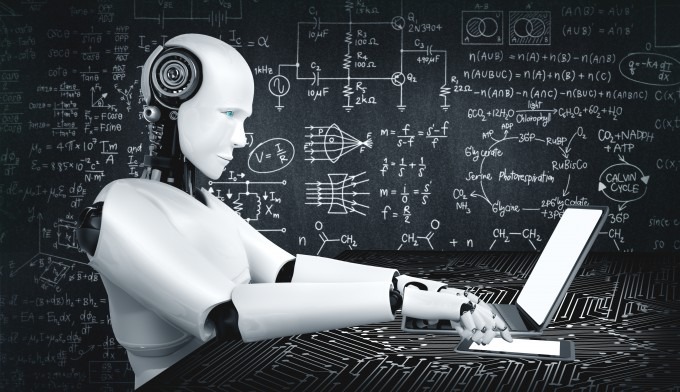
Imagine a classroom scattered across a city. Or a village. No shared blackboard. No teacher hovering nearby. Just a screen. This is remote mathematics education. It promises access. It delivers isolation. Numbers and symbols feel cold through a monitor. Students drift. They lose the thread. The challenge is not just the math. It is the distance.
AI changes this dynamic. It does not simply replicate a classroom online. It builds something new. Something responsive. Artificial intelligence turns a solo struggle into a guided conversation. Tools now see where a learner stumbles. They offer a hand. They whisper the next step. Remote education finds its missing heartbeat.
The Scale of the Problem
Remote education grew fast. By 2021, UNESCO estimated over 800 million learners had experienced some form of distance schooling. Math outcomes suffered. A 2022 McKinsey report found students fell an average of five months behind in math during the pandemic — more than in any other core subject.
The Challenge of Remote Math Education
Mathematics withers in isolation. Research shows this clearly. Students in open distance e-learning environments face unstable internet, inadequate devices, and a lack of institutional support. Abstract concepts become walls. Misconceptions harden into habit. A screen cannot sense confusion. It cannot lean over a shoulder.
Teachers lose their intuition in a video call. They cannot spot the blank stare. The slight frown. The eraser hovering over a wrong answer. Remote education breaks the oldest teaching tool: immediate, human feedback. Something must bridge that gap. Something must watch. Something must be heard.
How AI Steps In
AI tools enter this quiet space with sharp ears. ChatGPT and intelligent tutoring systems now personalize learning and simplify complex ideas. They do not tire. They do not rush. They sit beside the student at 2 a.m. or during a lunch break. The machine becomes a companion.
Studies confirm the impact. AI-based personalized learning significantly improves mathematics performance, especially for struggling students. The tool adapts. It bends to fit the learner. Not the other way around. Remote education suddenly feels less remote.
Personalized Learning Paths
No two minds move through algebra the same way. Some race ahead. Others circle back. AI watches these journeys. It builds a path unique to each learner. Personalized pathways yield 56.6 percent higher learning gains than static approaches. That number demands attention.
Students spend 53.1 percent more time engaged with tailored problems. Boredom drops. Frustration eases. The machine generates new questions at just the right difficulty. It knows when to push. It knows when to pause. Remote education becomes a dance, not a march.
Instant Feedback and Assessment
A wrong answer sits like a stone. Traditional remote learning leaves it there for days. AI sweeps it away in seconds. Students receive immediate, just-in-time help. The system highlights the misstep. It shows the correct path. Learning accelerates.
When students hit a wall, a math solver can help them move forward. This can be a Chrome extension that installs in a few seconds. It shows not just the answer, but each step of the solution. Rather than giving up, a student can trace where their reasoning diverged from the correct path. Used wisely, solvers teach processes—not just outcomes. This makes them a practical bridge between confusion and understanding.
Intelligent Tutoring Systems
Intelligent tutoring systems represent a leap forward. They assess knowledge. They administer exercises. They adapt in real time. Some studies show significant performance gains. Students taught with these systems outperform those in traditional classrooms. The machine learns the learner.
But results vary. Frequency of use alone does not guarantee better outcomes. Quality matters. Design matters. The best systems integrate diagnostic tools with automated feedback to enhance mathematical proficiency. Remote education demands this sophistication. Superficial tools fail.
Breaking Down Barriers
Geography once dictated destiny. Not anymore. In Rajasthan, India, an AI platform called PadhaiWithAI reached government school students in just six weeks. The Class 10 math pass rate soared to 96.4 percent. Rural learners, long left behind, suddenly thrived. Access widened.
In Nigeria, an edtech startup named Lena engineered its app for low-bandwidth environments. It runs on older smartphones. It offers an offline mode. Pilot programmes showed a 15 percent improvement in cognitive performance. Technology bends to reality. Remote education reaches the last mile.
Real-World Impact in Numbers
Statistics paint a vivid picture. Partner schools using Thinkverse achieved a 30 percent improvement in math proficiency and a 20 percent boost in student confidence. Personalized AI math coaching now supports over 5,000 students per district in major US cities. Scale is happening.
In Ghana, an AI-powered conversational math tutor accessible via WhatsApp reached approximately 1,000 students. The medium was familiar. The impact was measurable. These are not laboratory experiments. They are functioning classrooms. The evidence accumulates. AI makes remote mathematics education not just possible, but powerful.
The Road Ahead
Challenges remain. Digital inequities persist. Not every student holds a device. Not every village has a signal. Institutions must develop clear ethical guidelines for AI integration. Tools must handle visual tasks like geometry better. Language support must expand. The work continues.
Teachers need training. Students need orientation. AI must complement, not replace. The Nigerian startup Lena conducts hands-on sessions showing educators how the platform reduces workload. This is the pattern. Technology that empowers rather than displaces. Remote education must keep its human soul.
Conclusion
Remote mathematics education once felt hollow. A student alone with a textbook. No voice to answer. No hand to guide. AI fills that void with something remarkable. It watches. It adapts. It explains. Personalized pathways, instant feedback, intelligent tutors, and nimble math solvers now form a safety net.
The numbers speak. Higher pass rates. Faster learning. Deeper confidence. Artificial intelligence does not erase distance. It makes distance irrelevant. Mathematics, once a barrier, becomes a bridge. The classroom has no walls now. Only possibilities.