


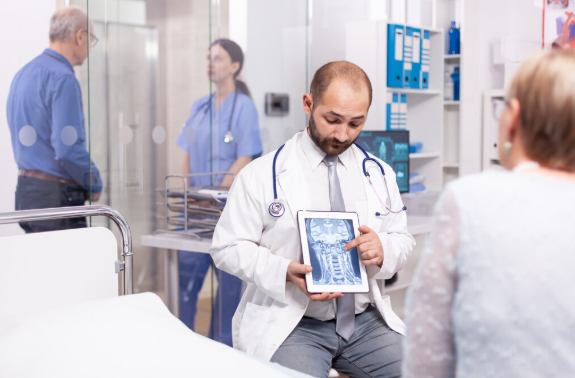
In today’s day and age, healthcare systems globally are facing mounting challenges to enhance patient quality of care, lower operational expenses, and offer more patient-centric services. Hospital infrastructure is often disjointed, slow to respond and inefficiently manages resources. That’s where digital innovation is starting to change the health care experience in a positive way.
Now, healthcare centers of the modern era are implementing technologies to build more responsive and safe facilities for patients and doctors. From real-time monitoring systems to predictive maintenance and AI-powered workflows, smart hospital solutions are becoming a critical part of the healthcare transformation journey.
Shift Towards Intelligent Healthcare Environments
A lot of data is generated in hospitals every day. From patient records to medical imaging, device readings to inventory management, and staff coordination, it’s a complex operational setting. If no intelligent systems are implemented, it can be hard to effectively manage this information.
Healthcare providers can streamline these processes with smart hospital solutions, such as connected devices, cloud platforms, and automation solutions and tools. For instance, the IoT sensors can provide real-time monitoring of patient vitals and send warnings to medical staff in case of any irregularity.
Smart systems also enhance hospital efficiency at the operational level. The automatic asset tracking system enables workers to easily find important medical equipment during emergencies, minimizing delays.
Enhancing Patient Care with Real-Time Connectivity
One of the biggest benefits of technology is its ability to offer real-time patient monitoring. Healthcare professionals can monitor patient health remotely, eliminating the need for frequent manual checks, thanks to wearable devices and smart bedside systems.
This has several advantages:
- Improved identification of health complications.
- Less strain on nursing staff.
- Improved patient safety and comfort.
- More accurate data collection.
In intensive care and post-surgical wards, continuous monitoring can have an impact on patient outcomes. Healthcare teams have access to real-time health data and can make faster, data-driven decisions.
Enhancing Operational Efficiency
In addition to the task of looking after patients, healthcare organizations are faced with the challenge of staffing shortages, escalating costs, and growing patient numbers. Smart automation can assist in overcoming these difficulties by automating repetitive administrative tasks.
AI-driven scheduling tools can make scheduling more efficient by identifying the best staff-to-patient ratios in terms of patient need. Predictive analytics can be used to pinpoint equipment maintenance requirements before failure happens, minimizing downtime of critical medical equipment.
Amidst all this digital transition, companies such as Sutherland are providing support for healthcare organizations to incorporate intelligent technologies that help achieve clinical and operational goals.
Data Security and Compliance are a Must
With healthcare facilities becoming increasingly interconnected, cybersecurity and patient data protection continue to be critical issues. To ensure the secure transfer of data, proper access controls, and adherence to healthcare regulations, smart systems must be designed with secure data encryption, controlled access protocols, and compliance with healthcare regulations.
Sensitive patient details cannot be left vulnerable in hospitals with digital systems. Team members should be trained regularly, and the system should be updated as needed, so as to ensure the successful implementation of the smart hospital solution.