


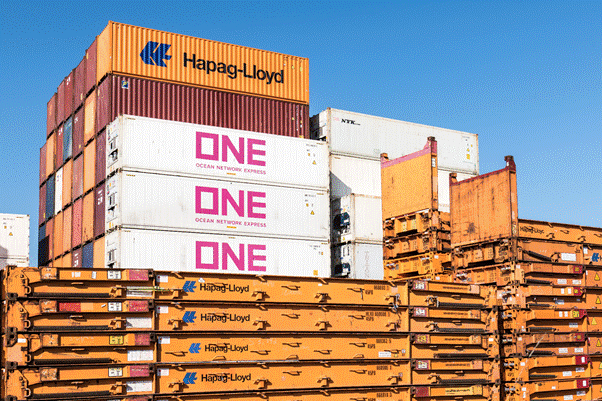
A flat rack container is built for freight that does not fit inside a standard enclosed box. Its open sides, open top, end walls, lashing points, and strong deck make it useful for oversized, heavy, or irregular cargo.
Why Flat Rack Cargo Is Different
A flat rack has no side walls and no roof, giving cargo crews open access from the top and both sides. For shippers comparing container options, flat rack containers provide a long open deck for machinery, steel pipes, timber, vehicles, and construction equipment that exceeds standard container door limits.
Many 40-foot flat racks have internal lengths close to 39 feet, with payload ratings around 39 to 49 metric tons depending on carrier specification and unit design. The CSC plate, owner data, tare weight, and maximum gross weight define the exact working limits for the individual unit.
Cargo Types That Fit the Format
The best cargo for a flat rack has size, shape, or loading needs that match an open platform. Weight distribution, forklift access, crane loading, end-wall clearance, and lashing-point layout all affect planning before the unit reaches a terminal, yard, or job site.
Heavy Machinery
Machinery fits well on a flat rack when height, width, or attachment points block enclosed-container loading. Industrial compressors, generators, presses, pumps, and large production equipment need a deck that allows crane placement and side access. Open sides give rigging crews more space to position the load.
Weight placement matters because machinery often has a compact center of gravity. A heavy base set too far toward one end creates stress on the frame and transport equipment. Planning documents need machine dimensions, center-of-gravity marks, lifting points, and securing locations.
Steel Pipes
Steel pipes fit the flat rack format because long cylindrical cargo stacks neatly and loads from the side. Bundles of pipe, beams, profiles, and fabricated steel sections benefit from forklift access along the length. End walls help define the load boundary without blocking side handling.
Pipe cargo also needs protection from shifting. Dunnage, separators, banding, and approved securing points help keep round freight stable during movement. Transport plans need bundle count, outside diameter, total weight, and overhang dimensions.
Timber
Timber works well on a flat rack when boards, beams, poles, or engineered lumber exceed ordinary container handling limits. The long deck supports bundled packs, while forklift access from the sides speeds yard handling. Open loading also helps with uneven timber lengths.
Moisture and movement matter for wood cargo. Timber bundles need secure banding, proper spacing, and weight spread across the deck. Wet lumber adds mass, so the declared weight needs to reflect real shipment conditions rather than catalog dimensions.
Vehicles and Equipment
Vehicles and construction equipment fit flat racks when standard doors are too narrow or when tracks, tires, buckets, arms, or frames create an awkward outline. Examples include tractors, loaders, excavator parts, farm equipment, utility vehicles, and specialty trucks. The open format gives room for loading equipment and lashing access.
Transport planning for vehicles and equipment relies on measurements that go beyond length and width:
- Ground clearance affects ramp choice and loading angle.
- Tire or track width decides deck contact points.
- Attachment position changes total height and overhang.
- Fluid status affects handling rules and weight documentation.
- Lashing locations need confirmation before the unit moves.
Some vehicles need partial disassembly to fit carrier limits. Mirrors, attachments, buckets, or protective frames sometimes change the loaded outline more than the chassis itself. Accurate diagrams reduce surprises during yard handling and vessel planning.
The table below shows how several cargo groups use different loading methods and gain specific advantages from the flat rack shape.
| Cargo type | Loading method | Flat rack advantage |
| Steel pipes | Side loading with forklift or crane | Open sides support long-bundled freight |
| Heavy machinery | Crane loading from above | Open top gives rigging access |
| Timber bundles | Forklift loading from both sides | Long deck supports stacked packs |
| Vehicles | Driven or winched loading with ramps | End structure supports secure lashing points |
Planning Details Before Loading
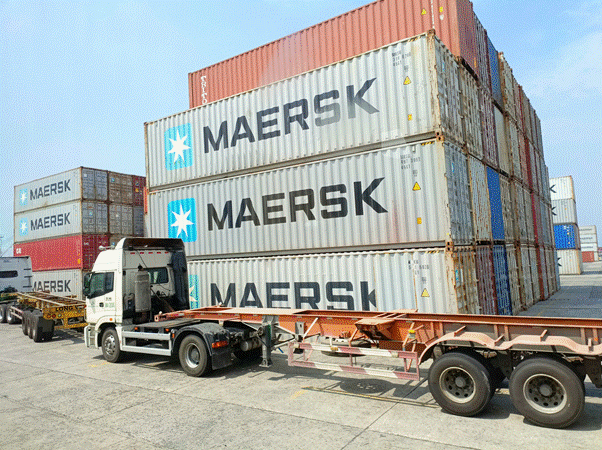
Flat rack cargo needs accurate measurements before it reaches the yard. The load plan should show total length, width, height, gross weight, center of gravity, lifting points, lashing points, and any overhang. Those details help match the cargo with the correct equipment and handling method.
Several planning checks reduce confusion before transport begins:
- Confirm whether cargo width or height exceeds standard container limits.
- Record the exact weight of attachments, packaging, skids, and lifting frames.
- Check whether cargo blocks access to built-in lashing points.
- Prepare recent photos that show all sides, lifting marks, and base contact areas.
- Separate removable parts in the cargo plan so handling teams know what travels attached.
Matching Cargo to the Container
A flat rack is strongest when the cargo requires open access, secure lashing, and a long heavy-duty deck. It is a transport platform for freight that needs crane reach, forklift clearance, and careful load planning.
A clear plan protects time and cost. The cargo description needs exact measurements, real weight, loading method, lifting points, photos, and any over-height or over-width details. When those basics match the flat rack’s structure, the shipment starts with fewer surprises and a better fit between freight and equipment.