


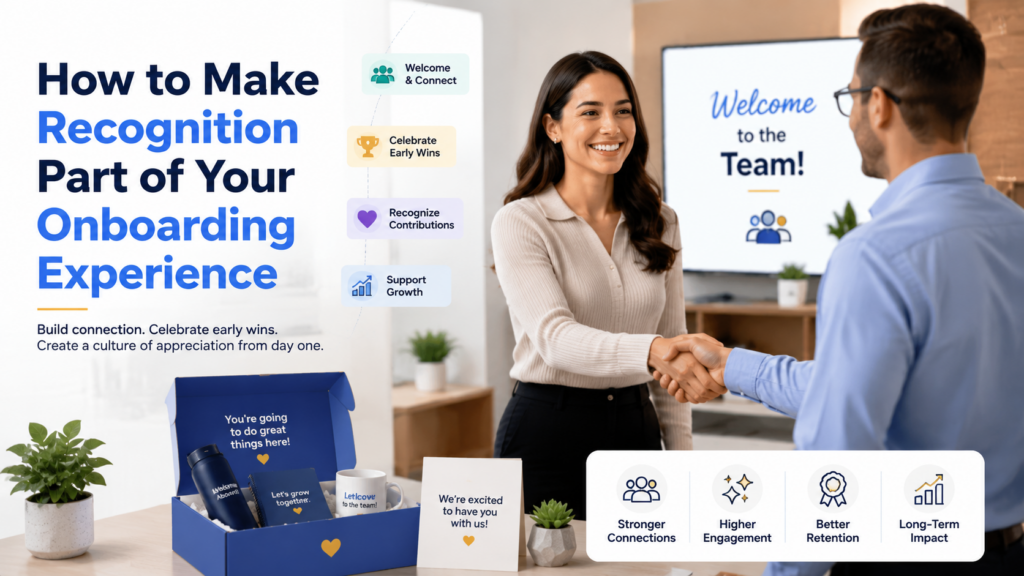
The first few weeks at a new job shape how employees perceive your organization. While onboarding often focuses on paperwork, policies, and training, one critical element is frequently overlooked: employee recognition.
When new hires feel appreciated from the beginning, they become more engaged, adopt your culture faster, and are less likely to leave within their first few months. Building recognition into onboarding isn’t about grand gestures; it’s about consistently showing employees that their contributions matter.
This blog explains exactly how to make recognition part of your onboarding experience with practical strategies you can implement throughout the first 90 days.
| Quick Answer: How Do You Make Recognition Part of Your Onboarding Experience?The best way to make recognition part of your onboarding experience is to embed appreciation into every stage of the first 90 days. Welcome employees before Day One, celebrate onboarding milestones, encourage peer recognition, acknowledge early contributions, and continue recognizing growth through structured milestone celebrations. Consistent recognition builds confidence, strengthens belonging, and improves long-term retention. |
Why Recognition Should Start Before an Employee’s First Day
Many companies believe onboarding starts when employees walk through the door.
In reality, onboarding begins the moment a candidate accepts your offer.
That period between acceptance and the first working day is an opportunity to reinforce that they made the right decision.
Early recognition helps:
- Reduce first-day anxiety
- Increase excitement about joining
- Build trust before work begins
- Reinforce your employer brand
- Create an immediate sense of belonging
Employees who feel valued before they start are more likely to remain engaged throughout their onboarding journey, especially when supported by the best employee recognition platform. By making recognition consistent and easy to deliver, organizations can create a more engaging onboarding experience while strengthening long-term employee retention.
The Business Impact of Recognition During Onboarding
Recognition isn’t simply a cultural initiative; it directly influences business outcomes.
According to research from O.C. Tanner, organizations that integrate recognition into the onboarding experience see measurable improvements across engagement and retention.
| Metric | Estimated Impact |
| Early employee attrition | Up to 50% lower |
| Employee engagement | Up to 487% higher |
| Workplace inclusion | Up to 615% higher |
These improvements occur because recognition removes uncertainty while reinforcing positive behaviors from the very beginning.
A 90-Day Framework for Building Recognition Into Onboarding
Rather than treating appreciation as a one-time welcome message, successful organizations spread recognition across three phases.
Phase 1: Pre-Boarding and Day One — Create an Immediate Sense of Belonging
First impressions matter.
Employees should feel appreciated before they even log in to their first meeting or enter the office.
Send a Personalized Welcome Message
Avoid generic automated emails.
Instead, send a short message from the hiring manager welcoming the employee, highlighting why they’re excited to have them join the team.
Deliver a Welcome Kit
Whether employees work remotely or onsite, a thoughtful welcome package creates an immediate positive experience.
Include items like:
- Company merchandise
- Personalized welcome note
- Branded notebook
- Essential equipment
Small gestures communicate that you’ve invested in their success.
Introduce Them Publicly
Announce new hires across platforms like Slack, Microsoft Teams, or internal newsletters.
Instead of simply sharing their job title, include:
- Previous experience
- Interesting background
- Personal interests
- Unique strengths they’ll bring to the team
This makes introductions more meaningful and encourages conversations.
Schedule Key Introductions
Don’t leave networking to chance.
Arrange meetings with:
- Direct manager
- Team members
- Cross-functional partners
- Assigned onboarding buddy
Giving employees dedicated time with colleagues demonstrates they’re an important addition to the organization.
Phase 2: First 30 Days — Make Recognition Interactive
During the first month, employees begin contributing while learning how the business operates.
Recognition should evolve from welcoming employees to reinforcing progress.
Celebrate Learning Milestones
Completing onboarding tasks deserves recognition.
Celebrate achievements like:
- Compliance training completion
- Product certifications
- First customer interaction
- First completed project
Simple digital badges, certificates, or public acknowledgements reinforce progress.
Introduce Recognition Software Early
If your organization uses an employee recognition platform, activate it immediately.
Consider providing new hires with starter recognition points so they can:
- Explore the platform
- Recognize colleagues
- Experience appreciation firsthand
This helps recognition become part of everyday work rather than a manager-only activity.
Encourage Peer-to-Peer Recognition
Recognition becomes more authentic when it comes from teammates.
Provide new employees with opportunities to thank colleagues who helped them during onboarding.
This naturally encourages relationship-building while strengthening your appreciation culture.
Recognize Early Contributions
Don’t wait for quarterly reviews.
Celebrate small but meaningful achievements, including:
- Solving a customer issue
- Presenting an idea
- Completing an assignment
- Supporting teammates
Be specific.
Instead of saying:
“Great job.”
Say:
“Your detailed documentation helped the entire team complete implementation faster. Thank you for taking ownership.”
Specific recognition reinforces desired behaviors far better than generic praise.
Phase 3: Days 30–90 — Recognize Growth, Not Just Performance
By this stage, employees are contributing independently while adapting to your culture.
Recognition should now focus on long-term engagement.
Celebrate 30-, 60-, and 90-Day Milestones
Don’t reserve celebrations for annual work anniversaries.
Recognize important early milestones with:
- Team shout-outs
- Manager appreciation messages
- Small rewards
- Informal team lunches
These moments reassure employees they’re progressing successfully.
Recognize Company Values in Action
Whenever new hires demonstrate organizational values, acknowledge them immediately.
Examples include:
- Collaboration
- Innovation
- Customer focus
- Continuous learning
Connecting recognition to company values strengthens culture through everyday behavior.
Encourage Reflection
Recognition isn’t only something managers give.
During regular check-ins, ask employees:
- What achievement are you most proud of?
- What have you learned recently?
- Who helped you succeed?
- What accomplishment surprised you?
These conversations build confidence while encouraging ownership of personal growth.
Invest in Career Development
One of the strongest forms of recognition is demonstrating belief in someone’s future.
Early development opportunities may include:
- Professional training
- Certifications
- Stretch assignments
- Career planning discussions
Employees who see investment in their growth are more likely to remain committed long term.
Practical Recognition Ideas You Can Implement Immediately
| Onboarding Stage | Recognition Idea |
| Offer acceptance | Personalized welcome email |
| Before Day One | Company welcome package |
| Day One | Team introduction on Slack or Teams |
| Week One | Buddy program recognition |
| Week Two | Celebrate the first completed task |
| Month One | Public milestone recognition |
| Month Two | Values-based recognition |
| Month Three | Career development discussion |
Common Mistakes That Reduce the Impact of Employee Recognition
Even organizations with strong onboarding programs sometimes miss opportunities because recognition feels inconsistent or impersonal.
Avoid these common mistakes:
- Waiting until performance reviews to recognize achievements
- Giving generic praise without specific examples
- Recognizing only top performers
- Overlooking remote employees
- Treating recognition as solely HR’s responsibility
- Celebrating outcomes while ignoring effort and learning
Recognition is most effective when it’s timely, authentic, and connected to meaningful actions.
How Recognition Software Supports Better Onboarding
As organizations grow, manual recognition becomes difficult to maintain consistently.
Modern employee recognition software helps standardize appreciation across teams by enabling organizations to:
- Automate onboarding milestone celebrations
- Enable peer-to-peer recognition
- Reward positive behaviors
- Connect recognition to company values
- Track participation and engagement
- Ensure consistent employee experiences across remote and hybrid teams
Technology doesn’t replace authentic appreciation; it helps organizations deliver it consistently at scale.
Final Thoughts
Building recognition into your onboarding experience isn’t about adding another HR initiative; it’s about shaping how employees feel from the moment they join your organization.
When appreciation becomes part of every stage of the first 90 days, employees gain confidence, connect with colleagues faster, and develop stronger loyalty to the company.
Whether through personalized welcome messages, celebrating early wins, peer recognition, or dedicated employee recognition software, consistent appreciation creates an onboarding experience that employees remember long after their first day.
Frequently Asked Questions
When should employee recognition begin?
Recognition should begin immediately after a candidate accepts the job offer. Early appreciation creates excitement, reduces uncertainty, and strengthens commitment before Day One.
Why is recognition important during onboarding?
Recognition increases employee engagement, reinforces desired behaviors, improves belonging, and helps reduce early turnover during the critical first 90 days.
What are examples of onboarding recognition?
Examples include welcome kits, personalized messages, public introductions, celebrating training milestones, peer-to-peer recognition, milestone rewards, and recognizing company values.