


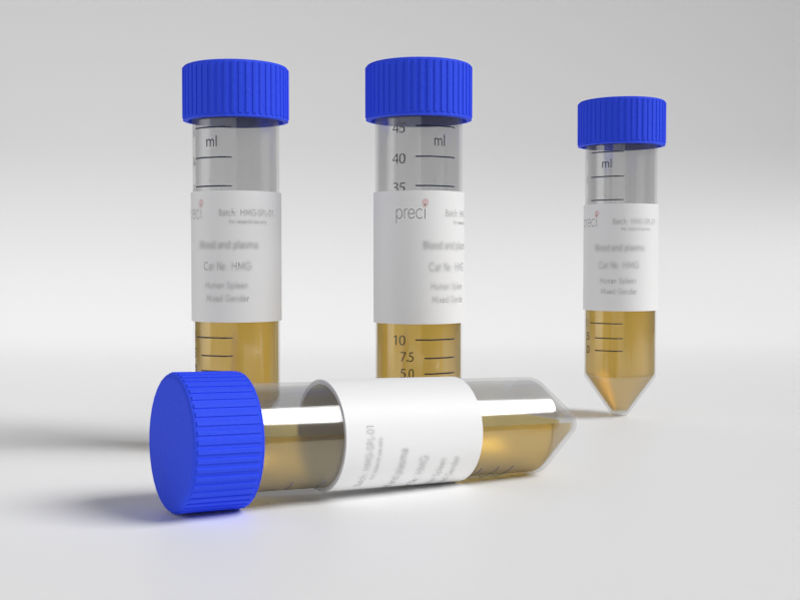
Lipemic plasma is a sample condition in which excess triglycerides make the sample cloudy and visually opaque, significantly complicating subsequent laboratory analysis. Therefore, reliable analysis of lipemic plasma depends on the quality and characterization of the source biomaterial.
Since 2020, Preci has been building a network of clinical sites to supply primary human cells and biospecimens for ADMET, oncology, immunology, and metabolic disease research. This approach helps researchers access well-characterized biospecimens that support more consistent experimental workflows.
Causes of Lipemia in Samples
Lipemia occurs due to elevated levels of lipoproteins, most commonly chylomicrons and VLDL, circulating in the blood plasma. This may be due to recent food intake, metabolic disorders, or genetic variations affecting lipid metabolism in experimental models.
In the case of research labs, it is important to understand the source of lipemia when interpreting data from preclinical studies.
How Lipemia Affects Test Results
Lipemic plasma can cause systematic measurement errors by interfering with spectrophotometric and some immunoassay-based methods. Increased light scattering is one of the primary mechanisms underlying this interference. Colorimetric and turbidimetric assays, often used in cancer and autoimmune model studies, are particularly sensitive to this effect.
The following are typical consequences that laboratories encounter when working with such samples:
- distortion of enzyme activity values;
- false protein concentration values;
- decreased accuracy of immunoassays;
- interference in spectrophotometric measurements;
- errors in metabolic marker assessment;
- difficult visual sample evaluation;
- need for repeated blood draws.
Recognizing these risks, research teams are increasingly implementing standardized protocols for preanalytical sample processing. This approach reduces the data variability and increases the reproducibility of results across experiments.
Practical Approaches to Working with Lipemic Plasma
Modern research systems use ultracentrifugation, specialized clarifying reagents, or other sample-preparation techniques to minimize the effects of lipemia. Many laboratories incorporate these approaches into standardized sample-processing workflows. These approaches help improve data consistency while reducing sample loss.
Lipemic plasma remains a significant preanalytical factor that can affect the reliability of laboratory data across a wide range of research areas. Knowing what it is and using the right sample-preparation techniques early in the process enables investigators to obtain accurate and reproducible results.
Such sample quality control is becoming part of the scientific methodology for teams working with complex disease models.