


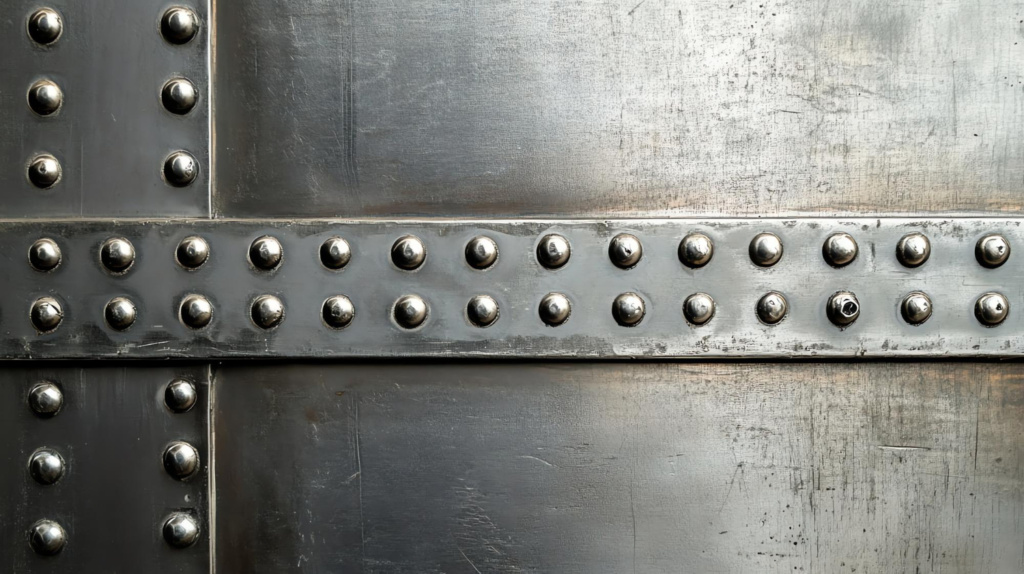
Heavy construction demands connections that carry substantial force, withstand vibration, and remain secure through years of service. Fasteners must suit different materials, site conditions, and fabrication methods without creating unnecessary maintenance concerns. Steel rivets continue to perform across structural frames, industrial machinery, transport equipment, and exterior panels. Their load capacity, finish options, head profiles, and dependable installation make them a practical choice for demanding assemblies. Five characteristics explain their continued use in serious construction projects.
1. High Shear Strength Supports Loaded Joints
Project engineers assess load direction, plate thickness, hole size, and expected movement before choosing a fastener. In many assemblies, steel rivets provide dependable resistance against sideways forces created by machinery, wind, traffic, or shifting weight. Their solid shanks occupy the prepared holes and transfer loads across connected plates. This arrangement limits local stress and helps maintain joint alignment during repeated service.
2. Steel Rivets Deliver Reliable Tensile Performance
A structural connection may also face pulling forces that try to separate joined components. Steel rivets resist stretching through their dense, continuous bodies. Once set, the formed tail creates a second bearing surface that holds materials together. That mechanical engagement suits equipment housings, brackets, vehicle panels, and industrial frames.
Material condition matters during fabrication. Annealed stock is easier to form, while harder grades can provide greater resistance after installation. Selection should reflect plate thickness, required strength, tooling, and anticipated stress. Careful specification prevents a mismatch between installation needs and service demands.
3. Solid Construction Handles Vibration
Repeated vibration can loosen threaded hardware, enlarge holes, and create small movements between connected surfaces. A correctly installed solid rivet creates a permanent mechanical joint without depending solely on thread tension. The expanded tail fills the rear side of the hole and helps resist shifting.
This behavior benefits machinery guards, mounting brackets, vehicle bodies, and industrial panels. Inspection remains necessary, especially near rotating equipment or impact zones. Still, accurate setting can reduce fretting, rattling, and movement-related damage during extended operation.
4. Several Finishes Address Exposure Risks
Moisture, salt, chemicals, and temperature changes can accelerate corrosion in exposed assemblies. Steel rivets may receive zinc plating, black oxide, or another suitable surface treatment. Each finish provides a different level of protection and should match the surrounding conditions.
An indoor machine enclosure may need a different specification from an outdoor frame exposed to rain and road spray. Engineers should also consider contact with dissimilar metals, because galvanic action can damage the joint. Appropriate coating and material choices help preserve surface integrity over time.
5. Head Styles Improve Joint Fit
Head geometry affects clearance, load contact, installation access, and final appearance. Common profiles include pan, round, universal, and countersunk heads. A countersunk head sits flush with the surface, which helps where airflow, movement, or smooth finishing matters.
Universal and round profiles provide broad contact across conventional joints. The correct shape prevents interference with nearby parts and distributes pressure across the connected material. Fit should be checked before production begins, particularly in thin panels or assemblies with limited access.
Material Selection Must Match the Assembly
Choosing a strong fastener is only one part of sound joint design. Engineers should review sheet thickness, hole diameter, grip length, load direction, operating temperature, and the adjacent metal. A steel rivet may suit a structural frame but create problems against a softer alloy if crushing or galvanic corrosion develops.
Clear specifications help purchasing teams avoid substitutions that change joint behavior. They also give installers consistent guidance for sizing, finish, and material condition. Documentation becomes especially valuable when several crews work on one construction program.
Installation Quality Protects Performance
Fastener quality cannot compensate for poor preparation. Holes should align accurately, surfaces must sit tightly together, and the shank needs enough length for proper tail formation. An undersized part may fail to fill the hole, while excessive length can distort the rear surface.
Suitable tools, controlled force, and trained operators produce more consistent results. Inspection should examine head formation, plate contact, hole condition, and visible cracking before service begins. These checks are simple, yet they can prevent costly rework.
Lifecycle Value Supports Practical Planning
A connection method earns its place through service performance and practical upkeep. Steel rivets are available in many dimensions, head profiles, and finishes, which helps standardize repairs and new fabrication. Common sizes can simplify inventory control and replacement planning.
Custom production remains useful for unusual thicknesses, restricted clearances, or demanding geometry. This range allows maintenance teams to address varied assemblies without changing connection methods unnecessarily. Long-term planning also benefits from predictable sourcing and familiar installation procedures.
Conclusion
Steel rivets remain valuable in heavy construction because they combine high shear capacity, tensile resistance, vibration tolerance, surface protection, and adaptable head designs. Their performance depends on correct sizing, suitable material condition, compatible finishes, and accurate installation. Engineers who evaluate these factors can protect both the fastener and the surrounding joint. Across structural frames, machinery, vehicles, and industrial panels, this established connection method delivers dependable service with practical maintenance requirements.