


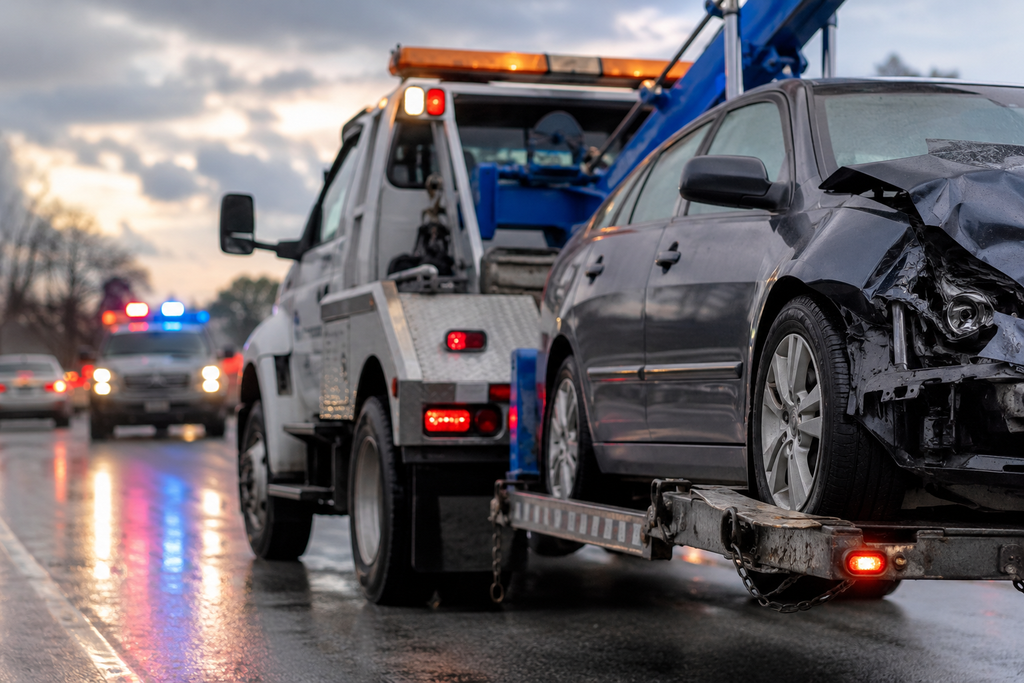
A collision involving a tow truck can be more complicated than an ordinary car accident. The truck may be carrying another vehicle, operating on the shoulder, responding to an earlier crash, or working in an area where traffic is already disrupted. That creates several possible sources of responsibility, including the tow operator, towing company, another motorist, a maintenance provider, or another party connected to the incident. For an injured person, the immediate concerns are usually straightforward: getting medical treatment, repairing or replacing the vehicle, dealing with insurance, and understanding who should pay for the resulting losses. The legal side can become much less straightforward when multiple vehicles, commercial insurance policies, roadside work, and competing accounts of fault are involved.
Why Tow Truck Crashes Can Become Complicated Injury Claims
Tow trucks perform a necessary roadside function, but their work often takes place in unusually difficult traffic conditions. A driver may have to position a large vehicle near moving traffic, attach a disabled automobile, operate a winch or wheel lift, and leave the scene while other motorists are approaching. The circumstances surrounding the crash therefore matter. A collision could occur while the tow truck is traveling normally, while it is stopped on the shoulder, while loading a damaged vehicle, while pulling another vehicle into traffic, or while leaving an accident scene.
The presence of a towed vehicle can introduce another layer of investigation. Attorneys may need to determine whether the vehicle was attached correctly, whether the equipment was appropriate for the vehicle being moved, and whether the towing operation complied with applicable safety requirements. The Federal Highway Administration specifically emphasizes the importance of using appropriate towing equipment and qualified recovery specialists when handling disabled or damaged vehicles.
Common Causes Behind Tow Truck Collisions
The cause of a tow truck crash is rarely established simply by looking at the vehicles after the collision. Evidence from the roadway, vehicles, witnesses, dispatch records, and available video can provide a much clearer picture.
Common contributing factors include:
- Distracted or inattentive driving.
- Excessive or unsafe speed for roadway conditions.
- Improper lane changes or turning maneuvers.
- Fatigue or inadequate driver training.
- Improperly secured vehicles or equipment.
- Mechanical defects or inadequate maintenance.
- Unsafe roadside positioning.
- Failure to use appropriate warning lights or traffic-control measures.
- Another motorist failing to slow down or move over.
- Poor visibility, weather, roadway design, or traffic congestion.
Maintenance deserves particular attention in serious cases. A brake problem, tire defect, lighting failure, steering issue, or equipment malfunction may shift the investigation away from driver conduct and toward the company responsible for inspection and repairs. The important point is that fault should be established through evidence rather than assumptions.
Who May Be Responsible for a Tow Truck Accident
Determining liability requires looking beyond the person sitting behind the wheel. Depending on the circumstances, several parties could potentially share responsibility. A tow truck driver may be liable when careless driving, unsafe maneuvering, distraction, speeding, or another negligent act caused the collision. The towing company may also face liability if it failed to properly train or supervise the operator, ignored maintenance problems, assigned unsuitable equipment, or allowed unsafe practices to continue. A maintenance or repair company could become relevant when defective repairs or overlooked mechanical problems contributed to the crash.
Another driver may be responsible if that motorist struck a tow truck while speeding, driving distracted, or failing to follow applicable move-over requirements. NHTSA reports that all 50 states have Move Over laws, although the precise requirements differ by jurisdiction. Drivers approaching vehicles with flashing lights are generally required to move over when safe or slow down when changing lanes is not possible. This means a tow truck accident investigation should examine the conduct of every relevant road user rather than automatically assigning blame to the towing company.
How a Tow Truck Accident Lawyer Builds the Case
When injuries are serious or liability is disputed, a Tow truck accident lawyer can investigate the collision from both the legal and technical perspectives.
A strong investigation may examine:
- Police reports and citations.
- Photographs and video from the crash scene.
- Dashcam, surveillance, and traffic-camera footage.
- Witness statements.
- Tow dispatch records.
- Driver qualifications and training records.
- Vehicle inspection and maintenance records.
- Towing equipment and attachment methods.
- Electronic or onboard vehicle data when available.
- Commercial insurance policies.
- Medical records and treatment documentation.
- Evidence of lost income and reduced earning capacity.
The goal is not simply to show that an accident happened. The case must connect the negligent conduct to the injuries and financial losses being claimed. For example, suppose a tow truck is stopped on the shoulder while assisting a disabled vehicle. Another driver strikes the truck from behind. At first glance, the approaching motorist may appear responsible.
Evidence Can Make or Break a Tow Truck Injury Claim
Evidence can disappear quickly after a collision. Vehicles are repaired, damaged equipment is replaced, surveillance footage may be overwritten, and witnesses can become difficult to locate. A claimant should preserve whatever information can be obtained safely and lawfully. Important evidence can include the location of the tow truck, position of the disabled vehicle, lane markings, warning lights, road conditions, traffic signs, visible damage, and nearby cameras.
Medical documentation is equally important. A medical record can establish when an injury was identified, what treatment was recommended, and how the condition affects daily activities and work. The investigation may also require records that an injured person cannot obtain independently, particularly company maintenance documents, dispatch information, employee records, insurance coverage, or specialized vehicle data. That is one reason early legal investigation can matter in a disputed commercial vehicle claim.
Insurance Coverage May Involve More Than One Policy
Insurance is another reason these claims can become complicated. A commercial towing operation may carry coverage specifically designed for its business activities. Depending on the circumstances, a claim could potentially involve commercial auto liability coverage, coverage connected to the vehicle being towed, or additional policies maintained by the company. The available coverage depends heavily on the facts and the applicable state law. It is also important to distinguish between the policy limit and the actual value of a claim.
A policy may have a stated limit, but determining what insurance applies can require examining the relationship between the driver, towing company, vehicle owner, and other involved businesses. Some states impose specific insurance requirements on towing operations. Those requirements are not uniform nationwide, so an attorney should review the rules applicable to the location and type of towing service involved.
Compensation May Cover More Than Vehicle Repairs
A serious tow truck collision can create financial consequences that continue long after the damaged vehicles leave the scene. Depending on the applicable law and circumstances, recoverable losses may include medical expenses, future medical treatment, lost wages, diminished earning capacity, property damage, and compensation for pain and suffering.
Severe injuries may also result in rehabilitation costs, mobility limitations, changes to employment, or long-term assistance needs. Property damage can be significant as well. A heavy commercial tow vehicle can cause extensive damage to a passenger vehicle, while a vehicle being transported can create additional property-loss questions. The value of a claim should therefore be assessed based on the complete impact of the accident rather than the initial repair estimate.
What to Do After a Tow Truck Collision
The first priority after any serious crash is safety and medical care. Once immediate danger has been addressed, preserving useful information can help protect the claim.
Consider these practical steps:
- Report the accident to the appropriate authorities.
- Seek medical attention for injuries, including symptoms that appear after the collision.
- Photograph the vehicles, roadway, tow equipment, signs, and surrounding area when it is safe.
- Collect contact information from witnesses.
- Keep medical bills, treatment records, repair estimates, and employment-loss documentation.
- Avoid guessing about fault when speaking with insurers or other parties.
- Keep copies of correspondence and claim-related documents.
- Speak with a qualified attorney when injuries are substantial or liability is disputed.
Do not put yourself in danger to collect photographs or evidence. Roadside tow operations can expose motorists and responders to moving traffic, and safety should come first.
Special Risks Around Roadside Tow Operations
A tow truck working at an accident scene is operating in an environment where traffic patterns may already be abnormal. Drivers may be distracted by emergency vehicles, blocked lanes, debris, damaged cars, or congestion. FHWA describes traffic incident management as a coordinated effort involving law enforcement, emergency medical services, transportation agencies, and towing and recovery providers.
That environment creates an important legal distinction. A tow truck being present at a dangerous location does not automatically mean the operator caused the accident. The investigation should ask what each party was doing, what warnings were visible, where each vehicle was positioned, how fast traffic was moving, and whether reasonable safety precautions were followed.
CDL and Commercial Driver Requirements Can Matter
Driver qualification can become relevant in certain cases. FMCSA explains that, for CDL purposes, a tow truck and the vehicle it is towing can be treated under the same general commercial vehicle framework used for powered units towing non-powered units. Depending on the applicable weight ratings and towing configuration, different CDL classes may be required.
A licensing issue does not automatically establish negligence or liability. However, if the driver’s qualifications relate directly to the circumstances of the collision, the information may become part of the broader investigation. This illustrates why commercial vehicle claims often require more than a basic review of the police report.
When Professional Legal Help Becomes Especially Important
Not every minor collision requires extensive litigation. However, legal representation can become particularly valuable when injuries are serious, fault is disputed, multiple parties are involved, or the insurance company questions the claim. A lawyer can help identify potential defendants, preserve evidence, evaluate insurance coverage, calculate damages, communicate with insurers, and determine whether settlement or litigation is appropriate.
Competitor legal resources commonly emphasize these same investigation issues, particularly improper loading, maintenance failures, roadside hazards, insurance disputes, and identifying every potentially responsible party. The stronger approach is to treat the crash as an evidence problem rather than simply an insurance negotiation.
Conclusion
A tow truck collision can involve much more than two damaged vehicles. The driver, towing company, maintenance providers, other motorists, insurance carriers, roadway conditions, and towing equipment may all become relevant to determining what happened and who should be responsible. The most valuable evidence is often created or preserved early. Medical records, photographs, witness accounts, vehicle information, maintenance records, dispatch data, and insurance documents can help establish how the collision occurred and how seriously it affected the injured person. If the crash caused significant injuries or the insurance company disputes responsibility, professional legal guidance can help clarify the available options and protect the claim. The right approach is based on the specific facts, applicable state law, and evidence available in the case.