


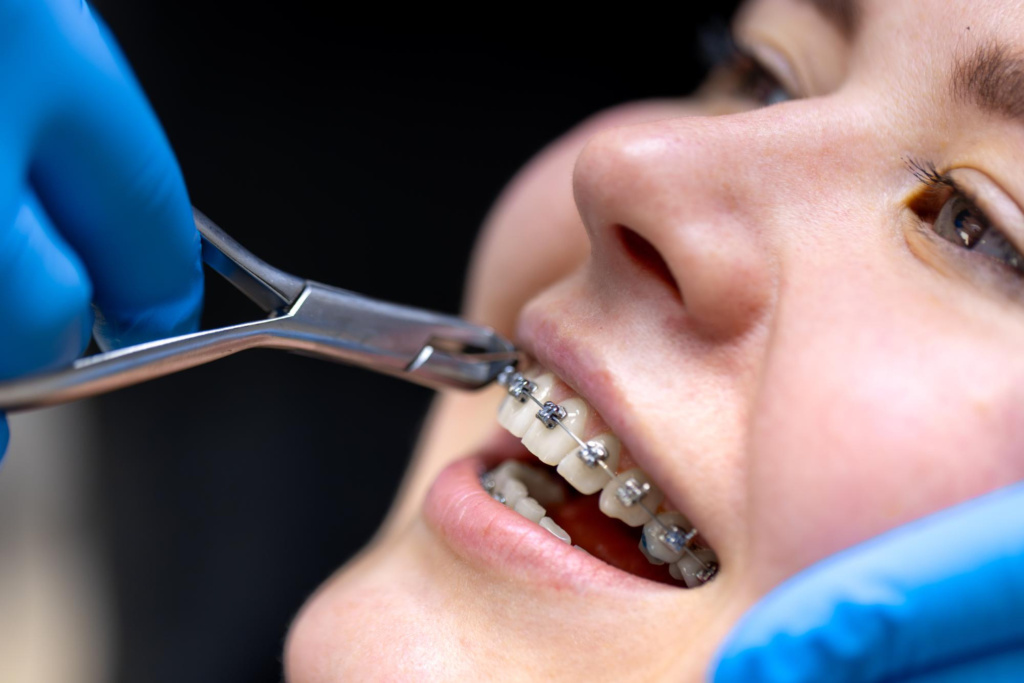
Nine days in, my friend bit into a bagel and heard a small metallic ping against her front tooth. One broken bracket, one emergency trip across town, and one very awkward explanation at the front desk. Nobody warned her that a plain bagel, no seeds, no crust drama, could do that kind of damage.
The first month with braces is the fragile stretch. Your teeth are loosening in their sockets, your cheeks are still learning to live with metal, and every bracket has only just been bonded. This is when food does the most harm and when diet adjustments pay off the fastest. Below you’ll find the foods worth skipping right now, plus the swaps that keep you fed without costing you a repair appointment.
Why Month One Is the Tender Stretch
Days three through ten are usually the worst. Your periodontal ligament, the cushion of tissue holding each tooth in place, is under constant light pressure, and that pressure is exactly what moves teeth. It also makes everything feel bruised.
Add freshly bonded brackets into the mix, and you get hardware that is stuck tight but still surrounded by gums that are puffy and sensitive. Biting down hard on something crunchy can shear a bracket straight off. Chewing something sticky can pull a wire out of its slot and send it poking into your cheek.
Orthodontic treatment across the board rests on the same foundation: controlling the forces on your teeth while the surrounding bone remodels. If you want the broad picture of how that process works, the American Dental Association publishes patient-facing material on oral health and orthodontic care that explains the mechanics without the sales pitch.
Here’s my honest take after watching several people go through this: babies the first month, and the rest of treatment gets noticeably easier. Your mouth adapts. Your chewing technique changes without you noticing. But those first four weeks set the tone for everything after.
Crunchy Foods That Pop Brackets
Crunch is the number one enemy of new braces. It is not the food itself that breaks things; it is the sharp, sudden force when your teeth meet something hard, and your jaw clenches at the same time.
The usual suspects:
- Whole raw carrots and celery sticks, unless you cut them into thin matchsticks first
- Hard pretzels, which are basically compressed salt bricks
- Popcorn, especially the unpopped kernels lurking at the bottom of the bowl
- Corn chips, tortilla chips, and anything with a sharp edge
- Whole apples and pears, which force you to bite down with your front teeth
- Ice, which is the single most common cause of bracket failure that I have seen people admit to
Notice the pattern? Most of these are fine in a different form. Shred the carrot. Cut the apple into wedges and chew with your back teeth. Switch to softer crackers for a few weeks.
You are not giving up these foods forever. You are giving your brackets a month to settle. Skip the ice entirely, though; that one has no softer version.
Sticky Foods That Yank Wires and Bend Archwires
Sticky is sneakier than crunchy. You bite into something chewy, it grabs the bracket, and your jaw pulls it in a direction the wire was never meant to go. Sometimes you feel it. Sometimes you don’t notice until the wire starts poking your cheek a day later.
The worst offenders during the first month:
- Taffy and saltwater taffy
- Caramel, especially the kind in candy bars
- Gummy bears, gummy worms, and fruit snacks marketed to kids
- Dried fruit like raisins, apricots, and mango strips, which are sticky once rehydrated by saliva
- Bubble gum, regular or sugar-free
- Marshmallows, oddly enough, because they compress and then cling
Here’s a swap that surprises people: freeze grapes and eat them instead of gummy candy. Cold, sweet, and they dissolve rather than stick. Soft fruit leather cut into small pieces works too, as long as you tear it rather than bite through it.
If you live in a house with kids in braces, this is the section to post on the fridge. Kids grab the easiest snack within reach, and fruit snacks are always within reach.
Hard and Sharp Foods That Catch You Off Guard
This category is where people get blindsided. These foods do not feel dangerous. They feel ordinary, which is exactly the problem.
Pizza crust is a classic. So are bagels, which is how my friend ended up in the chair. Toast that has been in the toaster a minute too long. Nuts, particularly almonds and any nut still in its shell. Beef jerky. Thick-cut bacon. Croutons. And the rim of a hard taco shell, which is basically a bracket-removal device shaped like dinner.
Bones in chicken wings and ribs belong here too. So does the end of a crusty baguette, which has the texture of a small brick.
None of this means you’re stuck with soup for a month. It means you eat pizza with a fork and knife for a while, which honestly is what you’d do in Naples anyway. Soften the toast with butter. Skip the crust, eat the middle. Tear the bagel into bite-sized pieces instead of biting into the whole thing.
Small changes, big difference. One broken bracket means a repair visit, and repairs cost you time, money, and another round of soreness.
The First Month Survival Checklist
Keep it simple. Here’s what I’d actually do if I were starting treatment tomorrow.
- Stock up before the soreness hits: yogurt, applesauce, mashed potatoes, scrambled eggs, smoothies, cottage cheese, soft pasta, and refried beans will carry you through the first week.
- Cut everything into bite-sized pieces and chew with your back teeth. Your front teeth are for smiling right now, not for tearing.
- Skip ice, gum, and hard candy entirely. These three cause the most damage for the least payoff.
- Rinse with warm salt water if your cheeks feel raw. It helps more than you’d expect.
- Drink plenty of water with meals. It clears food from brackets and keeps your mouth from feeling gritty.
- Carry a soft toothbrush and a small mirror in your bag. Food stuck in brackets is normal, and catching it fast keeps your gums from flaring up.
- Save chewy and crunchy favorites for the end of treatment. Make a list on your phone if that helps you stay accountable.
The broader point is simple: how you eat during treatment shapes how treatment goes. According to public health guidance from the Centers for Disease Control and Prevention, good oral health habits connect directly to overall health, and braces are a stretch of life when those habits matter more than usual.
If you’re in the Johns Creek area and you’re weighing your options for orthodontic treatment, it helps to talk to a provider who will walk you through the first month before you commit. A practice that takes the time to explain what to eat and what to avoid is usually one that will follow through on the rest of your care.
Drinks and Habits People Forget About
Sugary soda is the obvious one, but the timing matters more than most people realize. Sipping a soda slowly over an hour bathes your brackets in sugar the whole time. A quick drink with a meal and a rinse afterward is far less damaging.
Sports drinks and energy drinks fall into the same bucket. So does coffee with sugar, and sweet tea, which is worth flagging in the South specifically. Nobody thinks of sweet tea as a problem, and it absolutely is when you’re sipping it all afternoon.
Citrus juice deserves a mention too. The acid softens enamel temporarily, and if you brush right after drinking orange juice you’re scrubbing softened enamel. Wait about thirty minutes, then brush. This is one of those small habits that pays off over years. The Harvard T.H. Chan School of Public Health has written extensively about how beverage choices stack up over time, and the pattern holds for oral health too.
Two more habits worth breaking in month one: chewing on pen caps and opening packages with your teeth. Both are pure bracket risk for no benefit.
When the First Month Ends
Around week four or five, most people notice the soreness fading and their chewing adapting. That’s when you can start reintroducing some foods carefully. Most patients move on to regular textures, with a few permanent exceptions like ice, hard candy, and whole apples.
If you’re near Johns Creek and you’ve been putting off treatment because of the food rules, know that the adjustment period is short. Here’s a straightforward guide to braces treatment johns creek residents can review before an initial consultation, and it’s worth checking what a provider says about the first month specifically. Ask them the question directly. How long do most patients take to eat normally again? The answer tells you a lot about how honest they are. And if you take nothing else from this, take the bagel warning. It se