


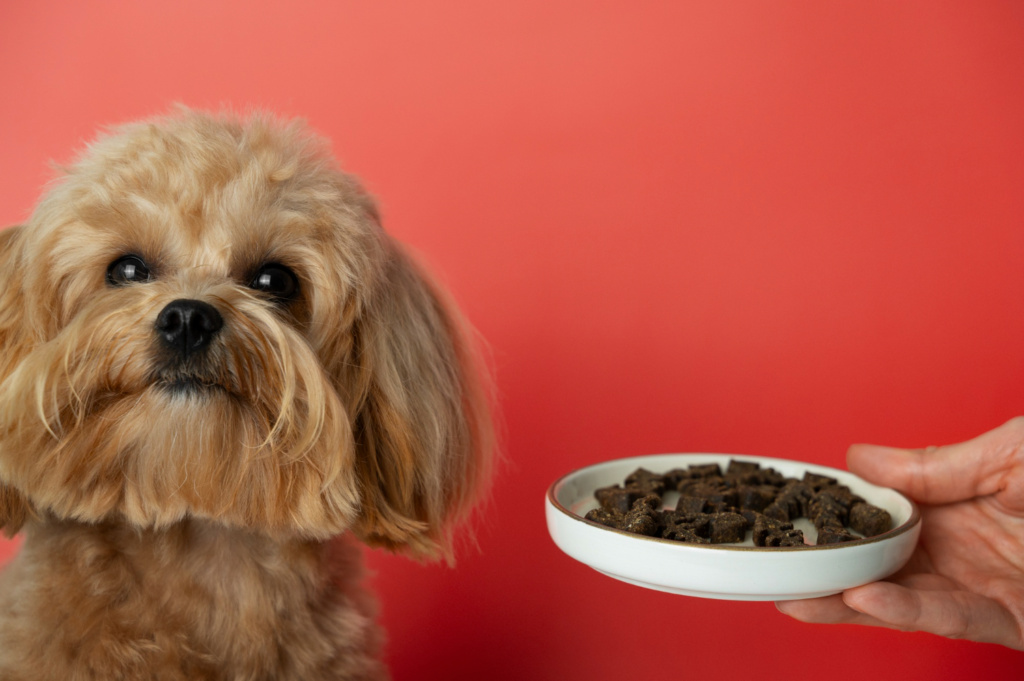
Eleven words. That’s how short a dog mushroom supplement label can be while still technically telling you nothing. I’ve held two bottles side by side at a pet store in Portland, both promising “mushroom support,” and walked out with neither because the fine print on one listed mycelium grown on grain and the other listed fruiting bodies with no amount anywhere on the panel. Same font. Same little illustration of a shiitake. Completely different products.
The trick isn’t that one company is lying. It’s that the rules let both bottles exist. So if you’re standing in that aisle, or scrolling a product page at 11pm, the only thing standing between your dog and a jar of ground-up oats is a habit of reading labels the way a copy editor reads a headline. I did this the slow way, over three dogs and roughly four years, and I want to save you the tuition. It starts with learning why people reach for a dog mushroom supplement in the first place, because the reason shapes what you should actually be checking.
Most people aren’t chasing a miracle. They’ve got a nine year old lab who doesn’t greet them at the door the way she used to, or a rescue terrier who licks his paws raw every August. Mushrooms get recommended for that gray area of aging and low-level inflammation. Fair enough. But the bottle is where good intentions go to die.
The word doing all the hiding: mycelium
Picture mushroom growing the way nature does it. A spore lands on dead wood. Threads spread through it for months, digesting. Eventually a fruiting body pushes out of the bark, the part you’d recognize on a pizza. That fruiting body is what traditional use and culinary cooking have always meant by “mushroom.” The threads underneath are mycelium, and they’re structurally different, with a different profile of the compounds people are usually after.
Here’s where labels get cute. A lot of products are mycelium grown on a bed of oats, rice, or sorghum, then dried and milled with the grain still attached. Nothing about that is automatically bad. But gram for gram, a large share of what’s in the scoop is the grain the fungus ate, not the fungus. And if the label says “mushroom” while the ingredient list says mycelium, the two words are quietly doing different jobs.
What should you look for instead? Fruiting body on the ingredient line, plus a species name in full. If it says “organic mushroom blend” and nothing else, you’re buying a vibe. I know how that sounds. I also know I bought two of those before I learned to flip the bottle to the back.
Is the compound on the panel, or just on the front?
Turn the bottle around. Look for a number, not a word. Beta glucans, for instance, are a family of polysaccharides found in fungal cell walls and widely discussed in research on immune response. The National Institutes of Health maintains public information on dietary supplements and their ingredients, which is a reasonable place to start if you want to understand what a compound is before you buy it in a bottle. What you want on the label isn’t the phrase “contains beta glucans.” You want a percentage or a milligram figure attached to the serving size.
No number means no way to compare one brand against another. Two products can both say the same four words on the front and differ by a factor of ten inside. That’s not a scandal, it’s just how loosely the category is regulated. Knowing that changes your shopping behavior immediately: you stop reading the front of the bottle.
The three question test I use in the store
I run every bottle through the same three questions, in the same order, and I don’t skip one because the answer looks good. Takes about thirty seconds with a phone.
- What part of the fungus is it? I’m looking for fruiting body listed plainly. Mycelium on grain isn’t a deal breaker, but I want to know which I’m feeding and I want the label to admit it.
- Is there a potency number? A percentage or milligram figure tied to the serving size. If the panel only lists total weight of a blend, the blend is the product.
- What’s the serving and the price per serving? A cheap bottle with a huge scoop can cost more per month than the expensive tincture. Do the division once and the shelf sorts itself out.
Anyone can run that test. I’ve watched a friend do it on her phone in a checkout line and put a bottle back. That’s the whole point. You don’t need a background in mycology. You need three questions and the willingness to look slightly weird while you read.
Tincture, powder, or chew? Pick based on your dog, not the trend
A tincture is a liquid you drop onto food or directly into the mouth. Powders mix into a bowl. Chews get eaten like a treat by a dog who thinks everything is a snack. The delivery format matters less than people claim, but it matters for follow-through.
My honest take: if your dog is a picky eater, buy the format your dog will actually finish. A perfect tincture in a bowl a beagle refuses is a worse purchase than a decent powder she licks clean. I’d rather see you dose consistently for six weeks than achieve label purity once and give up on day four.
One more practical piece. The U.S. Food and Drug Administration oversees animal food and drug products and publishes consumer-facing material on how those categories are regulated, which is useful context when a marketing page uses the word “clinically proven” and you want to know what that phrase is and isn’t allowed to mean. It’s not a shortcut to vetting a specific brand. It is a shortcut to understanding why the category looks the way it does.
The small thing that mattered most for my dog
I started keeping a one-line note in my phone. Date, what I gave, what I noticed. Nothing elaborate, just enough to catch a pattern. After about five weeks with my older dog, I could tell you whether the morning walk was longer or shorter than the week before. That’s not a clinical trial and I’d never dress it up as one. It’s the difference between guessing and knowing.
If you try anything from this piece, try the note. It costs nothing, it takes eleven seconds, and it protects you from the most expensive mistake in this aisle: buying six months of something you can’t evaluate because you never wrote down the starting point.
What the fine print actually protects
Marketing claims about supplements are governed in part by the Federal Trade Commission, which is why you see careful wording like “supports normal immune function” rather than promises of a cure. Some of that language is genuine legal caution. Some of it is a hedge dressed up as science. Being able to tell the two apart is a skill, and like most skills it comes from repetition.
So no, I’m not telling you mushroom products are all the same. I’m telling you the label is a document, and documents can be read carefully or skimmed. You already know which one you’ve been doing.
Next time you’re holding a bottle, flip it over before you decide anything. Read the ingredient line out loud like it’s a sentence someone wrote for you. If it doesn’t answer the three questions, put it back and try the next one. Your dog can’t read the label. You can.