


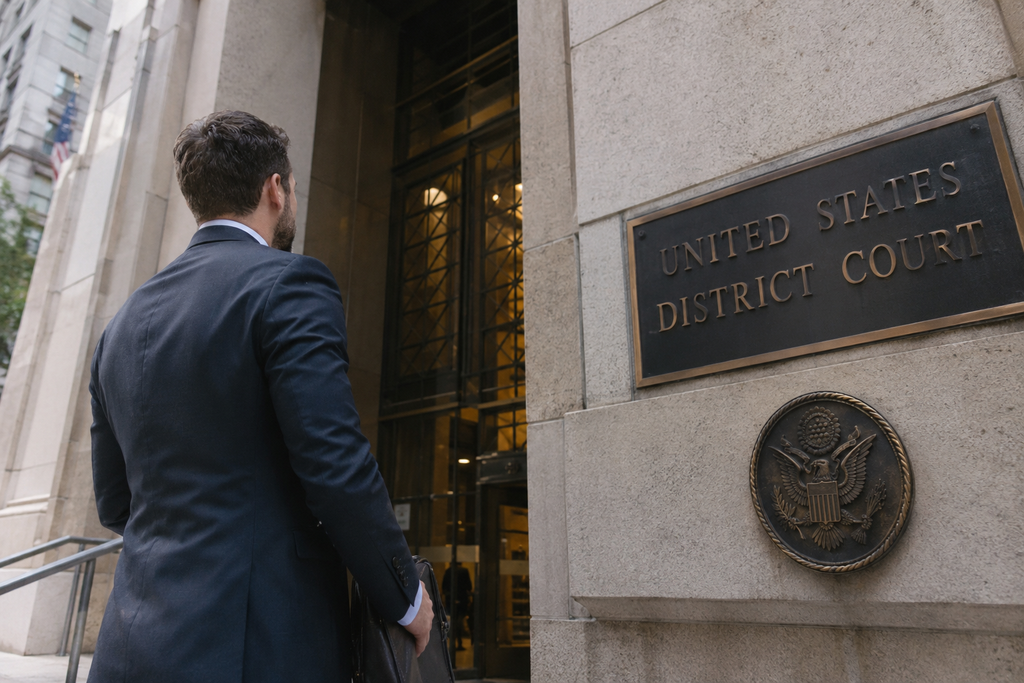
A New Jersey federal criminal defense lawyer discusses legal strategies with a client to protect their rights, navigate federal charges, and safeguard their future.
Facing a federal criminal investigation or charge in New Jersey can be intimidating. Federal cases typically involve extensive investigations, lots of evidence, many law enforcement agencies, and perhaps serious penalties. No matter if a person is dealing with charges of fraud, drug trafficking, weapons offenses, or conspiracy, it is essential to be informed about the legal process. A New Jersey Federal Criminal Defense Lawyer can help explain the charges, protect your constitutional rights and help develop a defense strategy based on the circumstances. Early legal advice can also help a person make an informed decision before speaking to investigators or responding to official notices. Choosing a lawyer who is familiar with the federal court system is an important part of building a defense. Here are some ideas that might be helpful about this topic.
Understanding Federal Criminal Charges in New Jersey
Federal criminal charges are different from state level offenses in that they are violations of federal law and prosecuted in federal court. The matter may be investigated in New Jersey by agencies such as the Federal Bureau of Investigation (FBI), the Drug Enforcement Administration (DEA) or Internal Revenue Service Criminal Investigation (IRS-CI). Common charges include financial fraud, drug trafficking, weapons offenses, cybercrime and conspiracy.
How serious a charge is will depend upon the statute, the evidence and the individual circumstances. A federal criminal defense attorney can review the charges, explain the potential penalties, and help you understand what legal defenses you may have before you make any important decisions.
Why Hire a New Jersey Federal Criminal Defense Lawyer?
Federal criminal cases can be complex because they have their own rules, court procedures, and sentencing issues. A lawyer skilled in federal defense can assess the government’s allegations, identify gaps in evidence, and explain the legal options. Representation can start even before formal charges are filed, such as when someone receives a subpoena, target letter or contact from federal investigators. A lawyer can also talk to prosecutors when appropriate, write legal motions and represent clients at hearings or trial. While no attorney can guaranty any particular outcome, the right legal representation can help defendants understand their rights and move through the process with greater confidence.
Common Federal Offenses and Potential Penalties
New Jersey federal criminal defense attorneys defend people charged with a broad spectrum of alleged crimes including white collar crimes, drug trafficking, gun crimes, and cyber crimes. Financial cases could involve wire fraud, tax crimes, identity theft or money laundering. Prosecutions for drugs may include possession with intent to distribute, manufacturing or conspiracy. Possible penalties include imprisonment, fines, restitution, forfeiture and supervised release depending on the offense. Some convictions can also impact professional licenses, employment prospects and immigration status. Potential penalties will vary based on the particular statute, criminal history, sentencing guidelines and facts of the case. A lawyer can tell you what penalties apply and evaluate possible defenses.
Choosing the Right Federal Criminal Defense Attorney
When facing a federal investigation or prosecution, choosing the right lawyer is an important decision. A potential client should seek out: experience in the federal courts, knowledge of the charges, good communication and a willingness to explain possible strategies. It is also useful to ask who will be working on the case, how fees are structured and what immediate steps may need to be taken. Federal cases can include extensive discovery, complex financial records, expert testimony, or multiple defendants, so preparation is especially important. People should provide truthful information and ask about their legal options when meeting with a consultant. A thorough evaluation allows a client to select representation that suits their needs.
Those facing serious federal charges can benefit from the guidance of a New Jersey federal criminal defense attorney. Experienced counsel can assist clients navigate the process and assess the available defenses, from reviewing evidence and safeguarding legal rights to negotiating with prosecutors and preparing for trial. Getting legal advice right away can be especially important because federal investigations can begin before an arrest or indictment. “I think people should do their research on potential lawyers, speak to them about their specific situation and know what the potential consequences are of each decision.” There are no guaranties, but the right lawyer can help a defendant understand and navigate the federal system and make choices that protect their rights and their future. To know more information about it, see this link The Law Offices of Jonathan F. Marshall.
Frequently Asked Questions (FAQs):
What does a New Jersey federal criminal defense lawyer do?
A federal criminal defense attorney is an attorney that defends people charged with federal crimes. May be responsible for investigating claims, reviewing evidence, filing motions, negotiating with prosecutors, and representing clients in federal court.
What types of federal crimes can a defense lawyer handle?
Depending on the attorney’s practice, cases might include drug trafficking, wire fraud, tax offenses, weapons charges, cybercrime, conspiracy and other federal offenses.
Should I hire a lawyer if I am only under federal investigation?
“It can be helpful to seek legal advice even before charges are formally brought. If you are contacted by federal agents, or receive a subpoena or target letter, you should consult with a qualified attorney before responding or making any substantive statements.