
Information Design Rule: Apply Dieter Rams’ Ten Principles
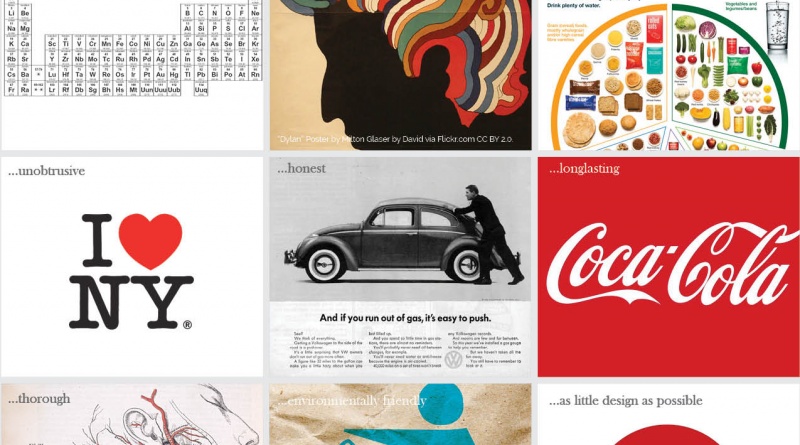
As you design information with the idiosyncrasies of human brains in mind, you become an architect that constructs messages in ways that best appeal to people. Industrial designer Dieter Rams famously articulated the Ten Principles of Good Design. While his brilliant declaration was about physical objects, the same principles should be applied to the design of information as well. When constructing useful, meaningful information for people, start with Rams’ ten principles:

Good Design is Innovative.
Innovation requires the application of something new, working in harmony with something proven. Find ways to do make information look fresh without creating something that doesn’t follow fundamental standards of what works well.
Good Design is Useful.
Utility emphasizes being easily accessed and used. Design information so that it will be used practically, effeciently, and effectively.
Good Design is Aesthetic.
Information should be beautiful. In an age of ubiquitous messaging, you provide a service of goodwill when you create information that is visually pleasing rather than haphazard, discordant, or ugly.
Good Design is Understandable.
Comprehension comes from strategic placement of words and graphics, People should fully understand the purpose of all textual and visual components and they should leave with the knowledge they hoped to obtain. Nothing should leave people wondering if they understood the message correctly.
Good Design is Unobtrusive.
Unobtrusiveness is beauty without flamboyance. All elements of a design should be purposeful, designed simple enough to not draw unneeded attention.
Good Design is Honest.
Trustworthiness is a quality earned through clarity, authenticity, and accuracy. Neither the design or the information should manipulate consumers nor should they make promises, even if tacit, that cannot be kept.
Good Design is Longlasting.
Avoiding the temptation to be trendy or fashionable, good design applies fonts, colors, and designs that are likely to endure many years beyond its creation.
Good Design is Thorough to the Last Detail.
Nothing should be arbitrarily placed or included without purpose. All details, all nuances, should be strategic, meaninfulful, and intended to assist your reader in a pre-determined way.
Good Design is Environmentally Friendly.
Conscious of purpose and use, information design should be produced with care to the environment. Thoughtful decisions should be made about whether printing is necessary, how much ink the design will require, how it will be disposed, if it is recyclable, and so forth.
Good Design Is as Little Design as Possible.
Information should include only what’s necessary. The inclusion of words, graphics, margins, and other design elements should be as minimal and as simple as is possible and still be useful and meaningful to the user.