
How AI Grammar Correction Works Behind the Scenes
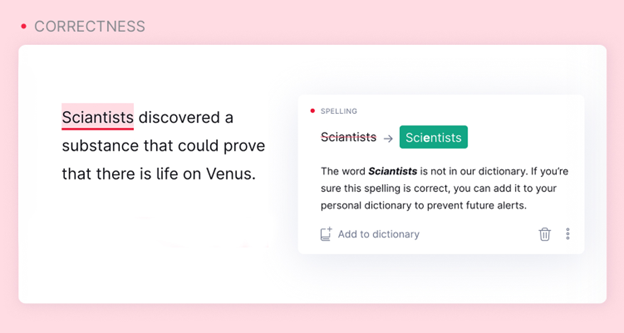
AI grammar correction might seem magic when it easily catches errors and suggests polished alternatives, but there’s a complex process behind those quick, accurate suggestions. This technology relies on complex layers of machine learning, language understanding, and massive datasets, which provide real-time feedback on everything from punctuation to complex sentence structure.
Take Grammarly and Hemingway Editor, for instance. Grammarly uses advanced NLP (natural language processing) algorithms to identify grammar, punctuation, and even tone issues, offering suggestions that adapt to various contexts, like professional or casual language. Meanwhile, Hemingway focuses on enhancing readability by spotting complex sentence structures, highlighting passive voice, and simplifying vocabulary, ensuring that writing remains clear and effective.
Together, these tools exemplify how AI can elevate writing quality by combining grammatical accuracy with style improvements, making them invaluable for both students and professionals.
Step 1: Building High-Quality Training Datasets
For any AI grammar correction tool, the foundation starts with data. Large datasets are curated from multiple sources, including books, articles, websites, and various public-domain text libraries. A dataset is a collection of data. The data is then thoroughly labeled to mark errors, corrections, and sometimes even preferred styles. This process, called data annotation, ensures that each example within the dataset can teach the AI a specific grammar rule, nuance, or language structure.
Companies like Unidata.pro play a major role here by developing these labeled datasets that help the AI distinguish correct from incorrect grammar across different contexts. Since language is diverse and dynamic, these datasets need to capture not only standard grammar rules but also variations in tone, formality, and even regional dialects. For instance, British and American English have several differences in spelling and grammar, and a quality AI model needs to recognize and respond to those variations.
Step 2: Training with Neural Networks
Once the data is ready, the next stage is training the AI model. At the heart of most grammar tools are deep learning architectures, often built with neural networks. These networks are structured to “learn” from vast amounts of data in layers. Early layers might focus on identifying fundamental rules, such as subject-verb agreement, while later layers handle more complex patterns, like recognizing stylistic issues or contextual word choices.
During training, the model processes text examples from the dataset, evaluating its predictions against correct annotations. For instance, it might predict that “they’re” is correct instead of “their” in a particular sentence. If this prediction matches the annotated correction, the model reinforces this learning; if not, it adjusts to improve accuracy. Over thousands or millions of iterations, the neural network refines its ability to recognize errors and provide appropriate corrections.
Step 3: Transformer Models and Contextual Understanding
Traditional grammar tools often focus on individual words or basic rules, but modern AI tools, like those using transformer models (e.g., BERT, GPT), are designed to understand context on a deeper level. Unlike older approaches, transformers analyze the relationships between words in a sentence, enabling them to handle more sophisticated issues, such as contextually ambiguous words and phrases.
Take, for example, the phrase “lead” in “She will lead the team” vs. “This pipe is made of lead.” Based solely on grammar, “lead” might appear correct in both cases. However, transformer models use contextual clues to distinguish the appropriate meaning based on the sentence’s structure, improving accuracy and usability. This allows AI grammar tools to tackle ambiguous word forms and even suggest synonyms for improved clarity.
Step 4: Fine-Tuning for Style, Tone, and User Intent
Beyond basic grammar, AI models can adapt to varying writing styles and tones. Many modern grammar tools offer options to adjust tone – say, for academic, business, or informal settings. This is achieved through specialized datasets that include examples of different tones and feedback on what works best for each.
The model is thus trained to recognize linguistic cues tied to formality or professionalism. For example, a sentence like “Let me know if you need anything else!” might be rephrased to “Please let me know if there’s anything further I can assist with” in a business context, improving formality without altering meaning. This helps users tailor their writing to specific audiences, from colleagues to academic committees.
Step 5: Real-Time Feedback and Continuous Learning
One of the most useful features of modern AI grammar tools is their ability to provide instant feedback as users type. This capability is the result of fine-tuning, where the model applies all its learned patterns to offer quick suggestions. Real-time processing requires optimizing both the model’s accuracy and speed, as users expect smooth and immediate corrections.
Moreover, these tools don’t stop learning after deployment. Many incorporate user feedback mechanisms, where they learn from accepted or rejected suggestions. For instance, if a user repeatedly declines the correction “affect” for “effect” in a specific context, the tool might adjust its suggestions in future interactions, helping it to align more closely with user needs.
Step 6: The Role of Syntax, Semantics, and Advanced Linguistic Understanding
While syntax (sentence structure) and semantics (meaning) have been crucial in language processing for a long time, modern AI grammar tools also leverage these aspects to refine grammar correction. Syntax helps ensure that sentence elements are correctly organized, while semantics ensures that words fit their context accurately.
For example, in a sentence like “The software was updated last week,” the AI grammar tool would detect that the sentence’s meaning implies a past action, suggesting “was updated” to align the tense with standard English grammar. This understanding helps these tools manage complex grammar rules and even suggest subtle improvements for clarity and readability.
Step 7: Handling Errors in Style and Clarity
AI grammar tools aren’t just about grammar – much help with stylistic consistency as well. This might include checking for passive voice, overly complex language, or wordiness. Consider a sentence like, “Since the meeting has been postponed, the agenda is subject to change.” The AI might suggest “Since the meeting was postponed, the agenda may change,” offering a more direct alternative.
These tools also aid in reducing jargon, breaking down long sentences, and suggesting active voice when it improves clarity. With these enhancements, users don’t just avoid errors; they also produce polished, reader-friendly content.
Privacy, Security, and Ethical Considerations
As AI models process large amounts of user data, ensuring data privacy and ethical use is critical. Trusted grammar tools prioritize end-user security, anonymizing or encrypting data to protect it from unauthorized access. Moreover, some tools operate directly on the user’s device to keep data private, particularly useful for professionals handling sensitive information.
Conclusion
In conclusion, the process behind AI grammar correction tools is a blend of reliable data, complex algorithms, and user-centered design. From real-time feedback to tone and style adjustments, these tools empower writers across fields to communicate more effectively and confidently. As AI technology continues to evolve, grammar tools will only get better at understanding our language intricacies, making them invaluable allies in our daily writing tasks.