
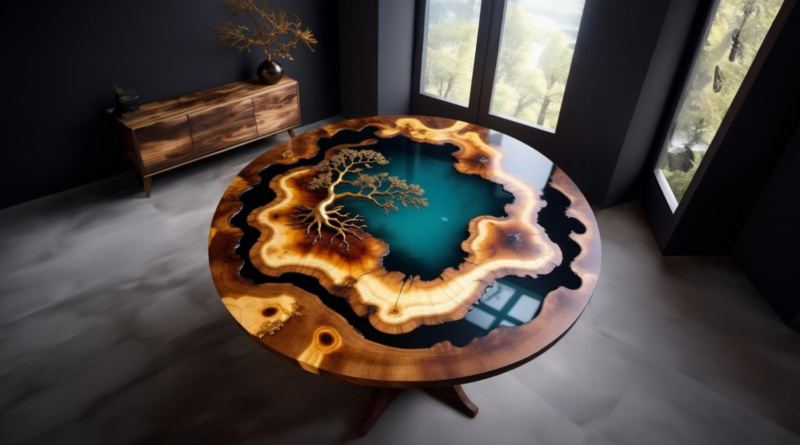
How Strong and Durable are Epoxy Tables?
Whether you’re thinking about getting epoxy tables or you’re only interested in their durability, you may be pondering whether these excellent pieces will keep standing up to frequent utilization. Epoxy tables create furniture that is both pleasing to the eye and sturdy with regard to fusing the exceptional resistance of epoxy resin with the botanical source quality of wood.
Though compared to a bit more traditional furniture options, epoxy wood tables actually offer important quality. These tables possess the ability of supporting huge loads, avoiding scratches, and keeping their absolutely spotless look for many years. Epoxy resin tables offer the ideal balance of availability and visual appeal due to a unique appearance. We suggest you check out the ThunderWood Studio website if you want to find your epoxy tables.
Through everyday uses and scientific testing, this thorough guide takes on the robustness and longevity of epoxy tables. You’ll grasp exactly how these tables function in various circumstances. and why creative people and homeowners are using them in increasing numbers.
Understanding Epoxy Table Construction
Epoxy tables’ important strength is the result of a strange process of chemical manufacture used in their frames. A blend of epoxy resin and hardener causes reactions caused by chemicals that sets the liquid foodstuffs.
Chemical composition and curing process
Three individual stages engage in their transition from liquid to solid. A mixture is initially still workable for the “a free time.” After that, it goes inside a gel phase before establishing as a whole. In particular, heat can be generated during the curing process, and the interior temperature has an extreme effect on the final perseverance.
Impact of manufacturing methods on strength
The service life of your epoxy table respectively largely relies on according to the right the manufacturing procedures. The next crucial elements effects the quality of the completed product:
- Temperature control during curing (ideal range: 18° to 24° C)
- Proper mixing ratios of resin and hardener
- Controlled humidity and dust-free environment
- Quality of materials selected
Role of wood-epoxy bonding
Epoxy and wood couple to produce extraordinary power investments. Further, the well-built epoxy tables have a compressive rigidity of about 10,000 pounds per square inch (psi). When producers use the right sealing approach, the wood-epoxy bond frequently transforms out to be more profound than the wood itself.
Besides, the right water content is essential for the success of wood-epoxy bonding. The quantity of water of the wood ought not to be higher than 12% for best results. Besides, in order to avoid the bubbles of air that might break down the final piece’s structural integrity, inventors frequently seal the edges.
The external environment must be meticulously examined during the manufacturing process. That means maintaining optimal benefit depends heavily on its temperature, humidity, and dust control of the workspace. By handling these details of technology, your epoxy table retains its dazzling appearance while generating their unique durability.
Measuring Epoxy Table Strength
Your epoxy table’s strength measures are remarkable. to comply with results from scientific studies. For one, knowing these metrics enables you to recognize how stable the money you spend is.
Compressive strength testing
Based on severe loads, robust epoxy exhibits exceptional compression objections, which is adapting to up to 15,000 PSI. Given this, epoxy tables are notably more powerful than ordinary poured cement, which can withstand stress of up to 3,000 PSI.
Impact resistance experiments
In a particularly informative real-world test, an epoxy table’s left out section suffered from being exposed to truly amazing weight. The results were remarkable:
- Supported 1,680 pounds of concrete without visible bowing
- Maintained structural integrity under a 2,000-pound walnut log
- Demonstrated bond strength equal to or greater than the wood itself
Load-bearing capacity limits
The max load capacity of your epoxy table is found by a number with significant factors. Tests performed in laboratories indicate that epoxy resin’s tensile strength begins at 61.9 MPa. In as a whole, this strength is fluctuating according to the surroundings:
The tensile breaking strength is comparatively steady at ambient (20°C), dropping only marginally to 59.3 MPa after 80 days. Meanwhile, over the same time period, the durability may drop to 36 MPa at higher levels (60°C).
Your table’s muscularity is also greatly impacted by its thickness. Professional producers often opt for epoxy that is 2 1⁄2 inches thick for the equilibrium tables that need to be able to accommodate a lot of weight. Less dense tables of contents often need greater bolstering when carrying heavy loads, for instance for specific software like holding high-priced
Especially, testing shows that the wood component essentially fails before the epoxy or the wood-epoxy bond under high stress levels. This describes an incredible lasting value of well-constructed epoxy tables.
Scientific Analysis of Durability Factors
The study of three factors that are crucial that impact the longevity of your epoxy table will enable you to better understand its durability factors. Let’s reconsider the findings of scientific analysis toward the variables at hand.
Temperature resistance properties
Effective heat resistance is shown by your epoxy table. Epoxy that has been properly got rid of can tolerate temperatures of up to 135 degrees Fahrenheit without sustaining any harm, among testing at laboratories. However, it remains a good idea to use drinking glasses or trivets for very hot items for the greatest degree of safety.
UV exposure effects
Sunlight poses a notable challenge for epoxy tables. Continuous UV exposure can lead to:
- Yellowing and haziness of the surface
- Decreased glossiness
- Degradation of the epoxy structure
The primary catalyst for this is that epoxy seems unstable when exposed to the ultraviolet rays Despite the simple fact that this may sound upsetting, preservation of your table is simple. Beneficial defense against UV damage can be achieved by posting a clear, UV-resistant urethane or painting coating. Significantly keeping your epoxy table’s finish glossier helps it outline more UV light, handing it out with added security.
Chemical resistance testing
Resistant to chemicals is checked scientifically using meticulous testing procedures. Nutrition changes in epoxy samples following encounters with different chemicals can be monitored in experiments in laboratories. Excellent repellent to chemicals can be confirmed by a weight change of less than 1%.
The unique chemical makeup and building networks of your epoxy table play an invaluable part in how long it is around you. Most Effective barrier function against chemically produced penetration is due to a tighter molecular web. Testing reveals that epoxy demonstrates remarkable resistance to:
- Common household chemicals
- Moisture penetration
- Various acids and bases
Without a doubt, their protecting characteristics become superior with proper care. You are certain that your table will last for countless years by avoiding toxic compounds and strictly sticking to sustaining what was said.
Comparative Material Analysis
Together we can look at how epoxy tables measure to more traditional sources as we consider the operational components of your furniture decision-making. over all, this contrast will assist you in making make a well-informed investment
Strength vs traditional wood tables
When contrasted with accepted wooden furniture, your epoxy table is stronger. Above all, the epoxy-wood bond turns out to be more able than the wood itself. This almost means that the wood component, not the epoxy or the bonded area, ideally fails first under the influence of extremely high stress.
Durability vs metal furniture
In comparison to metal housing, which is easily impacted by rust or corrosion when met with moisture, your epoxy table remains going in a variety of facts. The non-porous nature of epoxy makes it particularly resistant to:
- Fungi and bacteria growth
- Moisture damage
- Daily wear and tear
Cost-benefit analysis
As a result epoxy tables are usually have more expensive than the standard wooden or metal furniture, the very first expenditure may seem costly. Above all, several factors contribute to the higher price point:
- Labor-intensive manufacturing process requiring double the effort
- Additional materials including high-quality epoxy resin
- Specialized tools and maintenance requirements
Conclusion
Epoxy tables are outstanding artwork of furniture that pair up glamour and inspiring durability, as taught by tests conducted by scientists and practical applications. During up to 15,000 PSI in compression analysis, these tables exhibit exceptional strength characteristics and provide outstanding resistance to toxins, moisture, and normal wear. To find more epoxy tables visit ThunderWood Studio for that
Epoxy tables are cost-prohibitive initially, but they are an economic choice for your place of residence or business due to the quality and low cleaning needs. Although proper care is still necessary to maintain their attractive needs, research experiments confirm their ability to look after the structure under extreme conditions, to find more epoxy tables, visit ThunderWood Studio.
If you warn your epoxy table from sunlight. and stick with the manufacturer’s instructions for up-keep, it should last for decades. Epoxy tables are becoming more and more popular against homeowners looking for furniture that is both attractive as well as effective, which can be recognized by their durability and distinctive sense of style.