
Why 3D Scanning Is Becoming Essential for Long-Term Digital Asset Strategies
Most businesses already have thousands of digital files sitting in storage somewhere. Product photos, PDFs, archived videos, and old CAD files. The problem is that a lot of those assets only capture part of the picture. A standard image might show what an object looks like, but it cannot fully preserve scale, depth, texture, or physical detail. That limitation is one reason more companies are investing in advanced digitization tools that create assets with longer-term value.
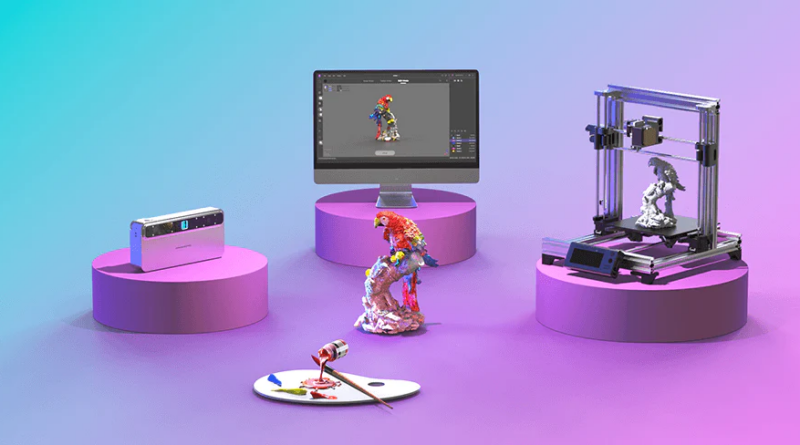
A modern 3d scanner allows physical objects to be transformed into accurate digital models that can be stored, edited, shared, and reused for years. As industries continue investing in long-term digital asset strategies, 3D scanning is becoming a practical tool for preserving valuable products, designs, and environments.
Today, businesses are looking for digital assets that are not only easy to store but also flexible enough for future applications such as virtual experiences, product design, remote collaboration, and digital archives.
Why Traditional Digital Archives Are No Longer Enough
Not long ago, storing a few folders of images and documents felt like enough. But once businesses start managing larger product libraries or multi-year projects, those systems become messy surprisingly fast. Teams lose track of versions, archived files become difficult to search, and older records often lack the detail needed for future use.
Many businesses struggle with losing physical detail when relying only on photos or videos. Others face difficulties recreating products or environments years later because older records often lack depth and precision. In many cases, outdated storage systems also make digital assets difficult to organize, retrieve, and scale for future technologies such as AR and VR.
3D scanning addresses these challenges by creating highly accurate digital representations that remain useful long after the original object changes or disappears.
Why 3D Scanning Is Growing in Importance
Physical Objects Can Now Be Preserved Digitally
What makes 3D scanning different from standard imaging is the level of information it captures. A photograph can show how something looks, but a scan records depth, dimensions, and surface detail in a way that makes the object usable long after the original item is no longer available. That difference matters more now that businesses are building digital assets for long-term use instead of short-term campaigns.
This technology is especially useful for:
- Product archives
- Historical preservation
- Manufacturing records
- Digital showrooms
- Reverse engineering workflows
Instead of relying on flat visuals, companies can preserve full-dimensional data that supports future editing, analysis, and collaboration.
A growing number of industries now see digital preservation as a long-term investment rather than a short-term project.
| Traditional Asset Capture | 3D Scanning |
| Flat 2D images | Full-dimensional models |
| Limited detail | High-precision geometry |
| Difficult to modify | Easy to edit and reuse |
| Static viewing experience | Interactive visualization |
| Lower future compatibility | Better support for AR, VR, and simulation |
Better Support for Remote Collaboration
The rise of remote collaboration also changed expectations around asset sharing. Teams no longer want to wait for prototypes to arrive in the mail or schedule in-person reviews just to inspect a single component. In many workflows, people expect immediate access to the same detailed files regardless of location.
Instead of repeatedly shipping prototypes or arranging in-person inspections, teams can work from the same detailed digital model. That shared access simplifies communication and helps projects move faster, especially when multiple departments are involved in the review process.
For example, product designers can scan a prototype once and distribute the digital model across departments for testing, visualization, and future revisions.
Future Technologies Depend on 3D Assets
The demand for immersive digital experiences is increasing rapidly. Virtual reality, augmented reality, digital twins, and AI-driven simulations all require detailed 3D content.
Businesses that begin building 3D asset libraries today are preparing themselves for future technologies that will depend on accurate digital models.
Long-term applications now include:
- Interactive online shopping experiences
- Virtual training simulations
- Digital twin environments
- AR-based product demonstrations
These experiences depend on accurate 3D assets that can be reused across multiple digital platforms.
Without high-quality 3D assets, companies may struggle to adapt to these evolving digital ecosystems.
How 3D Scanning Improves Digital Asset Longevity
High Accuracy Reduces Future Rework
One thing companies often realize too late is how frequently old assets come back into use. A scan created for documentation can later end up in a training module, product redesign, repair workflow, or marketing campaign. When the original capture is detailed enough, teams avoid wasting time recreating the same asset again and again.
A properly scanned object can support marketing visuals, engineering analysis, e-commerce visualization, 3D printing, and training content without requiring repeated physical capture sessions. This long-term usability makes 3D scanning more cost-effective than repeatedly producing new assets.
Digital Models Are Easier to Scale
As businesses expand, managing physical assets becomes increasingly difficult. Digital models are easier to organize, duplicate, and distribute.
Modern cloud platforms have also made it much easier to store and organize large 3D files without limiting accessibility. Teams in different locations can review, edit, and reuse the same assets without constantly transferring physical materials.
This scalability becomes especially important for companies managing large product catalogs, industrial equipment, complex environments, and multiple design versions.
Improved Disaster Recovery and Preservation
Physical objects can deteriorate, become damaged, or disappear completely over time. Digital preservation helps reduce this risk.
By scanning important assets early, businesses can maintain permanent digital records that remain usable even if the physical version is lost.
This approach is increasingly valuable for:
- Rare prototypes
- Architectural structures
- Customized manufacturing parts
- Collectibles and artwork
- Historical artifacts
The Role of Portable Scanning Technology
3D scanning hardware has also changed quite a bit in recent years. Older systems were often expensive and difficult to move around, which limited adoption outside industrial environments. Newer portable scanners fit more naturally into everyday workflows, especially for smaller studios and growing businesses that need flexible setups instead of dedicated scanning spaces.
Many portable scanners now support:
- High-resolution texture capture
- Real-time processing
- AI-assisted alignment
- Compact workflows
These improvements allow smaller businesses and independent creators to adopt scanning technology without investing in expensive industrial systems.
In real-world workflows, smaller scanning devices are becoming increasingly popular because they fit more naturally into day-to-day production environments. Some smaller teams and independent creators have also started using more compact scanners from companies like 3DMakerpro because they fit more easily into everyday workflows without requiring large setups.
Key Industries Benefiting From Long-Term 3D Asset Strategies
Manufacturing
Manufacturing teams often rely on 3D scans to document parts, inspect quality, and maintain accurate product records. Having access to detailed digital models can simplify future repairs, redesigns, and production updates.
E-Commerce
Online retailers are also investing more heavily in 3D product visualization. Interactive models give customers a clearer sense of size, texture, and design, which can make digital shopping experiences feel more informed and engaging.
Architecture and Construction
Buildings and construction sites can be scanned to create long-term digital records for maintenance, renovation, and documentation.
Healthcare
Medical professionals use 3D scanning for prosthetics, dental modeling, and patient-specific planning.
Entertainment and Gaming
Game developers and digital artists use scans to create realistic assets for immersive environments.
Best Practices for Building a Long-Term 3D Asset Strategy
Businesses planning to integrate 3D scanning into their digital workflows should focus on sustainability and organization.
Start With High-Value Assets
Businesses should begin by scanning assets that are difficult to recreate, frequently reused, or important for future production and documentation. Focusing on high-value assets first helps companies build a practical and sustainable digital archive.
Standardize File Management
A structured asset library helps maintain consistency over time.
A structured asset library should include:
- Consistent naming systems
- Metadata tagging
- Secure cloud backups
- Version control processes
These practices make long-term asset management more efficient and scalable.
Choose Scalable Scanning Solutions
Technology needs may grow over time. Businesses should choose scanning workflows that can adapt to future applications.
Important considerations include:
- Accuracy requirements
- Workflow speed
- Software compatibility
- Export formats
- Portability
Choosing flexible solutions early can help organizations adapt to future digital demands.
Maintain Asset Quality Standards
Poorly captured scans may become unusable later. Consistent quality control ensures assets remain valuable over the long term.
Teams should establish clear standards for resolution, texture quality, mesh cleanup, and file optimization so digital assets remain usable over time.
The Future of Digital Asset Preservation
The conversation around digital preservation has shifted. Companies are no longer focused only on storing files safely. They are thinking more about long-term usability, future compatibility, and whether today’s assets will still work inside tomorrow’s platforms and tools. That broader mindset is helping move 3D scanning from a niche workflow into a much more practical business investment.
3D scanning provides a foundation for that evolution by turning physical objects into flexible digital assets that remain useful across multiple applications.
As more industries invest in virtual environments, AI-driven tools, and immersive customer experiences, high-quality 3D assets will likely become a standard part of long-term digital strategies.
Conclusion
Long-term digital asset strategies are no longer limited to storing photos, PDFs, or archived videos. Businesses increasingly need digital content that can adapt to changing workflows, support emerging technologies, and remain useful years after it was originally created.
A reliable 3d scanner helps bridge the gap between the physical and digital world by creating detailed assets that remain useful for years. From manufacturing and design to e-commerce and preservation, 3D scanning is becoming an increasingly valuable part of modern digital infrastructure.
Organizations that begin building structured 3D asset libraries today will be better prepared for future demands in visualization, collaboration, and digital innovation.