
ACL Recovery: What the Rehabilitation Process Actually Involves
ACL injuries are among the most feared in sports. Here’s a clear guide to what the rehabilitation process involves and what realistic recovery timelines look like.
Anterior cruciate ligament (ACL) injuries are among the most significant and most feared injuries in sports, affecting athletes across virtually every sport from soccer to basketball to skiing. The injury that takes place — often a non-contact planting and pivoting movement with a pop sensation and immediate swelling — initiates a recovery process that is longer and more demanding than many injured athletes initially anticipate.
The ACL is one of four major ligaments stabilizing the knee joint, running diagonally through the center of the joint to prevent the tibia (lower leg bone) from sliding forward relative to the femur (thigh bone) and to provide rotational stability. Because it lacks a blood supply that would allow spontaneous healing, ACL tears — whether partial or complete — typically require surgical reconstruction followed by an extended rehabilitation program to return to full activity.
Surgical Decision-Making
Not every ACL tear requires surgical reconstruction. The decision depends on the degree of functional instability the injury produces, the demands of the patient’s activity level, age, and the presence of other concurrent injuries (meniscus tears and other ligament injuries frequently accompany ACL tears and may independently warrant surgical treatment). Athletes who want to return to pivoting and cutting sports generally require reconstruction for adequate stability; less active individuals may be successfully managed with rehabilitation alone.
ACL reconstruction uses a graft — tissue transplanted to replace the torn ligament — which may come from the patient’s own tissue (autograft) or donor tissue (allograft). Common autograft options include the patellar tendon, hamstring tendons, and quadriceps tendon, each with different trade-offs in early strength, donor site morbidity, and long-term outcomes. The choice between graft types is a detailed conversation between the patient and surgeon that depends on the patient’s specific anatomy, activity goals, and other factors.
The Rehabilitation Phases
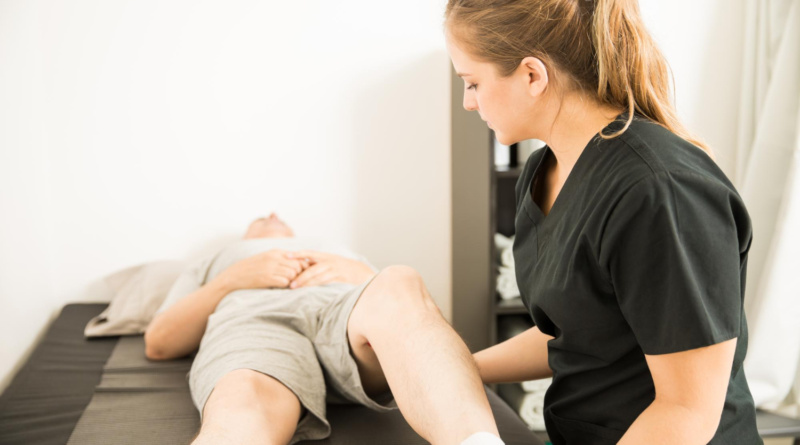
ACL rehabilitation is organized into progressive phases, each with specific goals that must be achieved before advancing to the next phase. The initial phase (weeks 0-6 post-surgery) focuses on controlling swelling, restoring full extension (straightening) of the knee, achieving adequate flexion, activating the quadriceps, and achieving normal gait without compensation. The neuromuscular re-education that begins in this phase — waking up muscles that have inhibited themselves in response to pain and swelling — is as important as the basic range of motion work. Quality sports injury physical therapy programs progressively load the healing graft through each phase based on biological healing timelines.
The intermediate phase (typically months 2-5) builds strength, progresses to sport-specific movement patterns, and begins plyometric (jump and landing) training as strength criteria are met. This phase requires patience: the graft is actually at its weakest structural point at six to eight weeks post-surgery, when the original graft tissue has revascularized but the new ligament tissue isn’t fully incorporated. Progressing activities too quickly during this phase is one of the primary risk factors for re-tear.
Return to Sport Testing: The Criteria That Matter
The most significant evolution in ACL rehabilitation practice over the past decade is the movement away from time-based return to sport criteria toward criteria-based progression. The old standard of ‘six months and you’re cleared’ has been replaced by functional testing batteries that assess whether the athlete is actually ready to return, regardless of the time since surgery.
Return to sport testing typically includes limb symmetry index (LSI) comparisons of the surgical and non-surgical leg in strength, hop distance, and other functional measures. Athletes who return to sport with LSI values below 90% — meaning the injured leg is more than 10% weaker or less capable than the uninjured leg — have significantly elevated re-injury risk. Psychological readiness measures that assess confidence in the knee and fear of re-injury are also recognized as important components of clearance criteria, since under-confident athletes modify their movement patterns in ways that can paradoxically increase injury risk.
Quadriceps Strength: The Critical Variable
Quadriceps strength deficit — the inability of the quadriceps of the injured leg to match the strength of the uninjured leg — is the most consistently identified risk factor for ACL re-injury and for suboptimal outcomes after reconstruction. The quadriceps both protect the ACL from excessive loading and provide the dynamic knee stability that complements the structural stability of the ligament.
Achieving and maintaining quadriceps strength parity between the surgical and non-surgical leg is a primary goal of late-stage rehabilitation and one that’s more demanding to achieve than most athletes expect. The quadriceps inhibition that occurs in response to knee injury and surgery is profound and persistent; strength deficits of 20-30% compared to the uninjured leg at six months post-surgery are common without dedicated rehabilitation. Strength testing with isokinetic dynamometry provides objective measurement that guides the return to sport decision.
Preventing Re-Injury
Athletes who have had an ACL reconstruction have a significantly elevated risk of second ACL injury — either re-tearing the reconstructed knee or injuring the opposite knee — compared to athletes who have never had an ACL injury. Young female athletes face particularly elevated risk, related to biomechanical and neuromuscular factors that influence knee loading during sport. This re-injury risk makes ongoing prevention training an important part of the post-ACL-recovery program.
Neuromuscular training programs — structured exercises that train landing mechanics, cutting technique, and the neuromuscular patterns that control dynamic knee stability — have strong evidence for reducing ACL injury risk in athletes at elevated risk. Incorporating these programs as part of regular sports training, even after full return to sport, addresses the underlying risk factors that made the initial injury possible.
Mental and Psychological Aspects of ACL Recovery
The psychological component of ACL recovery is now recognized as a significant factor in outcome and is receiving increasing attention in rehabilitation programs. Fear of re-injury, loss of sport identity during the prolonged recovery period, frustration with the pace of progress, and the challenge of returning to the sport with genuine confidence in the reconstructed knee are all documented challenges that affect a meaningful proportion of ACL rehabilitation patients.
Athletes who return to sport with significant fear of re-injury modify their movement patterns to protect the knee — a response that, while understandable, can actually increase injury risk by creating the kind of asymmetric, guarded loading patterns that stress the joint abnormally. Psychological support, specific fear-of-reinjury interventions, and graded exposure to sport-specific movements are components of comprehensive ACL rehabilitation programs that address this dimension of recovery.
Wrapping Up
ACL recovery is a demanding, lengthy process that requires patience, consistent effort, and commitment to the criteria-based progression that modern rehabilitation science supports. The athletes who achieve the best outcomes — strong return to sport, low re-injury risk — are those who approach the rehabilitation as seriously as they approach their sport training, who don’t rush the process before criteria are met, and who work with physical therapists who apply evidence-based practice to their specific case. The investment in thorough rehabilitation is the investment in a full, sustainable return to the sport.
Frequently Asked Questions
How long does full ACL recovery take?
Complete return to unrestricted sport after ACL reconstruction typically takes nine to twelve months when criteria-based progression is followed, though some athletes with favorable biology and intensive rehabilitation achieve clearance at eight to nine months. Early return to sport before criteria are met is associated with significantly elevated re-injury risk. The timing varies based on the graft type used, the athlete’s baseline strength and conditioning, and how effectively they meet each phase’s progression criteria.
What’s the rate of ACL re-injury after return to sport?
Re-injury rates for athletes returning to pivoting sports after ACL reconstruction are substantial — studies report rates of 15-25% for second ACL injury (same or opposite knee) within five years of return to sport for young athletes, with rates varying by sport, sex, and age. These rates are lower in athletes who complete criteria-based rehabilitation with confirmed strength symmetry before returning to sport. The elevated re-injury risk is part of why return to sport criteria are taken seriously and why prevention training after return is valuable.