

The Best Way to Get Your Paid Ads Seen
This article was written by one of our amazing contributors! Content may include promotional links.
If you are the owner of a small business, no doubt you have at least experimented with Google Ads, previously known as AdWords before the search engine’s minor rebrand earlier this year. Whether you are a PPC amateur or seasoned pro, you get that investing in paid campaigns can open new avenues to your business.
Why? Because your targeted advertisements will appear above organic search results, which is potentially a major positive – as long as your ads are well targeted, otherwise they only serve to waste the user’s time and, crucially, your money.
Visibility
Visibility is the number one reason why any business owner or whoever is responsible for the marketing budget invests in paid ads. For small business owners that may not have or be able to afford the same level of SEO work as major corporations, targeted paid ads help to level the playing field.
Google Ads allow the user to not only target a specific location, but also to exclude locations that you do not want your advertisement to show in. This means that if your business is based in London and you only want to serve the local area, you can exclude the rest of the country and world to go with it.
That may seem like a lot of work, but the time spent ensuring your ad doesn’t have users on the other side of the planet clicking your advert – costing you money – will certainly be worth it.
Extensions
A key feature that has evolved in recent years on AdWords/Ads is the extension feature that allows users to extend their advert so as it takes up more space on the screen. Several key extensions include:
- Sitelink Extensions
- Location Extensions
- Call Extensions
- App Extensions
- Review Extensions
- Structured Snippets
- Offer Extensions
Used correctly, these extensions can be the difference between an impression and a click. PPC experts are constantly experimenting with the best way to utilise extensions in adverts as there is no concrete right and wrong way to approach ads.
Split tests are common and come highly recommended. The best way to find what works best for your campaign is through trial and error. Even if you are satisfied with your campaign’s performance, that doesn’t mean that your adverts couldn’t be performing better.
Quality Scores
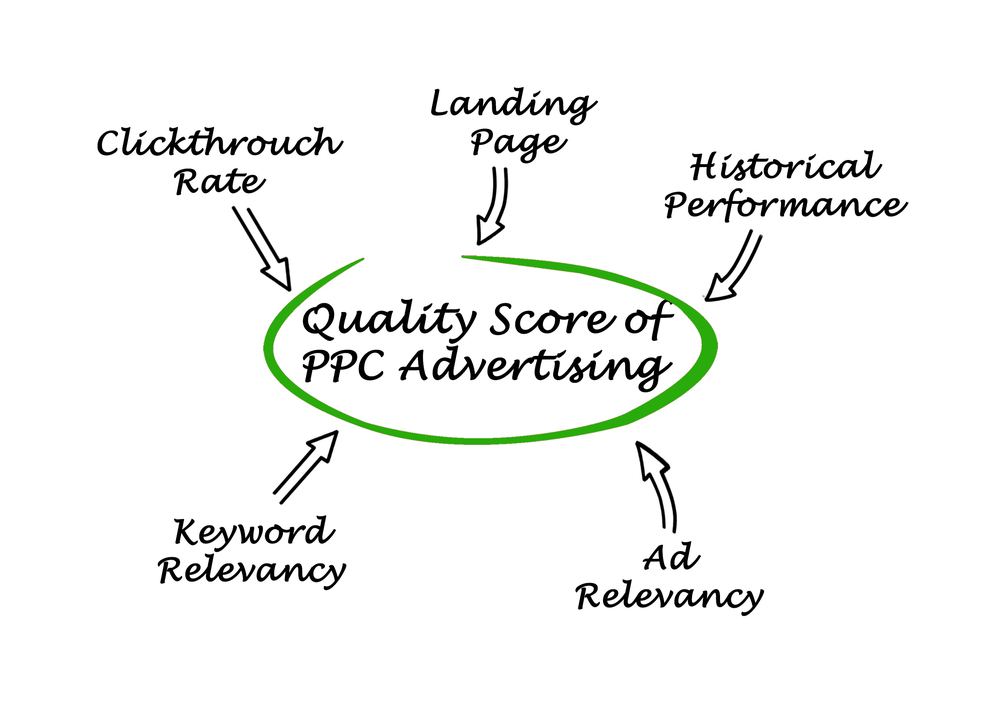
Google puts a lot of time and effort into ensuring that it delivers the best and most relevant results to its users. As part of any advertisement that you create on Google Ads, you will see a quality score which is a mark out of 10. Simply, low quality scores will mean low impressions.
So how can you ensure your advert achieves a high quality score?
Ensure that your advertisement is well targeted in terms of keywords used, location and the best landing page possible. For example, an advert that sends users to a landing page on flooring that targets tiles will not benefit from a good quality score as Google will deem the advertisement misleading.
SEO and PPC
Brothers in arms, SEO and PPC most certainly do work together. Whereas PPC can be utilised to provide a quick boost, SEO provides the ultimate goal, which is consistent organic traffic.
A localised London SEO campaign services both your website’s performance and your advertisements; because if Google recognises that your website is London-based then this will help to qualify the relevancy of any localised ads.
In the end, everything comes together. While you can (foolishly) put your eggs into one basket, putting in the leg work on your site’s SEO can assist your paid campaigns by helping Google to identify who your site benefits best.