
Design Tips For A Better Business Environment
If we’re really honest about things, business environments aren’t always known for their style – they’re functional more than anything else, and whether it’s an open-plan office, a café, a clinic, or a busy showroom, too many workplaces go a bit far in that direction and forget about everything else. But the thing to remember is that design matters, and it matters a lot more than most people think.
In the end, a well-designed space does more than just look good… It can actually do things like improve productivity, give a positive impression to customers, reduce stress, and even make your brand identity stronger, all without saying a word. That’s why it’s worth thinking about how your business environment is designed to make sure it’s living up to its potential. So whether you’re starting fresh or looking to breathe new life into your existing setup, here are some smart and simple design ideas to help create a better business environment – one that works just as well as it looks. With that in mind, keep reading to find out more.
Make Sure You Design With Purpose
There’s really no shortage of inspiration out there – just type something like ‘modern office design’ or something similar into your search engine, and you’ll find thousands of images of bright, airy spaces with minimalist furniture and gorgeous artwork on the walls. But although these places might look good at first glance, these images might not show the reality of working in a space like that, and it might not be such a great working environment, no matter how great it looks.
If you want the best business design, it’s not about just seeing something lovely and smart and trying to copy it – it’s got to solve your current problems, otherwise you’re just changing things (and spending money) for the sake of it. So what needs to be better? Maybe you need better flow for customers moving through the space, for example, or perhaps your staff are all crammed together so it’s hard for them to focus. What about the reception area? Does it look a bit tired so it doesn’t end up giving your visitors the welcome you want it to?
The first step when it comes to a great design is to ask the right questions about what’s not working, what could feel easier, what needs to be calmer, and what should be more functional. If you start there, and then move forward and look for creative ways to fix the issues through your new design, including the layout, the lighting, and the furniture, you’ll be on the right track.
Make The Space Work Harder
Space is expensive, and most businesses don’t have as much of it as they’d like, and that’s why making every square foot count is a must. Think about how people move through your space, whether they’re staff, customers, or anyone else. Are there certain areas that get really crowded at specific times of day? Is there someone quiet people can go so they can focus better or have a meeting? Are there places that people avoid entirely?
It could be that simple layout tweaks can help spread people out more and make the entire space more usable and comfortable. So you might try moving furniture around, trying modular pieces so you can change things when you need to, or perhaps even using lighting and colours to define zones – all of that can help people use a space better so none of it is wasted.
Plus, don’t forget your vertical space – shelves, wall hooks, hanging planters, and various clever storage solutions can all make a massive difference, especially if things are tight at the moment; you never know, you might be able to really open things up in ways you never realised you could.
Make It Match Your Brand
Your physical space is really an extension of your brand and the personality of your business – or at least, it should be. That means you need to match your business design ideas to the kind of business you’re running and how you want it to come across – is it casual? Formal? Quirky? Creative? Whatever it is, it’s best to make your working environment look and feel the same, and that way, no one’s going to get confused and it’s going to be easier for everyone to understand what’s expected of them and how they’re meant to behave.
Colours, materials, artwork, and even the style of your furniture all go towards making this happen, but don’t worry – you don’t have to go overboard and throw everything that might even slightly match your business at the place. That’s just going to cost a lot, take a lot of time, and probably mean it’s cluttered and confused as a result. What you’ll really need is consistency, so choose the style you’re aiming for and stick with that, and in that way, it’ll be easier for everyone to get what you’re going for.
For example, if your brand is all about natural materials and sustainability, using wood, recycled materials, greenery, soft lighting, and so on can all help to show that. Or if you’re more about tech, you’ll probably want to have clean lines, smart lighting, and open spaces.
Light Is Important
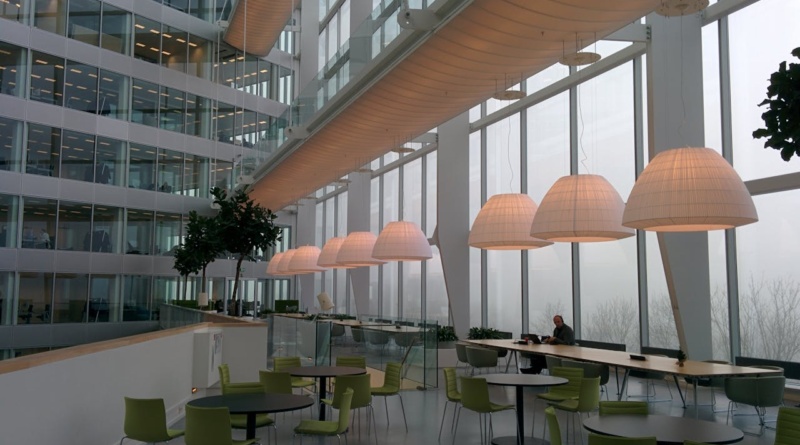
Lighting is one of the most underrated elements of design, but it plays a massive role in how a space feels, and the reality is that poor lighting can make even the best interiors feel gloomy or uninviting. On the other hand, great lighting can lift a space instantly, making it feel more open, vibrant, and energising, and that’s going to be good for everyone, whether they work in the space or they’re just passing through.
And don’t forget that natural light is always the winner, so if you’ve got access to windows, really make the most of them. You need to get rid of the heavy blinds, position workspaces or key areas where the daylight hits best, and if natural light is limited, focus on layered artificial lighting like task lights for desks, warm ambient lighting for relaxed areas, and spotlights or LED strips to highlight features.
Speaking of which, details like an LED handrail can do more than just add safety – they bring an extra touch of style and clarity, especially in stairwells or dimly lit areas. It might be subtle, but people will notice (in a good way) and it could be what helps you stand out from the crowd.
Think About Acoustics
This idea is so easy to miss completely, but it can become a problem, so it’s worth adding to the list. The fact is that sound affects how comfortable a space feels, especially in open-plan offices, cafes, or really anywhere people are talking, thinking, or trying to concentrate (so pretty much everywhere).
If noise bounces off every wall and surface, it basically creates a low-level feeling of stress that’s hard to shake off, so you should think about soundproofing. That doesn’t mean having to have specially thick walls or doing any major renovations – you can do smaller things like adding acoustic panels, having soft furnishings, using rugs, covering chairs in fabric, and even suspended ceiling tiles. In the end, you’ll want a space where people can hear what they need to and tune out what they don’t, and if your team currently have to step outside to make a call or they’ve taken to wearing noise-cancelling headphones as standard, it’s probably time you made those small changes to see what’s going to help.
Comfort Is Crucial
Whether it’s your staff or your customers, comfort is key when it comes to how long people want to spend in a space – and how they feel when they leave. The fact is that good design actually helps to support the body as well as look good, so you’ve got to pick furniture that fits real human beings, and doesn’t just have a lot of style but no practical use.
If your staff are sitting in the same chair for eight hours a day, that chair really does matter. And if your customers are waiting for appointments or browsing your shop, small details like padded seating or the right lighting can make their experience a better one and help to keep them calm.
And even the temperature plays a role because no one does their best work when they’re too hot or freezing cold – it’s got to be just right.
Inject A Bit Of Life
Too many business spaces feel totally sterile, and although that might be safe, it’s also instantly forgettable, so injecting a bit of life into the place makes sense. One thing you can do is add plants because they don’t just look good, they actually improve air quality and reduce stress too. You can pick a few low-maintenance options and spread them out through the space, but if you’ve not got a lot of natural light, fake plants can work well too (they just won’t clean the air, of course).
Artwork helps too, and it doesn’t have to be expensive or from a gallery either. Framed prints, local photography, maybe a mural… they can all add some colour and personality to a place that would otherwise feel boring and flat. And of course, if it’s possible, get your staff to personalise their spaces too – they’ll be a lot more invested that way.
Finally, always do your best to embrace seasonal themes and holidays – it’s important to invest in commercial Christmas displays and general decorations, for example, to help keep the mood positive during the busy winter periods.