
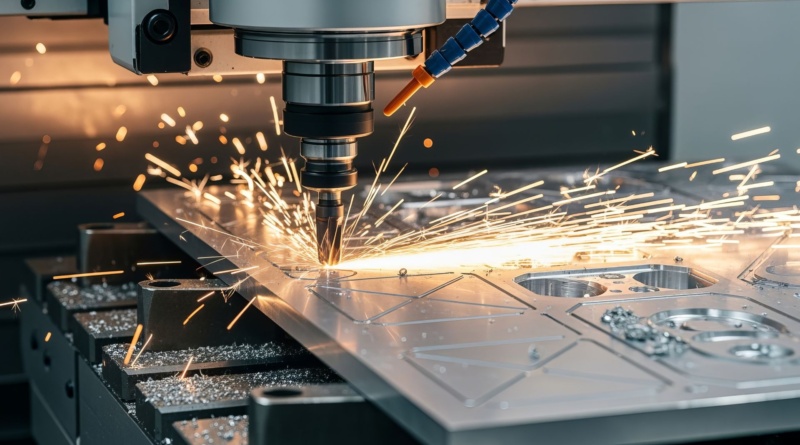
Why Precision Matters in High-Performance Applications
When one small part gives out in a serious product, it is almost never “just one part.” The fallout can snowball into recalls, safety concerns, late launches, warranty claims, and customers who start wondering if they trusted the wrong brand.
That is why precision matters so much. It keeps the original design promise intact, whether you are working on aircraft components, medical device housings, automotive systems, electronics, or industrial assemblies. It also helps you reduce waste, improve fit, and build products that hold up in the real world. And yes, even formed plastic parts can meet far tighter expectations than many people used to assume.
Impact of Precision in High-Performance Applications on Industry Success
Precision is the quiet backbone behind products that simply have to work. In demanding industries, precision in high-performance applications affects reliability, safety, and high-performance application accuracy in very direct ways.
Only 36% of manufacturers surveyed say they can currently make informed business decisions with their existing data, leaving 64% unable to do so.
That gap matters. If teams cannot trust their data, it becomes much harder to control quality, predict problems, or improve the process before defects start showing up.
Direct Influence on Product Reliability and Safety
Tiny errors can turn into big headaches when parts deal with heat, pressure, vibration, chemicals, repeated handling, or tight assembly requirements. In a medical device, a poor fit may create a patient safety issue. In aerospace, a small dimensional miss can raise the risk of failure. Nobody wants to discover that during use.
When engineers need repeatable shapes, smart material choices, and production support that protects the original design intent, they often rely on custom thermoforming services to create complex plastic components with dependable results.
Shaping Innovation and Next-Gen Solutions
Reducing failure risk proves that high-performance application accuracy protects both products and people. But there is another upside: it gives designers room to be bolder.
Accurate components can support lighter vehicles, smaller electronics, better surgical tools, and more efficient robotic systems. When you can trust the part to behave as expected, you do not have to overbuild everything just to calm your nerves.
That is where precision moves beyond engineering. It becomes commercial. It becomes competitive. It helps a product earn its place in the market.
Exploring the Importance of Precision Engineering
Once precision starts affecting cost, safety, performance, and customer trust, it stops being a small production detail. It becomes a business priority. The importance of precision engineering shows up anywhere quality, compliance, and reputation are on the line.
Driving Forces in Competitive Markets
Companies leading in electric vehicles, aerospace, medical parts, robotics, and electronics usually do not win because they move fast once. They win because their products perform consistently, again and again.
Think about battery housings, satellite components, FDA-compliant trays, protective covers, or sensor assemblies. Each one depends on controlled dimensions, stable materials, and clean production documentation.
A single sloppy tolerance can create issues downstream. Suddenly, assembly slows down. Parts need rework. Quality teams get pulled into emergency mode. Sound familiar? It happens more often than anyone likes to admit.
Competitive Advantage Through Quality Assurance
Market leaders understand that quality cannot be inspected at the very end. It has to be built into the process from the start. Precision supports inspections, certifications, traceability, and documented quality systems that buyers often need before approving a supplier.
Poor precision gets expensive quickly. It creates scrap, rework, delayed product launches, and those uncomfortable customer calls nobody wants to make.
So the question becomes simple: how do strong manufacturers keep accuracy from slipping?
Core Technologies and Methods Elevating High-Performance Application Accuracy
The best manufacturers do not rely on luck, heroics, or one final inspection before shipment. They build systems that measure, correct, and repeat accuracy throughout production.
Latest Precision Measurement Technology Innovations
Modern teams use vision systems, laser measurement, in-process inspection, and real-time dimensional checks to catch variation early. That is where precision measurement technology becomes more than a measuring tool. It becomes a control system.
When precision is paired with data-driven process controls, manufacturers have reported: “yield increases up to 5.2%, defect reductions by as much as 70%, and cycle time decreases of over 15%.”
Those numbers are not just nice-to-have improvements. They can change margins, delivery schedules, and customer confidence.
Role of Advanced Manufacturing Processes
Inspection helps you find variation, but measurement alone does not create better parts. CNC machining, additive manufacturing, thermoforming, and automated trimming still need to turn accurate data into accurate outcomes.
Hybrid production is becoming more common, too. A component might begin with printed tooling, move into forming, and then finish with CNC trimming for tighter edges and better fit. That kind of workflow gives teams more flexibility without giving up control.
With better measurement and advanced manufacturing working together, precision becomes something you can plan for instead of something you hope for.
Benefits of Precision in Engineering for Modern Product Development
The payoff is practical. Fewer defects. Less waste. Better fit. Stronger parts. Happier customers. The benefits of precision in engineering show up in cost, speed, product performance, and long-term brand trust.
Cost Efficiency and Waste Minimization
Precision reduces scrap because fewer parts need to be remade. It also helps teams use material more wisely, which matters when you are working with plastics, composites, specialty sheets, or engineered materials that are not exactly cheap.
Moving from loose workflows to precision-based production often reduces rework and speeds up approvals. It may not sound glamorous, but it saves real money. And in manufacturing, boring savings are still savings.
Superior Performance and Product Longevity
Less scrap and rework show how quickly precision can pay back on the factory floor. Customers feel the difference in smoother assembly, better product fit, fewer warranty claims, and longer service life.
The result is easy to understand: fewer defects, lower waste, and longer-lasting products that help protect your reputation.
Custom Thermoforming Services: Accelerating Precision in High-Performance Engineering
For manufacturers trying to balance flexibility, performance, and cost, custom thermoforming services can be a practical way to produce demanding plastic parts. They are especially useful for covers, housings, trays, panels, enclosures, and formed components with detailed shapes.
Thermoforming sometimes gets underestimated. That is a mistake. With the right tooling, materials, trimming, and inspection, it can support serious performance requirements.
Advantages of Thermoforming for Complex Geometries
With custom thermoforming services, manufacturers can create large, lightweight parts with smooth curves and consistent forms. This makes the process useful for prototypes, bridge production, and lower-volume projects where injection molding may be too expensive, too slow, or too rigid for the job.
Add CNC trimming and thoughtful tooling, and formed parts can meet demanding fit requirements. In other words, thermoforming is not just a “good enough” option. In the right application, it can be the smart one.
Customization and Material Selection for Engineered Performance
Repeatable geometry is only half the story. The material has to do its job, too. Engineers may choose ABS, PETG, polycarbonate, HDPE, or specialty grades based on impact resistance, heat performance, clarity, chemical exposure, or regulatory needs.
This is where material selection becomes part of accuracy. A beautifully formed part made from the wrong sheet can still fail in the field. No one wants that surprise.
Thermoforming proves precision is not locked to one manufacturing method. It becomes a strategic advantage when the process, geometry, and material are matched correctly.
Emerging Trends Shaping the Future of Precision in High-Performance Applications
Expectations are climbing fast. Smart factories, digital twins, advanced sensors, and smaller components are pushing precision in high-performance applications into places that once felt out of reach.
Smart Factories and Digital Twins
Smart factories use live feedback from equipment and inspection systems to stop production from drifting. Digital twins let teams test process changes before adjusting the physical line.
That means problems can be spotted earlier, often before they become expensive. It also means quality teams do not always have to play detective after defects appear. Honestly, that alone is a relief.
Nanotechnology and Miniaturization
Real-time feedback and predictive tools help protect accuracy at scale. But as components shrink, the measurement challenge changes completely.
Healthcare devices, microelectronics, aerospace sensors, and compact robotics are already pushing tolerances smaller. At that scale, dust, heat, humidity, and material behavior can matter more than expected.
As smart factories, digital models, and miniaturization keep raising the bar, precision will become harder to maintain and more valuable to master.
Key Strategies to Maximize High-Performance Application Accuracy
Better accuracy usually comes from discipline, not magic. Teams need shared expectations, trained people, useful data, and equipment that fits the work.
Cross-Disciplinary Collaboration
Engineering, design, production, and quality teams should work together early. If a tolerance looks great on paper but cannot be held in production, that problem needs to surface before tooling begins.
Good collaboration also cuts down on blame. The conversation shifts from “who messed this up?” to “how do we prevent it next time?” That is a healthier room to be in.
Continuous Employee Training and Technological Upgrading
When teams work together, errors appear earlier, and improvements are easier to keep. Training helps people stay sharp on metrology, tolerances, materials, inspection methods, and quality systems.
Technology matters as well. Better inspection tools, cleaner data systems, automated checks, and repeatable processes help keep high-performance application accuracy from drifting over time.
The best accuracy gains usually come from aligned teams, skilled people, and technology that supports the work instead of complicating it.
Final Thoughts on Unmatched Precision
Precision is what turns a promising idea into a product people can trust. It improves safety, reduces waste, lowers rework, and helps parts survive demanding conditions. From aerospace and medical devices to electronics, robotics, and automotive systems, the need is straightforward: parts must fit, function, and repeat.
Processes such as thermoforming, CNC trimming, advanced inspection, and data-driven process control make that goal more achievable. In high-performance work, precision is not a luxury. It is the difference between “good enough for now” and dependable for the long haul.
Common Questions About Precision in High-Performance Applications
What are the three types of precision?
Precision can assert itself in three different ways: arithmetic precision, meaning significant digits for a value; stochastic precision, meaningthe probability distribution of possible values; and granularity, meaning grouping or level of aggregation of values.
Why is this precision necessary to accomplish the purpose of the measurement?
If the person using the instrument is ignored, a more precise measuring instrument usually produces more precise measurements. That often supports more accurate results, better comparisons, and stronger confidence in engineering decisions.
How does precision in manufacturing impact product recalls and liability?
Poor precision can create defects that escape inspection and fail in use. That raises the risk of recalls, warranty costs, customer harm, and legal claims, especially in regulated fields.