
How Visual Wayfinding Helps Travellers Navigate China’s Cities
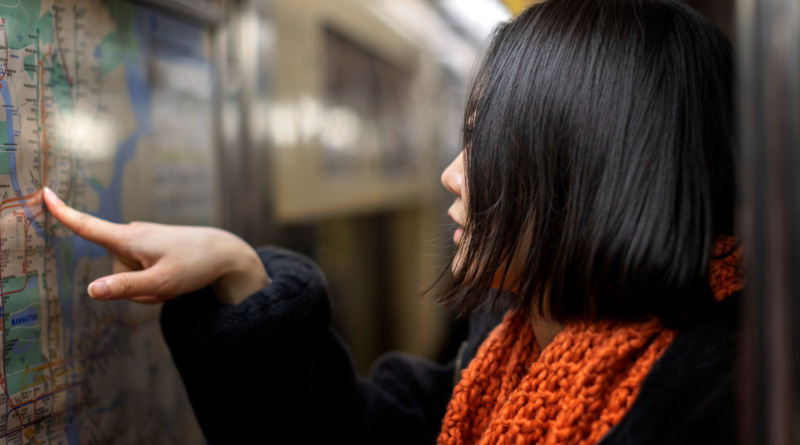
China’s largest cities communicate at enormous scale. Metro maps, colour-coded lines, pictograms, building numbers and digital screens move millions of people through complex spaces each day. For a visitor who cannot read every character, these visual systems are not background decoration; they are a practical language that can make an unfamiliar city easier to understand.
A connected phone helps with translation and route checking, but observation remains essential. Before travelling, visitors can review TravelKon China eSIM options, confirm handset compatibility and save the first destination in Chinese characters. Taking a screenshot of the entire address gives a driver or station employee something clear to read if a map pin is ambiguous.
Read The Whole Sign System
Do not focus on one translated word and ignore the surrounding design. Line colours, arrows, platform numbers, exit codes and landmark icons work together. On a metro journey, note the line number, direction, interchange station and final exit before boarding. A correct station reached through the wrong exit can still add a long walk.
Photograph the local area map displayed near the station. It can reveal which side of a major road the exit reaches and how numbered gates relate to nearby buildings.
Use Landmarks As Visual Anchors
Towers, rivers, elevated roads and distinctive façades can provide orientation when street layouts feel abstract. Choose one visible landmark near the hotel and learn how it appears from several directions. At night, remember that lighting can change the appearance of a building dramatically.
Background knowledge also improves interpretation. The Australian Department of Foreign Affairs and Trade’s China country brief offers an official overview of the country’s geography, society and bilateral context. Practical travel decisions should still be based on current transport and government travel information.
Save Addresses In Two Forms
An English business name may not match the wording used locally. Save the full address in Chinese characters and keep a photograph of the entrance or logo when available. For a hotel, include the front-desk phone number. These details can resolve confusion faster than repeating a translated pronunciation.
When requesting help, show only the relevant line rather than a crowded itinerary. Increase the screen brightness, enlarge the text and keep personal details out of view. Clear information is easier to understand and safer to share.
Notice What Colour Can And Cannot Tell You
Colour is helpful for identifying transport lines and zones, but it should not be the only cue. Look for line numbers, characters and terminal-station names as well, especially where similar hues appear. Travellers with colour-vision differences should rely on this redundant information from the outset.
The same principle applies to icons. A symbol may suggest an information desk, transfer or toilet, yet the arrow and floor number determine where it actually is. Read the cluster rather than guessing from the most familiar shape.
Design A Personal Wayfinding Routine
Before leaving any place, check three points: the destination as written locally, the transport line and direction, and the exit nearest the final address. Save the return route before the day becomes busy. If uncertain, stop in a safe area and solve the problem before following the crowd.
Strong visual communication becomes visible when it helps people act with less hesitation. By combining official signs, local-language addresses, screenshots and careful observation, travellers can move through China’s complex urban spaces with greater independence while appreciating the design systems working around them.
Travellers can sharpen that appreciation by comparing systems between cities. Notice whether station exits use letters or numbers, how transfer routes are drawn and which public symbols remain consistent. Record observations only where photography is permitted and keep moving areas clear. The comparison reveals not one universal solution, but many design choices shaped by space, passenger volume and local behaviour.