

8 Reasons Why No One Is Visiting Your Website
This article was written by one of our amazing contributors! Content may include promotional links.
Not getting any traffic to your website? There could be many possible reasons as to why you’re not getting any visitors. Here are just a few reasons to consider.
#1 | Your domain name is putting people off
A bad domain name can be the first thing to put people off.
It could be that your web address is difficult to spell or memorise. You should avoid replacing letters with numbers for this reason and should keep the domain name short and snappy – anything over three words is usually too long to remember. Ideally, the domain name should relate to the content or it should be so wild that people remember it anyway.
You should also watch out for ambiguous meanings – sometimes when two words are placed together they can be misread as other words (for example Kids Exchange becomes problematic when written as kidsexchange.com). This is certainly something you don’t want on a company website, where it could have a negative impact on your professionalism.
If you’re not sure whether your domain name is suitable or not, try conducting a survey on people to see what they think of it. Changing a domain name isn’t easy, but it is possible and could be worth the hassle if it boosts your traffic.
#2 | Your website has poor search engine rankings
Is your website easy to find on search engines? If the answer is no, this could be a big part of why you’re not getting much traffic.
Search engines are one of the biggest sources of traffic for the average website. Most people don’t search beyond the third page when using search engines. By investing in some SEO (search engine optimisation), you can help to improve your rankings when people enter specific keywords.
SEO can be done oneself, but it can be complicated business. Most people think it’s all about use of keywords – whilst these do play a major part, so many other factors can affect your rankings (many of which are also mentioned in the points below). There are sources online that can help you to understand elements such as on-page SEO and link building if you fancy going the DIY route. Alternatively, you may prefer to simply hire an SEO company to do the work for you.
#3 | You’re not using social media
Social media can be another important ingredient in encouraging visitors. Many people stumble across sites for the first time by people sharing them on Facebook and Twitter, or by seeing ads posted on these platforms. Meanwhile, a lot of your return visitors may be people who have followed you on social media – having social media pages allows you to keep past visitors updated with new content.
Facebook, Twitter and Instagram are the three biggest social media platforms, all of which are worth signing up to. Business owners may want to invest in social media marketing to help build up a following, although if you feel you’re already social media savvy you may be able to easily manage this yourself.
It’s worth adding a social plug-in to your website that allows people to easily follow you on Facebook, Twitter and Instagram with the click of a button. You can find information on how to embed this plug-in online.
#4 | You’re not marketing your website elsewhere
If it’s a personal website, you may not need to do much more promotion, but if it’s a business website and you want more visitors, you may want to consider promoting your site elsewhere.
Many companies have started incorporating their website address into their everyday branding. This could involve printing it on the side of your company vehicle, printing it on business cards and placing it in your email signature. In the past people have always done this with phone numbers so it makes sense to also do this with your website, allowing people to easily look you up.
#5 | Your website isn’t mobile compatible
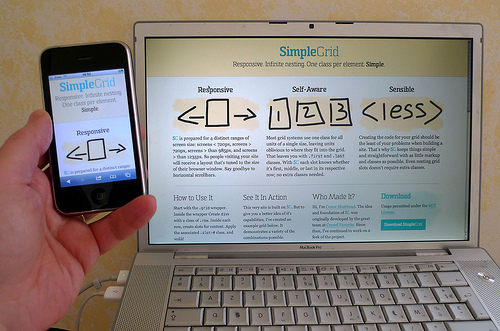
More people are now using mobile devices to use the internet than they are using PCs. If your website isn’t mobile compatible, you could be preventing lots of visitors from accessing your site, which could be a big reason as to your lack of visitors.
Most websites nowadays are automatically mobile compatible – it’s likely to only be old websites that haven’t been updated in a while that struggle to load on mobile phones. If your website doesn’t seem to load on a mobile device, you can always hire a web designer to build a mobile version of your site.
Some sites may load on mobile devices, but many not be mobile-friendly. For example, text viewed on a PC screen may be too small when viewed on a mobile screen. Similarly, you may want to create a mobile version with enlarged buttons – small buttons that may be easy to click on using a PC cursor may be difficult to click on when tapping them with a finger.
#6 | You’re not updating your website
If you’re website hasn’t been updated for a while, it could also be turning visitors away. This is something to look out for with blogs – if you haven’t published any new blog posts for a while, people may think that you’ve quit your blog. Meanwhile, with company websites, failing to update your website could make people think that your company is no longer in business. Posting new content all the time reassures people that your website is still active and will encourage visitors to keep coming back.
Regular updates are also good for SEO – a site that is updated frequently usually has better rankings than a site that isn’t updated on a regular basis. This could be essential for attracting new visitors.

#7 | Your website looks ugly
If your website doesn’t look good, you’re unlikely to get many return visitors. There are so many factors that can lead to a website looking ugly.
The first is the use of colours and fonts. Certain clashing hues could make your website unreadable, as could certain fonts. Try to stick to a classic font that isn’t overly squiggly or artsy, and make sure that colours contrast their background well. Placing photos over images can often be a problem – you may need to think about fading the image in the background or placing the text strategically on the image where the colours are less likely to clash.
Next you should consider the text/image ratio. Walls of text should ideally be avoided on websites unless you own a blog as they can intimidate people and prevent them from reading. Try to keep text condensed to short and snappy segments whilst focusing on large images (this is particularly important when designing a homepage).
Finally the navigation is an important factor to consider. If people can’t easily find information on your website they get frustrated and not return. Create a clear tab system or use a search bar for people to easily to look up the information they need.
If you’re not sure whether your website is ugly or not, consider holding a survey or getting a professional to review your website for faults. You may then be able to make improvements yourself or hire a web designer to make these improvements for you.
#8 | Your website loads too slowly
Another common deterrent is a slow loading time. If your website takes ages to load, visitors may grow impatient and decide not to proceed.
A slow loading time can be the result of many factors. It could be that you’re using a slow hosting server. Some servers may contain data from huge amounts of websites leading them to become slow. Moving to a new improved hosting server or even setting up your own hosting server could result in a quicker loading website.
Alternatively, you could simply simplify the amount of data on your website. If your website contains lots of videos or gifs or high definition images or ads, it could be causing it to load slowly purely due to the amount of information that needs to be loaded. Try to limit embedded media such as videos and gifs, whilst avoiding ad overload (having too many ads – particularly pop-up ads – could simply be annoying too, further leading to a loss in visitors).