
Interactive Websites: The Extra Edge Your Brand Needs Online
In a world where attention spans are measured in milliseconds, visitors expect more than information on your site. They want an experience.
This has led to the emergence of interactive websites. If you’re an entrepreneur, a UX designer, or a content marketer searching for a more effective method of engaging your consumers, you need to understand why interactive websites are becoming more popular (and why they’re so effective).
Agencies like eDesign Interactive have shown just how powerful smart interaction can be. They’re transforming websites from static pages into engaging, conversion-driven experiences that users enjoy exploring and just keep coming back to.
More about how you can do that in today’s article.
The Importance of Interactive Websites
In order for you to understand this, just imagine two websites. One is like an HTML brochure: straightforward and fixed. The other one invites you to click, scroll, quiz, learn, and ask questions.
- Which one is alive?
- Which one will keep you longer?
- Which one is more likely to convert the visitor into a customer?
The answer to that question is always the second one. Interactive websites not only deliver information; they also offer opportunities for engagement that lead to dramatically increased conversion rates and better user experiences.
Engagement and Conversion Numbers You Should Know
Don’t believe us? Look at the stats.
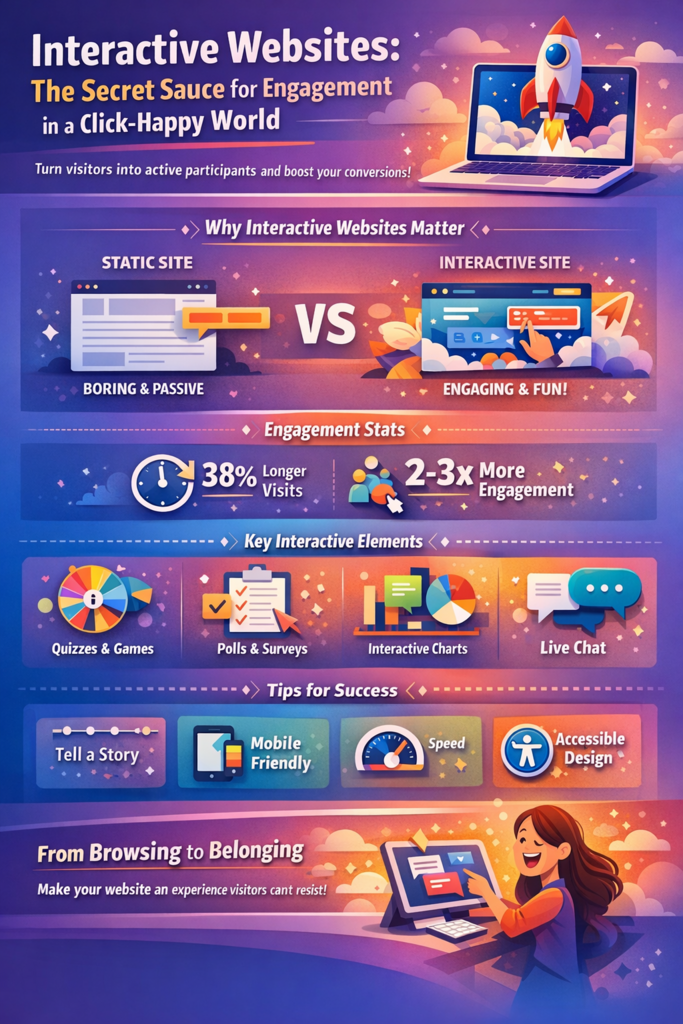
Interactive content creates 2-3 times more engagement than static content and helps extend the time that users spend on the page by up to 38% (compared to pages without interactivity).
Why should that matter to you? Well, high engagement means:
- More time on site
- Enhanced brand awareness
- More opportunities for conversion to occur
- Better SEO
And if you are interested in learning more about how audience engagement looks in the age of technology, read our article about engagement in the digital age.
User Expectations Are Changing
Here’s another astonishing fact.
81% of marketers believe that interactive content draws attention better than static content.
That’s not just a cool stat. That’s business-critical. When people feel involved, they browse for longer periods of time and are more likely to return (and, most importantly, take action).

Source: https://www.freepik.com/
What Makes a Website Interactive?
Interactivity doesn’t have to mean complexity. It just means that users interact with your website in addition to being able to read it.
Below are some common interactive elements that can improve the user experience:
- Animations and micro-interactions (feedback when you click, hover, or scroll)
- Gamified features (like badges, quizzes, progress bars)
- Interactive data visuals (charts, sliders, and draggable timelines)
- Live chat or AI assistance (real-time chat)
- Polls and surveys. You can ask users, and let them answer instantly
- Interactive maps or tours. They’re suitable for events, products, or service areas
Every component encourages viewers to do something, not simply watch.
Tips for making Your Website Interactive (And Effective)
Good interactive design should always be intentional, intuitive, and support your brand goals. Here are some tips on how to do that.
Begin with the User and Not the Technology
Before adding all of the new fancy features, ask yourself:
- What problem does this solve?
- Does it help users find what they’re looking for?
- Does it feel natural?
Sometimes, having interaction for the sake of interaction will come off as gimmicky or even annoying.
Tell a Story through Interactive Elements
The art of storytelling is not something that is reserved for book writers alone; it is one of the most powerful techniques that will help guide the user through the content that you have to offer.
For example,
- Slide-activated effects can reveal key points as you scroll
- You can add timelines that users can drag to discover events
- You can use interactive hero sections that respond to clicks or movement
This helps keep people curious and entertained.
Optimize for Performance
Interactive features can slow down your site if you’re not careful.
Find that balance between creativity and speed. Use optimal images, lightweight scripts, and high-speed hosting services.
One of the key factors that makes users leave a page prior to even interacting with the content is slow loading. Always keep that in mind.
Think Beyond Desktop – Mobile First
Given that most internet activity takes place on phones and tablets, your interactive elements need to adapt to that.
A hover effect on a desktop does not work for smartphones. So, it is always a good idea to ask yourself: “Does this interaction work with touch?”
If no is the answer, adjust.
Make It Accessible
If a feature doesn’t work with assistive tools (like screen readers or keyboard navigation), it effectively excludes a part of your audience. Choose tools that include everyone.
Interactive Web Design That Converts
Interactive websites are great for conversions.
Why? Because users who stick around and participate will be that much more invested. And invested users take action.
Here’s how you can use this.
Instead of providing a static FAQ page with questions and answers listed out linearly, provide an interactive FAQ widget that expands answers when users click or when they search something up. This helps them find what they’re looking for faster, but also feels more personal and dynamic.
Use Data to Improve Engagement
Good interactive websites require constant upkeep.
Track:
- How long do people stay on your site
- Rates of user interactions
- Click maps
- Scroll depth
- Conversion paths
These help measure how users really behave, rather than how you believe they should.
Use this data to refine your interactive features. The key is in staying adaptable.
Balancing Fun With Function
Ultimately, interactivity is a tool. Not just a trend.
When users enjoy their experience, feel understood, and can easily find what they came for, magic happens.
Engagement isn’t just about using the cool new design. It’s about creating a connection with your audience, helping, guiding, and surprising people in a good way.
Interaction Meets Impact
Interactive websites are no longer just nice to have. They’re something your competition is working on (excessively). They’re becoming the norm.
Users expect to explore information online. They want an experience. They want a feeling. And they want to feel like they know you, get you, and know what your brand is all about.
Making your website interact with them will just bring them closer to feeling like you’re their new best friend.
Want to learn more about the role of visuals and engagement in communication? Check out our article Designing Emergency Alerts People Actually Notice for a fresh perspective on how to grab someone’s attention online. You won’t be disappointed.