
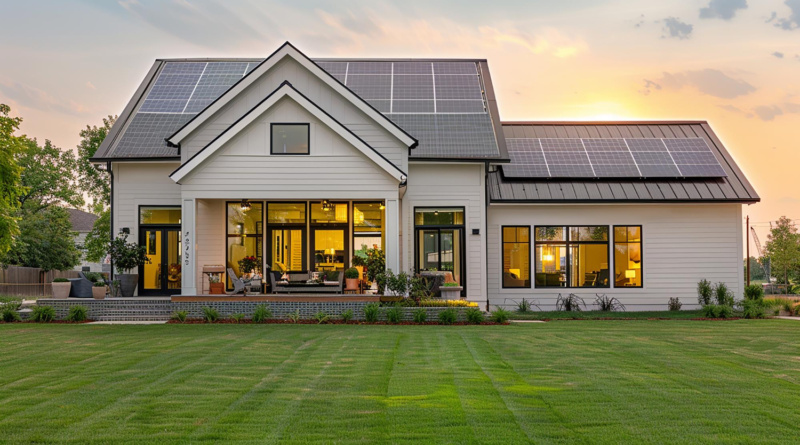
Smart Appliances and Solar Power: The Ultimate Eco-Friendly Home Setup
Solar panels on the roof used to be the gold standard for a greener home. Today, however, that lone array is only one player in a tightly choreographed ensemble of smart appliances, real-time monitoring, and predictive software. When every device from your dishwasher to your heat-pump dryer can listen to solar production data and react in milliseconds, you stop owning gadgets and start running a coordinated energy system.
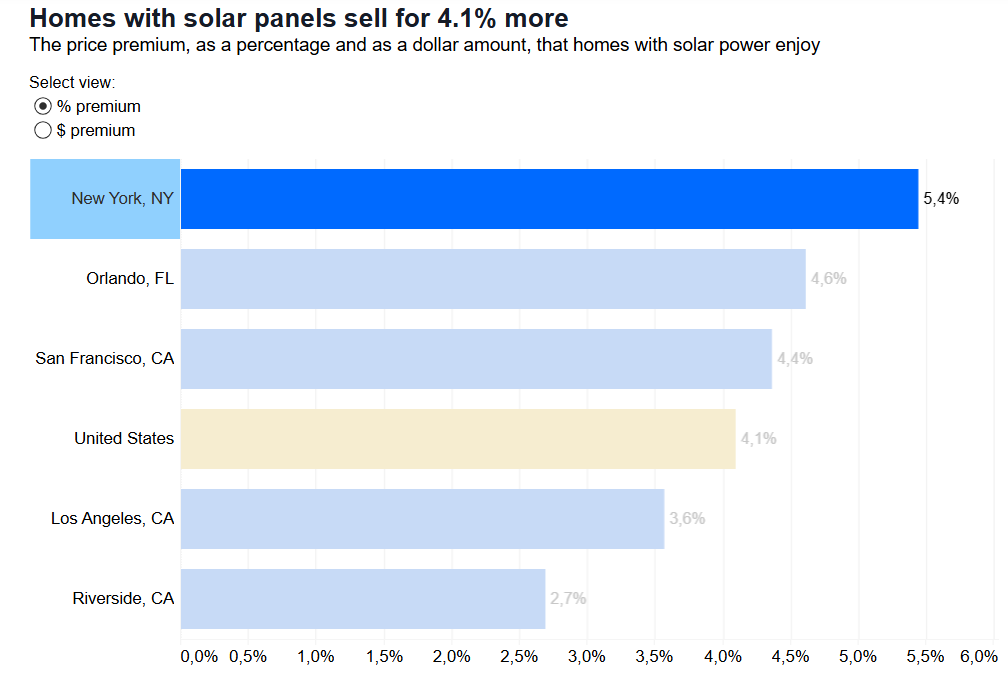
For homeowners, sustainability-focused shoppers, and installers, the shift brings three tangible wins: bigger utility savings, less grid strain during peak demand, and a documented resale premium – Zillow highlights a price bump for smart-energy listings and other features.
How Solar Panels and Smart Appliances Talk to Each Other
At the heart of an eco-friendly home is clear communication among three layers:
- Generation – solar panels, micro-inverters or string inverters
- Management – the smart electrical panel and a Home Energy Management System (HEMS)
- Load – connected appliances that can throttle, delay, or accelerate their cycles
From Sunlight to Schedules
When photons hit a photovoltaic (PV) module, DC electricity flows to the inverter, where it’s transformed into the 120/240 V AC that U.S. appliances expect. Traditionally, that’s where the story stopped. In 2026, a HEMS keeps the narrative going by timestamping every watt, predicting usage peaks, and, if you enable it, automatically starting your washer the moment solar production spikes above household demand.
A dishwasher run at noon on a sunny Saturday can cost zero grid kWh. The same cycle at 7 p.m. can cost 2-3× more under most time-of-use plans.
A modern smart electrical panel (think EcoFlow’s Power Insights series) acts as an orchestra conductor. Through a single app you can:
- Identify “vampire” loads hiding in standby mode
- Remotely cut power to a circuit that you forgot to turn off
- See real-time solar back-feed vs. battery charging in one dashboard
Appliance Repair Software
A solar-powered smart home ecosystem is only as strong as its weakest link and that link is often a malfunctioning appliance sitting quietly in an inefficient “limp mode” for days or weeks before anyone notices. A compressor running warm, a heat pump cycling too frequently, or a dishwasher drawing twice its rated wattage can quietly drag down an otherwise well-optimized energy setup. This is the operational gap that appliance repair software helps close, not by connecting to your appliances directly, but by making the repair technicians who service them dramatically more effective. Platforms built for appliance repair businesses let service companies manage job scheduling, technician dispatch, parts inventory, and customer communications from a single dashboard. When your Wi-Fi-enabled refrigerator throws a fault code, a properly equipped repair company can:
- Log the work order, assign the nearest available technician, and confirm a same-day arrival window, all without a single phone call
- Track parts availability in real time so the tech arrives with the right components, not just a diagnostic tool
- Store a full digital service history for every appliance in your home, creating the kind of documented maintenance record that supports warranty claims and adds tangible value at resale
For homeowners running a solar-integrated setup, faster turnaround time on repairs has a direct energy impact. Every day a smart appliance operates outside its efficiency spec is a day your HEMS is making decisions based on incorrect consumption data. Keeping equipment in peak condition isn’t just a maintenance chore – it’s a prerequisite for the automation to work as intended.
High-Impact Smart Appliances: Where to Spend First
Every kilowatt-hour you don’t need to buy is a kWh you don’t have to produce or store. That principle makes certain appliances far more strategic than others.
Refrigeration: Always On, Now Always Smart
A refrigerator never sleeps, so even a modest 15% gain pays back quickly. LG’s InstaView line, for instance, relies on inverter compressors that modulate speed instead of slamming on and off. The result is steadier temps, quieter operation, and roughly 700 kWh saved over a 15-year life span versus a 2015 baseline model. Add door-in-door viewing and motion-activated interior lights, and you cut cold-air loss each time someone raids the fridge.
Laundry: Heat-Pump Dryers and AI Washers
Laundry equipment sees fewer runtime hours than a fridge but draws far higher peak wattage, making it perfect for solar-timed operation. AI washers weigh loads, detect fabric type, and meter just enough water. Energy Star data places combined washer-dryer savings at roughly $130 per year for an average family. Heat-pump dryers such as the Bosch 800 Series run on 240V and reclaim latent heat, trimming energy use by up to 70% compared with a vented resistance unit. Because they exhaust no moist air outside, conditioned indoor air stays indoors, lessening HVAC workload.
HVAC and Smart Thermostats: The Seasonal Heavyweights
Heating and cooling still represent about 40% of typical residential electricity. Today’s smart thermostats tie into the same HEMS data that drives appliance automation. On a sunny February afternoon, the system may preheat the living space to 71°F while excess solar is free, allowing a graceful glide down to 67°F during a pricey 6-9 p.m. peak window. Each intelligent 1°F offset slices approximately 1% off annual heating or cooling costs.
Battery Storage and AI Dispatch: Smoothing the Solar Curve
Without storage, midday overproduction and evening scarcity remain a stubborn mismatch. Batteries solve the timing problem and, thanks to AI dispatch, maximize every watt.
Why Storage Changes the Game
Goldman Sachs confirms lithium battery prices drop to $80 per kWh in 2026, halving their 2023 cost. A 15 kWh pack rides through an evening cooktop session and keeps the Wi-Fi and fridge humming during storms. AI algorithms read weather forecasts and real-time utility rates, then decide whether to:
- Store surplus mid-afternoon solar
- Top off a partially charged battery with cheap overnight wind power
- Sell stored energy back when a utility calls a demand-response event
Homeowners in California, Arizona, and Texas earned $200-$600 last year from such events, cushioning payback even as net-metering rules tightened.
Below is a practical sizing table that installers use during design consultations.
| Household Profile | Recommended PV (kW) | Battery Capacity (kWh) | Typical Daily Load (kWh) | Notes |
| Apartment / Tiny Home | 3-4 | 5-10 | 8-12 | Covers lights, fridge, and router for 10-12 h outage |
| Standard 3-bedroom | 6-8 | 15-20 | 18-24 | Supports EV Level-2 charging off-peak |
| Large Home + Pool | 10-12 | 30-40 | 35-45 | Allows multi-day autonomy and HVAC backup |
| All-Electric Estate | 15+ | 50-80 | 60-90 | Geothermal, dual EVs, and workshop equipment |
Sizing Basics
A rule of thumb: battery capacity should equal roughly 60%-80% of average daily consumption if the goal is overnight autonomy. Go lower if your utility offers favorable net metering; go higher if outages are frequent or critical medical equipment exists in the home. Modularity matters – stackable packs from EcoFlow let you add capacity later rather than oversize on day one.
Maintenance and Longevity: The Overlooked Half of Sustainability
Many home-energy articles celebrate shiny new tech but skate past upkeep. Yet a neglected system can lose 5%-10% of efficiency in as little as two years, a silent cost few homeowners notice until bills creep upward.
A brief preview: yes, appliance repair software makes scheduling painless, but human eyes and calibrated meters are still required at regular intervals.
Annual Rhythm of a Healthy System
Before the bullet points, remember that proactive care preserves both savings and environmental intent.
- Spring. Inspect array hardware, torque-check roof-mount bolts, infrared-scan for hot spots, and upload inverter firmware.
- Summer. Audit HEMS automations; utilities change rate schedules annually. Ensure dishwasher or EV charging still lands in the cheapest window.
- Fall. Tackle appliance finesse: vacuum fridge coils, descale heat pump condensers, and examine gasket integrity.
- Winter. Perform a battery depth-of-discharge calibration and conduct an outage drill. The aim is muscle memory, not panic, when real storms hit.
Average annual cost: $150-$350, comparable to a single HVAC tune-up yet safeguarding a $25,000-$50,000 investment.
Predictive Maintenance: Machine Learning in Action
A modern HEMS tracks string-level PV performance. If one panel sags 3% below its siblings, the system flags “possible micro-crack” and sends a ticket, often through the same appliance repair software portal, to the contractor’s tablet. Catching degradation early can preserve $400-$600 in lost generation over a single summer. Just as important, it avoids efficiency ripple effects that would force the battery to cycle deeper, eroding its cycle life.
Replacement Lifecycles at a Glance
Panels: 25-30 years at 0.5%-0.7% annual output decline.
Micro-inverters: 15-25 years, $150-$300 each to swap.
String inverters: 12-15 years, $1,500-$3,000 replacement.
Batteries: 10 years to 70% capacity, but warranties now cover at least 6,000 cycles or 10 calendar years.
Setting aside about $500 per ownership year for planned replacements avoids bill shock and prevents emergency grid reliance at punitive rates.
Making the Numbers Work: Incentives, Payback, Resale
Financing questions often decide whether a project gets built. The good news: the math has never looked better.
Before diving into numeric snapshots, remember that incentives stack – federal, state, and sometimes utility programs can overlap without conflict.
Federal and State Sweeteners
The 30% Federal Solar Investment Tax Credit (ITC) spans PV and batteries through 2032. Separately, the Energy-Efficient Home Improvement Credit allows up to $3,200 annually for qualifying upgrades, including smart panels and high-efficiency HVAC. State rebates add thousands, and over 30 states now waive property-tax assessments on renewable systems. When these layers combine, a 9 kW array plus battery lands 35%-45% below retail outlay.
Real-World Payback Snapshot
| Component | Cost After Incentives | Annual Savings | Simple Payback |
| 8 kW PV + 15 kWh battery | $18,500 | $1,650 | 11.2 years |
| Smart panel + HEMS | $2,800 | $265 | 10.6 years |
| 2 heat-pump dryers | $2,400 | $190 | 12.6 years |
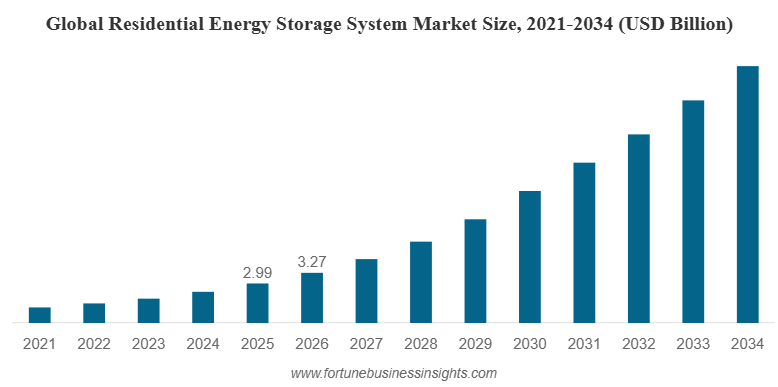
These numbers exclude demand-response revenue, which can shave another year off payback for homes in aggressive grid programs. Fortune Business Insights projects the residential energy storage market will hit $3.27 billion in 2026, reaching $6.74 billion by 2034.
Resale Premium
Because the next buyer inherits lower bills and blackout resilience on day one, they are willing to pay for the privilege. Listings advertising “solar with smart storage” sell six days faster and fetch that coveted 7% premium noted earlier. That uplift often eclipses any remaining loan balance, turning the system into a net asset rather than a sunk cost down the road.
Conclusion
Pairing smart appliances with solar power isn’t about collecting tech trophies; it’s about creating an integrated home ecosystem that produces, stores, and consumes energy with purpose. The formula is straightforward: generate clean kWh on-site, let AI shift appliance run times to coincide with that generation, store surplus so the party continues after sunset, and maintain everything proactively through connected diagnostics and solid best practices. Do it right, and you’ll enjoy quieter machines, lower bills, and the peace of mind that outages are mere inconveniences, not emergencies. Even better, when you eventually hand over the keys, the value of a turnkey self-managing energy system is already baked into the sale price, proof that sustainability, comfort, and financial prudence finally align.