
Designing for Survival: How Visual Cues Save Lives in Emergencies
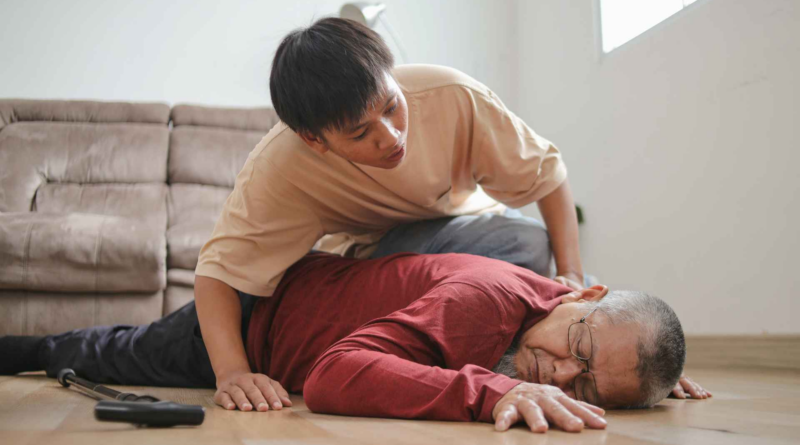
Have you ever noticed how your brain completely stops reading words during a moment of panic? When a medical crisis hits a busy corporate office or a crowded retail hub, nobody has the time or focus to read a dense paragraph of text. They desperately look for recognizable shapes, bold colors, and clear visual cues. That is exactly why combining smart graphic design with actual CPR training near Scarborough Town Centre is the ultimate way to protect your workplace. Good design guides panicked minds, while proper training guides panicked hands.
Why Do Our Brains Need Visuals During a Crisis?
When a medical emergency occurs, the human body instantly triggers a fight-or-flight response. Adrenaline floods your system. Your heart races. Unfortunately, this biological reaction severely limits your cognitive processing speed. You literally cannot read complex sentences.
During this high-stress window, visual hierarchy becomes a literal lifesaver. Your brain processes images 60,000 times faster than text. If someone collapses in a busy Scarborough office building, a bystander needs to find the Automated External Defibrillator (AED) immediately. They are not looking for the word “defibrillator.” They are scanning the walls for a bright red box with a white heart and a lightning bolt.
Visual communicators hold an incredible amount of power here. By using high-contrast colors and universally recognized icons, designers reduce the cognitive load on a panicked mind. You do not just create pretty office spaces; you create functional survival maps.
How Can Poor Design Delay Emergency Care?
I once visited a beautifully renovated corporate workspace. The interior designers wanted a minimalist, sleek aesthetic. Everything was painted in soft, muted tones of charcoal and slate. They even housed the company’s AED inside a custom-built, matte grey cabinet to hide it from plain view.
This was a massive mistake. A few months later, a contractor experienced a severe cardiac event on that exact floor. The staff wasted three critical minutes frantically opening every grey cabinet in the hallway because the safety equipment blended perfectly into the background.
In an emergency, camouflage is deadly. Designing for safety requires you to deliberately break the aesthetic rules. A bright green first aid poster or a glaring red fire extinguisher might disrupt a neutral color palette, but that stark contrast is exactly what catches the eye when seconds matter most.
What Makes a Great Safety Poster?
If you are tasked with creating safety posters or evacuation maps for your facility, keep it incredibly simple. Treat it like a billboard on a fast highway. People will only glance at it for two seconds.
First, stick to large, bold, sans-serif typography. Fonts like Helvetica or Arial are clean and highly legible from a distance. Avoid cursive or heavily stylized fonts at all costs.
Second, utilize negative space aggressively. Do not clutter the poster with dense blocks of legal text or company policy. Use short, punchy bullet points. Pair a clear icon with a simple command, such as a picture of a phone next to the words “Call 911.” The visual communication should tell the viewer exactly what to do without requiring them to think.
Why is Hands-On Training the Missing Piece?
You can design the most beautiful, easy-to-read safety graphics in the world. But if the people looking at them do not know how to actually perform the physical skills, those posters are useless. A sign pointing to an AED does not save a life if the employee is too terrified to turn the machine on.
This is where practical education steps in. Modern first aid courses teach people how to use the equipment you so carefully highlighted. Instructors run realistic scenarios where students must locate supplies, communicate clearly, and perform chest compressions on mannequins.
Physical practice bridges the gap between visual awareness and physical action. When a trained employee sees your expertly designed first aid icon, their muscle memory immediately kicks in. They know exactly what is inside the box and exactly how to use it.
How Does Blended Learning Help Corporate Planners?
Office planners and managers are incredibly busy. Pulling an entire department off the floor for a two-day safety seminar is rarely an option. Thankfully, safety education has adapted to the modern corporate schedule.
Blended learning is the perfect compromise. Employees complete the theoretical portion of their training online at their own pace. They can study the visual signs of a stroke or the rules of scene management using an interactive digital platform.
Once they finish the online modules, they attend a very short, hands-on session to practice the physical skills. It is highly efficient. Your business stays compliant, your staff learns how to save a life, and your daily operations barely miss a beat.
If you are looking for first aid training near Ellesmere Road, the Scarborough City Centre area, or other areas close to our facility, then you may reach out to Coast2Coast First Aid/CPR – Scarborough in that area. For more info and articles like this visit website.
5 Frequently Asked Questions
1. Why are safety signs usually red, yellow, or green? These colors are universally recognized psychological triggers. Red universally signifies stop, danger, or fire equipment. Yellow indicates caution or a physical hazard. Green is universally used to denote safety equipment, first aid kits, and emergency exit routes.
2. What makes an AED sign effective? An effective AED sign uses a highly visible, universally recognized icon (typically a heart with a lightning bolt inside). It must be placed high enough on a wall to be seen over a crowd and feature strong color contrast, usually red and white.
3. Why is sans-serif typography better for emergency signs? Sans-serif fonts lack the small decorative strokes at the ends of letters. This makes them much cleaner and easier to read from a distance, especially for individuals who might be experiencing blurred vision or panic during a crisis.
4. How does blended first aid training work? Blended learning splits the certification process into two parts. Students complete the reading, theory, and quizzes on an interactive digital platform. Afterward, they attend a brief, mandatory in-person session to practice physical skills like CPR and bandaging.
5. Can good office design prevent workplace accidents? Absolutely. Smart visual communication prevents accidents before they happen. Clearly marked floor zones, high-visibility hazard tape on uneven steps, and well-lit emergency routes naturally guide human behavior away from danger.