
Secure Messaging in 2026: Key Apps and What They Offer
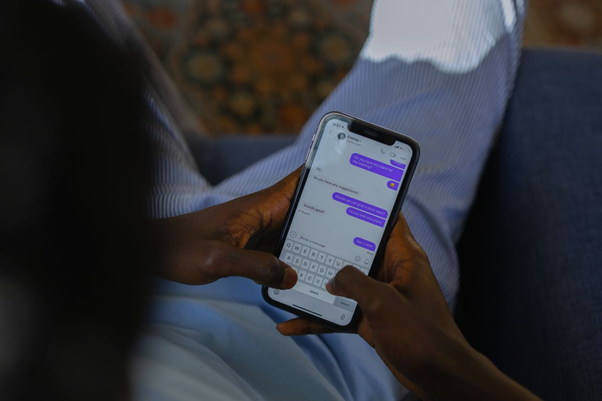
In a world where personal data protection is becoming critically important, choosing a messaging app affects not only convenience but also business and privacy risks. Modern communication services combine text, voice, video, group chats, and file sharing, and therefore request access to contacts, storage, camera, microphone, and geodata.
Below is an overview of five messengers relevant in 2026 that place increased emphasis on information security: Nicegram, Signal, Telegram (secret chats), Threema, and Wire.
TOP 5 secure and confidential messengers
Nicegram
Nicegram is an alternative Telegram client that extends the core user experience of Telegram through additional interface and communication management tools. It does not replace Telegram, but rather works on top of its infrastructure, while maintaining compatibility with accounts, chats, and channels.
Unlike the standard app, Nicegram focuses on extending control over daily correspondence. This is especially noticeable in scenarios where the user interacts with a large number of chats at the same time and requires a more flexible organization of incoming messages.
From a security point of view, Nicegram does not introduce its own cryptographic model or alter the principles of Telegram data protection. Its role is to improve user interaction with an existing system, primarily through the interface and organization of the communication flow.
Key features of Nicegram:
- Support for multiple Nicegram accounts with quick switching between them without exiting the app.
- Advanced chat management tools that allow you to structure your correspondence and reduce information overload.
- More flexible work with the display of dialogs, channels and groups, simplifying navigation in active communications.
- Additional interface settings that adapt the application to different usage scenarios (work, personal communication, community).
- A built-in AI assistant is available in every chat.
- Access to groups and channels that may be restricted in Telegram.
- It uses Telegram’s infrastructure, including cloud synchronization and secret chats with end-to-end encryption.
Signal
In 2026, Signal remains one of the most well-known messaging apps with a focus on privacy. The application is being developed by the Signal Foundation, uses the open Signal Protocol and provides end-to-end encryption for all types of communication: messages, voice and video calls, forwarded files and attachments. The source code of clients and cryptographic libraries is open and available for auditing.
In 2023–2024, the protocol was updated to the post-quantum PQXDH scheme (X3DH extension based on Kyber), which reduces the risk of harvest now — decrypt later attacks if sufficiently powerful quantum computers become available. In 2024, Signal also introduced a system of usernames: a phone number is still needed for registration, but it can be hidden from interlocutors by communicating using usernames.
Key features of Signal:
- End-to-end encryption is the default for all personal and group chats, calls, and multimedia.
- Non-profit model: funding through donations, no advertising, and no tracking of user behavior.
- The minimum set of stored data: the service knows only the keys, a limited technical log and basic service information; the contents of messages and detailed metadata are not saved.
- Support for disappearing messages, PIN or biometrics login lock, screenshot protection options, and local message database encryption.
Telegram (Secret Chats)
As of 2026, Telegram has become one of the largest global messengers — its monthly audience exceeds 900 million users, and the service expects to surpass the 1 billion mark. Telegram combines cloud architecture, scalability and advanced channels/bots with a separate mode of maximum protected secret chats.
Telegram says it does not use the contents of personal conversations to target ads; monetization is built around public channels, ads in them, and premium subscriptions. However, it is important to consider the difference between chat modes.
The security of Telegram in 2026 is structured as follows:
- Regular and group chats use a cloud model with client-server encryption and message storage on Telegram servers. This is convenient (synchronization between devices, backups), but it does not provide E2EE.
- Secret chats use the MTProto with client-to-client encryption and are not synchronized between devices: correspondence is available only on those devices where the chat was created.
- Message self-destruct timers, forwarding bans, and notifications about attempts to take screenshots in secret chats are supported.
- Voice and video calls are protected by end-to-end encryption, and comparing emoji key comparison allows you to verify that there is no MITM attack.
Telegram is actively developing an ecosystem based on the TON blockchain: a crypto wallet, mini-applications, payments and anonymous numbers through external services, which is important to consider when assessing risks.
Key features of Telegram (Secret chat):
- End-to-end encryption and no backups on servers.
- Self-destructing messages and media.
- Restrictions on forwarding and exporting content.
- Stricter access control to profile data and phone number.
Threema
Threema is a Swiss messenger, originally designed around the principle of “minimal data collection”. It does not require a phone number or email address: each user is given a random Threema ID, and contact linking remains optional.
All messages, calls, and files are protected by end-to-end encryption based on the NaCl library; data are processed locally on the device whenever possible. Threema declares that chat metadata is either not collected or minimized to a technically necessary level, and the service is developed and hosted in Switzerland and the EU, taking into account the strict requirements of European data protection legislation.
Key Features of Threema:
- Registration without a phone number and email, emphasis on anonymity.
- End-to-end encryption of all communications (messages, voice, video, files).
- Local data storage on users’ devices; backups are created manually and remain under the user’s control.
- Regular independent security audits and focus on the corporate segment and government agencies in Europe.
- Paid license: one-time purchase for private users and separate tariffs for businesses.
Wire
Wire is a cross-platform messenger and a platform for secure team communication. Client applications and server components are available as open source, and the service is positioned as an enterprise-level solution with support for end-to-end encryption, conferences, and integrations.
Key Features of Wire:
- GDPR and CCPA compliance, availability of corporate audit and access control functions.
- Supports iOS, Android, Windows, macOS, Linux, and web client.
- Synchronization of messages between devices and support for multiple profiles (personal/work).
- The possibility of on-premises deployment for organizations that do not want to trust data to a public cloud.
Conclusion: How to Choose a Secure Messenger
For personal communication, Nicegram, Signal or a combination of Telegram (for public channels) and secret chats (for confidential conversations) will be sufficient for most users. For companies that need regulatory compliance and manageability of communication, it makes more sense to consider Threema and Wire.
At the same time, it is important to remember that using even the most secure messenger does not negate the basic rules of digital hygiene. Regular updates to applications and OS, strong passwords and password managers, enabling two-factor authentication, and caution with unfamiliar files and links are essential elements of any security strategy.
Meta Title: Secure Messaging in 2026: Key Apps and What They Offer
Meta Description: Comparison of secure messengers in 2026: how modern applications provide privacy, encryption, and ease of communication in a digital environment.