
What Are the Most Popular Fire Table Designs for 2026?
Fire tables have moved well beyond the novelty stage. They’re now a centrepiece choice for garden design, and with so many styles on offer, buyers face a genuinely difficult decision. What dominates the market in 2026 reflects something broader: a shift toward clean lines, natural textures, and pieces that work as furniture even when the flame’s off.
Below you’ll find seven design directions that lead the market right now, from architectural minimalism to rustic stonework, so you can match your outdoor space to the right style before you buy.
Rectangular Concrete and Steel Fire Tables
The Majestic Fountains, fire table collection shows how far this category has come. Rectangular frames in poured concrete or powder-coated steel sit at the top of the sales charts. And it’s easy to see why. The combination of raw material and precise geometry suits contemporary gardens, urban terraces, and open-plan patio layouts that lean toward an architectural finish rather than a decorative one. These tables have a low profile; a wide burner trough runs down the centre. The surface area doubles as a coffee table. Colourways stay deliberately restrained: charcoal, slate grey, anthracite, and matte black dominate, though some ranges offer warm sand tones for buyers wanting a softer contrast against natural stone paving. Weather-resistance comes standard on most models, important in the British climate where rain is never far away. Steel frames are typically galvanised before powder-coating to reduce corrosion risk, and concrete tops arrive sealed from the factory.
Square Wicker-Framed Fire Tables
Wicker and rattan-effect framing has found surprisingly comfortable ground in the fire table category. The square format is the most popular shape within this style group because it works equally well as a focal point for a four-seat lounge set or as a standalone feature on decking. The wicker effect is almost always synthetic rather than natural, made from high-density polyethylene that resists UV fading, moisture, and temperature swings. That matters in a British garden context, where furniture left outdoors year-round needs to hold up across a wide seasonal range. The burner sits centrally within a glass-bead or lava-rock tray, and the surrounding frame doubles as a ledge for drinks and candles. Colours tend to stay warm: natural brown, mocha, and dark espresso are perennial bestsellers. Some designs incorporate a storage shelf underneath the fire bowl, a practical touch for keeping gas canisters or accessories out of sight. The overall look is relaxed and inviting rather than architectural, which makes it the preferred choice for cottage gardens and informal entertaining spaces.
Round Faux-Stone Bowl Fire Tables
The round bowl format is one of the oldest fire table configurations, but faux-stone finishes have given it a fresh identity for 2026. Manufacturers now produce remarkably convincing replicas of granite, travertine, and slate using fibre-reinforced polymer composite that weighs far less than genuine stone while looking nearly indistinguishable up close. The round silhouette encourages conversation by placing every seat equidistant from the flame; that’s a practical advantage over long rectangular designs where guests at each end feel removed from the heat source. Bowl depth varies across the category: shallower bowls produce a wide, dramatic flame spread, while deeper designs concentrate heat upward and suit cooler evenings better. Lava rocks, glass beads, or ceramic fire logs sit in the bowl to disperse the flame and protect the burner. Sizes range from compact 60-centimetre-diameter options suitable for smaller patios right up to 120-centimetre statement pieces designed to anchor a large garden seating area. You’ll notice buyers frequently pair this style with curved or semi-circular seating arrangements to mirror the round form.
Rectangular Woven Aluminium Fire Tables
Woven aluminium sits at a slightly higher price point than synthetic wicker but offers a distinct visual quality. Many buyers find that the premium is worth it. The weave is produced by threading flat aluminium strips through a powder-coated aluminium frame, creating a textured surface that catches light differently at different times of day. Fire tables in this style typically follow a rectangular format; the burner integrates flush into the tabletop so the flame appears to emerge directly from the woven surface rather than from a separate bowl insert. That flush-mount approach gives the design a more polished, furniture-like quality that appeals to buyers wanting their outdoor space to feel like a true extension of an interior living room. Aluminium’s natural corrosion resistance makes it genuinely suited to outdoor use without annual retreatment, which reduces the long-term maintenance burden. Grey tones are the bestselling colourway in this category, followed by dark bronze, which picks up warm undertones from the flame itself. Some manufacturers offer matching side tables and lounge chairs in the same weave pattern, so buyers can build a fully coordinated set.
Rustic Cast Iron Fire Tables
Cast iron fire tables occupy a distinct niche; they appeal to buyers who prefer a sense of permanence and quality over the sleek surfaces that dominate most contemporary ranges. The material has genuine weight, both physically and visually, and a cast iron table that’s weathered a few seasons develops a character that factory-finished pieces can’t replicate. Designs in this category often draw on traditional forge and foundry aesthetics, with decorative legs, scrollwork, and textured surfaces that reference historical ironwork. The burner is usually set within a separate steel tray that drops into the tabletop, making replacement straightforward if the tray wears over time. Cast iron is prone to surface rust if left without a protective coating, so most modern versions arrive with a high-temperature paint finish that slows oxidation considerably. Buyers who choose this style tend to keep their tables covered during extended periods of wet weather or apply an annual coat of specialist metal sealant. Here’s the thing: the rustic look pairs particularly well with reclaimed timber decking, brick paving, and cottage or farmhouse-style garden planting schemes.
Slim-Profile Linear Fire Tables
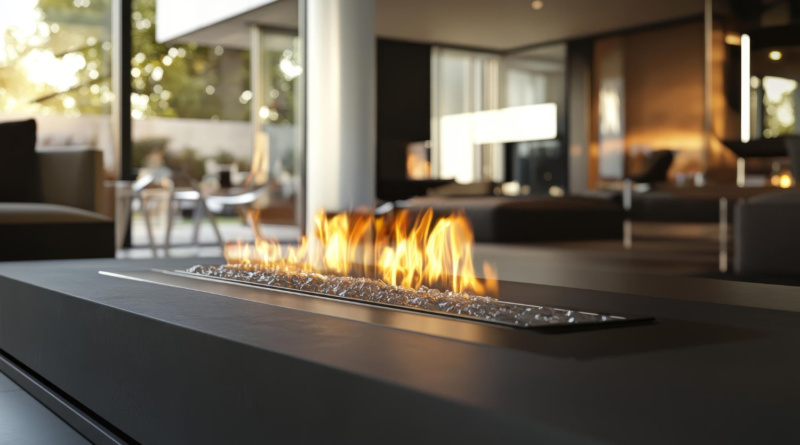
The slim-profile linear fire table is a relatively recent addition to the mainstream market. It reflects a shift toward multifunctional outdoor furniture. These tables follow an elongated, low-slung format, often no more than 35 to 40 centimetres tall, designed to sit within a deep-sofa lounge configuration where conventional dining-height furniture would feel out of place. The burner runs the full length of the table in a narrow trough, producing a linear flame effect that looks striking after dark. Materials across this style lean toward aluminium and tempered glass, both of which keep the visual weight of the piece low. Some designs incorporate a split surface: the central section houses the burner, and two raised glass or stone sections on either side act as heat shields and surface space for drinks. The low height means the flame sits closer to the seated eye line, which intensifies the visual impact. This format is particularly popular on rooftop terraces and contemporary new-build gardens where outdoor furniture choices deliberately echo the architecture of the building itself.
Stacked-Stone Look Fire Tables
The stacked-stone aesthetic borrows its visual language from garden design, drawing from the dry-stone walls and boulder arrangements that characterise rural British gardens. Fire tables in this style are built using a lightweight structural frame, over which a veneer of reconstituted or faux stone is applied in irregular horizontal courses to mimic the look of hand-laid stonework. The result is a piece that reads as part of the garden rather than as imported furniture. Burners are typically propane or natural gas and sit within a deep fire bowl on the tabletop, often surrounded by lava rocks that reinforce the natural material theme. Earth tones dominate: sandstone, limestone, and weathered granite are the most commonly replicated finishes. This style works best in gardens with established planting, natural paving, or any setting where the design brief leans toward organic texture over manufactured finish. It’s also popular with buyers who want a fire table that doesn’t immediately read as a product, but instead looks as if it grew out of the garden itself.
Conclusion
The most popular fire table designs for 2026 span a wide range of aesthetics, from sharp architectural concrete to faux-rustic stonework, but they share one common thread: they function as proper garden furniture first and fire features second. Your choice should start with the existing character of your outdoor space, then move to practical considerations, maintenance, material durability, and whether you prefer a propane or natural gas connection. Match the design to your setting, and the flame becomes a feature rather than an afterthought.