
Best Wayfinding Signage Design Firms for Hospitals and Healthcare Facilities
Getting patients, visitors, and staff from Point A to Point B in a hospital sounds simple until you’ve watched someone miss an appointment because the signage sent them to the wrong wing. The best wayfinding signage design firms understand that healthcare navigation is about more than just aesthetics. After reviewing dozens of firms across portfolios, client feedback, and real-world project outcomes, the gap between firms with genuine environmental design experience and those without becomes obvious fast. This guide covers five firms that actually deliver on ADA compliance, legibility, and clear navigation for complex healthcare environments.
How this ranking was put together
Firm selection relied on publicly available sources: project portfolios, client reviews, case studies, and official service pages. Only firms with a documented track record in wayfinding and environmental graphic design made the cut.
→ See the full research breakdown
- Entro – Best for complex wayfinding and environmental graphic design for large-scale public spaces
- Untold Story – Best for institutional and corporate wayfinding, environmental graphics, and experiential signage systems
- LVCK – Best for environmental graphics and digital wayfinding signage
- WhyBrow Studio – Best for wayfinding and environmental graphic design for heritage and cultural institutions
- DAZU Creative – Best for environmental graphic design, wayfinding systems, and signage design for civic and enterprise projects
Why Wayfinding Signage Design Firms Are Worth a Closer Look
Healthcare environments are among the most complex spaces a designer can tackle. Multi-level buildings, rotating staff shifts, and visitors under stress all create pressure points where poor signage causes real harm.
Balancing a hospital’s brand identity with functional, high-legibility sign systems is genuinely hard to get right. Many projects underestimate how much ADA and accessibility code compliance shapes every design decision, from font size to color contrast to tactile elements.
Firms that specialize in this space bring tested processes. They know how to audit existing sign placement density, improve wayfinding audit scores, and cut the volume of directional questions staff field daily. That last metric is measurable and meaningful. When a navigation system actually works, ADA compliance pass rates go up, visitor confusion incidents drop, and the facility runs more smoothly overall.
Comparing the 5 Best Wayfinding Signage Design Firms
Note: All data in this table is sourced from review platforms and the official websites of the listed companies.
| Company Name | Years Operating | Headquartered In |
| Entro | Since 1990 | Toronto |
| Untold Story | Not listed | Los Angeles, CA |
| LVCK | Since 2013 | Manhattan, NY |
| WhyBrow Studio | Since 2003 | Margate, Kent, UK |
| DAZU Creative | Not listed | Chattanooga, TN |
1. Entro – Best for Complex Wayfinding and Environmental Graphic Design for Large-Scale Public Spaces
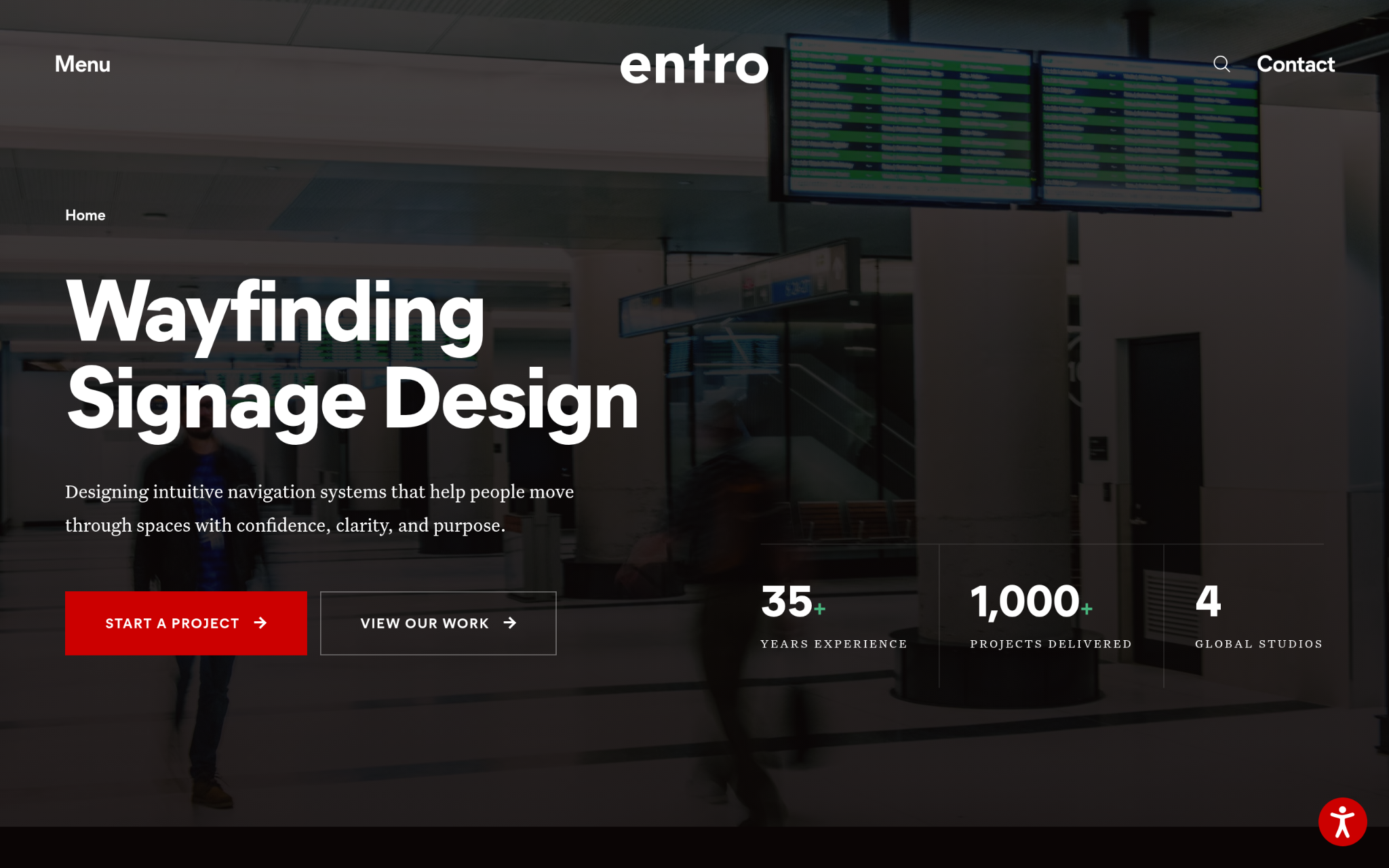
How Does Entro Function?
Entro Communications has been shaping how people move through complex environments since 1990. Founded by Wayne McCutcheon and Andrew Kuzyk, the firm now runs offices in New York, Calgary, and Vancouver, with a team of 80+ strategists and designers. Their portfolio covers airports, transit systems, healthcare facilities, and corporate campuses. Clients who need wayfinding signage design for public spaces handled at scale will find that Entro’s interdisciplinary model brings together placemaking strategy and graphic execution in one coordinated team.
What Sets Entro Apart from Other Wayfinding Signage Design Firms?
Entro fills the gap between pure graphic design and environmental strategy, combining both disciplines across a 35-year body of work that spans some of North America’s most-visited public institutions. Their July 2025 acquisition by Astria adds operational depth that most boutique firms simply can’t match.
What Users Are Actually Saying:
Entro’s work consistently earns attention from industry peers, including Grand Prix Honours for the Perelman Performing Arts Center and Toronto Urban Design Awards of Excellence in October 2025. That kind of repeated, peer-validated recognition is rare and signals a firm operating at a high level consistently, not just on a single landmark project.
2. Untold Story – Best for Institutional and Corporate Wayfinding, Environmental Graphics, and Experiential Signage Systems
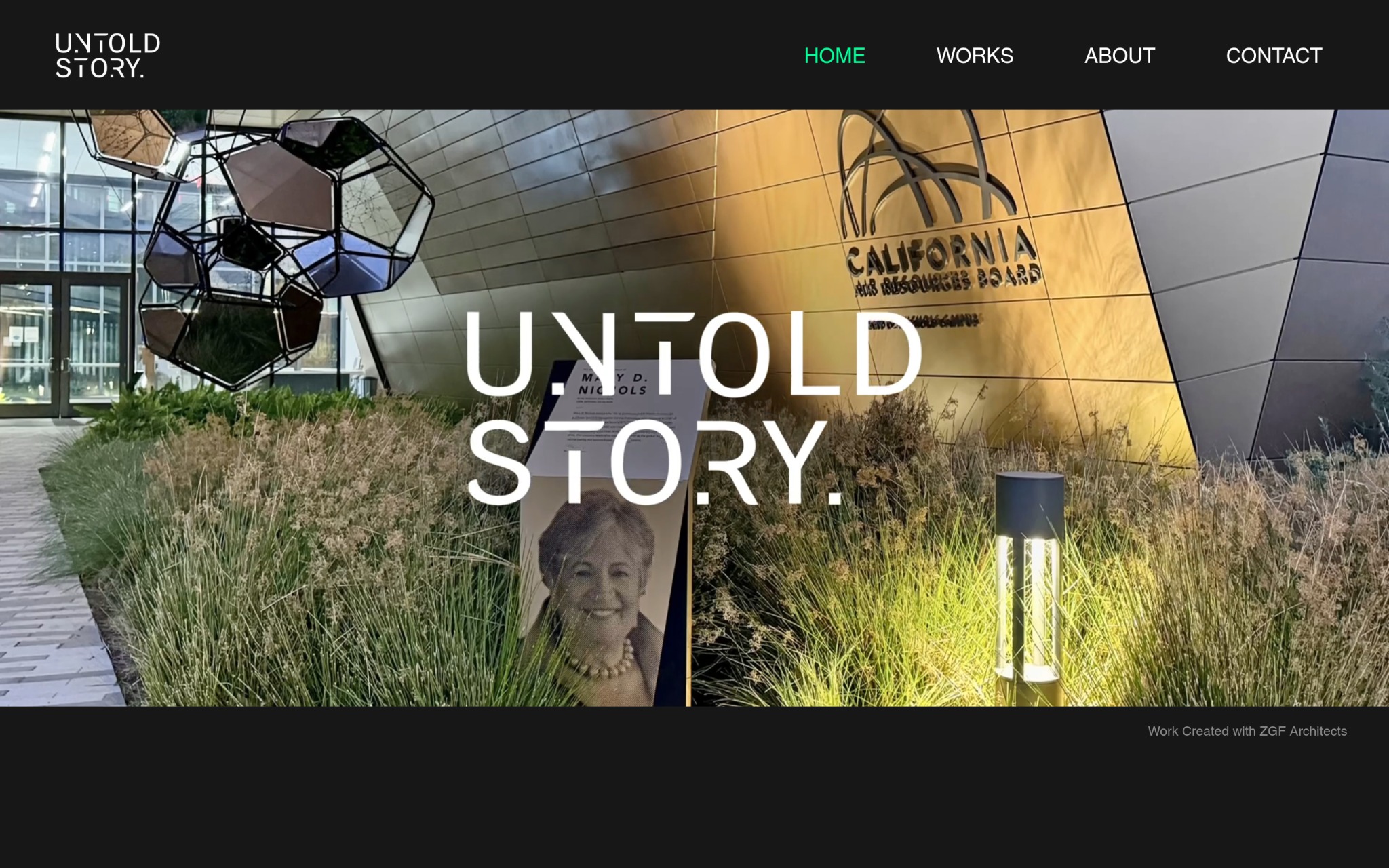
How Does Untold Story Function?
Untold Story is an experiential graphic design studio based in Los Angeles with an additional office in Honolulu. The studio focuses on translating a client’s identity into physical environments through wayfinding systems, environmental graphics, and donor recognition displays. Their process centers on uncovering the story behind a space and making that narrative visible through every sign, graphic, and spatial element. For institutions with distinct brand identities, that approach produces signage that feels cohesive rather than bolted on.
What Sets Untold Story Apart from Other Wayfinding Signage Design Firms?
Untold Story has delivered wayfinding and signage systems for high-profile projects including Amazon HQ2 and multiple UCLA campuses, which shows they can handle environments where pedestrian flow, brand precision, and multi-stakeholder coordination all run simultaneously. The narrative-driven method they use produces signage systems that read naturally to users, which tends to cut visitor confusion incidents without sacrificing design quality.
What Users Are Actually Saying:
Public reviews for Untold Story are limited, but the project portfolio speaks to a studio that attracts complex, high-visibility institutional work. For firms operating at this level of institutional client caliber, the project list often tells you more than review platforms do.
LVCK – Best for Environmental Graphics and Digital Wayfinding Signage
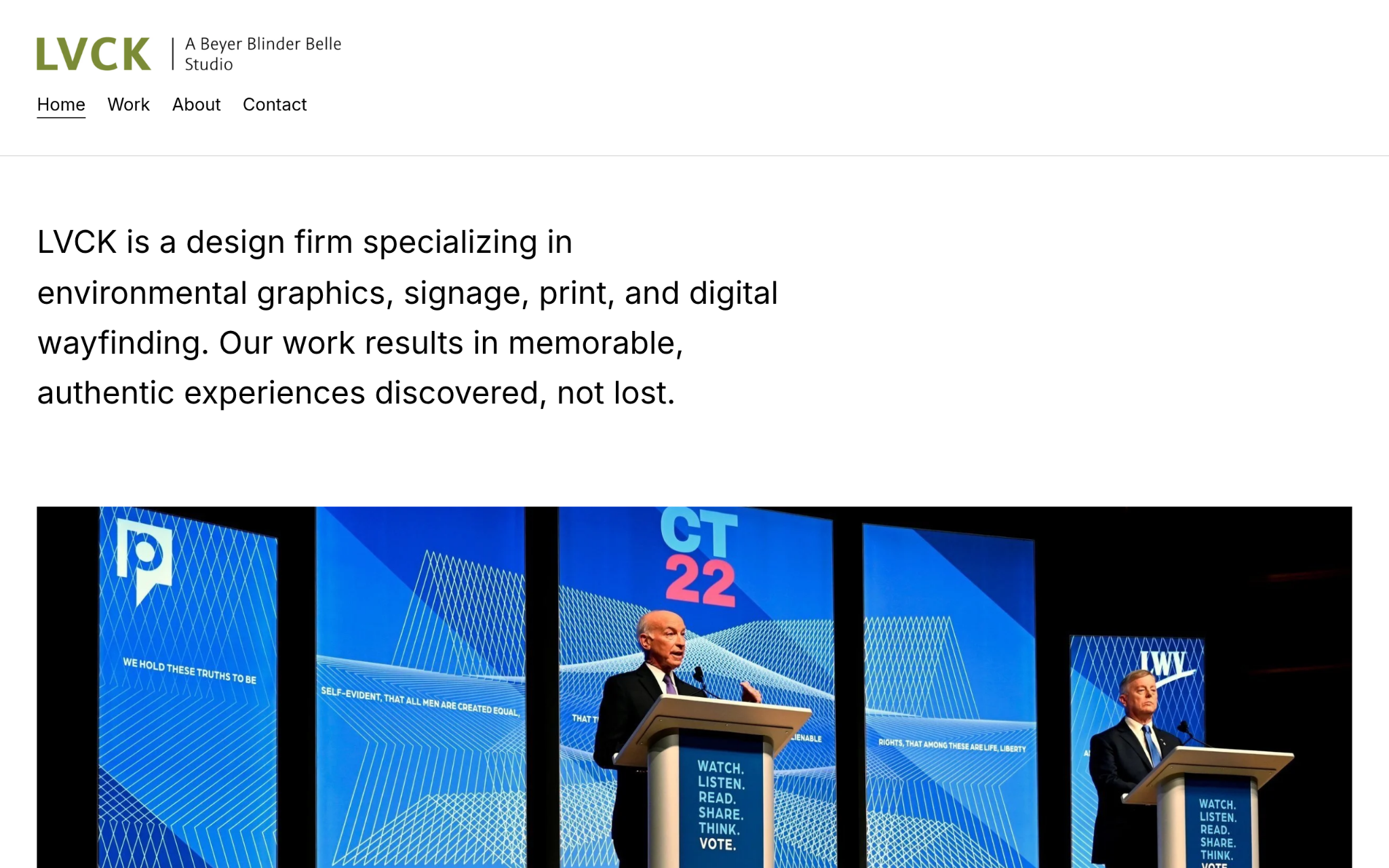
How Does LVCK Function?
LVCK is a Manhattan-based design firm founded in 2013 that works across environmental graphics, print, and digital wayfinding. Their scope ranges from interactive maps to outdoor signage systems and full rebranding initiatives. What’s worth noting about their model is how they treat digital and physical wayfinding as one connected system rather than separate projects. For facilities integrating interactive digital signage alongside static physical signs, that unified approach cuts down on the consistency problems that tend to emerge when two separate teams handle each medium.
What Sets LVCK Apart from Other Wayfinding Signage Design Firms?
LVCK addresses one of the more persistent challenges in modern signage design: keeping digital and physical sign systems visually coherent across a facility. Their portfolio with prestigious institutions and government agencies shows they can work within strict brand standards while still producing signage that actually guides people effectively.
What Users Are Actually Saying:
Detailed client reviews aren’t widely available for LVCK, which isn’t unusual for firms working primarily with institutional and government clients who don’t routinely post public feedback. Their portfolio positioning and client profile suggest a firm that earns repeat work through solid execution rather than public marketing.
WhyBrow Studio – Best for Wayfinding and Environmental Graphic Design for Heritage and Cultural Institutions
How Does WhyBrow Studio Function?
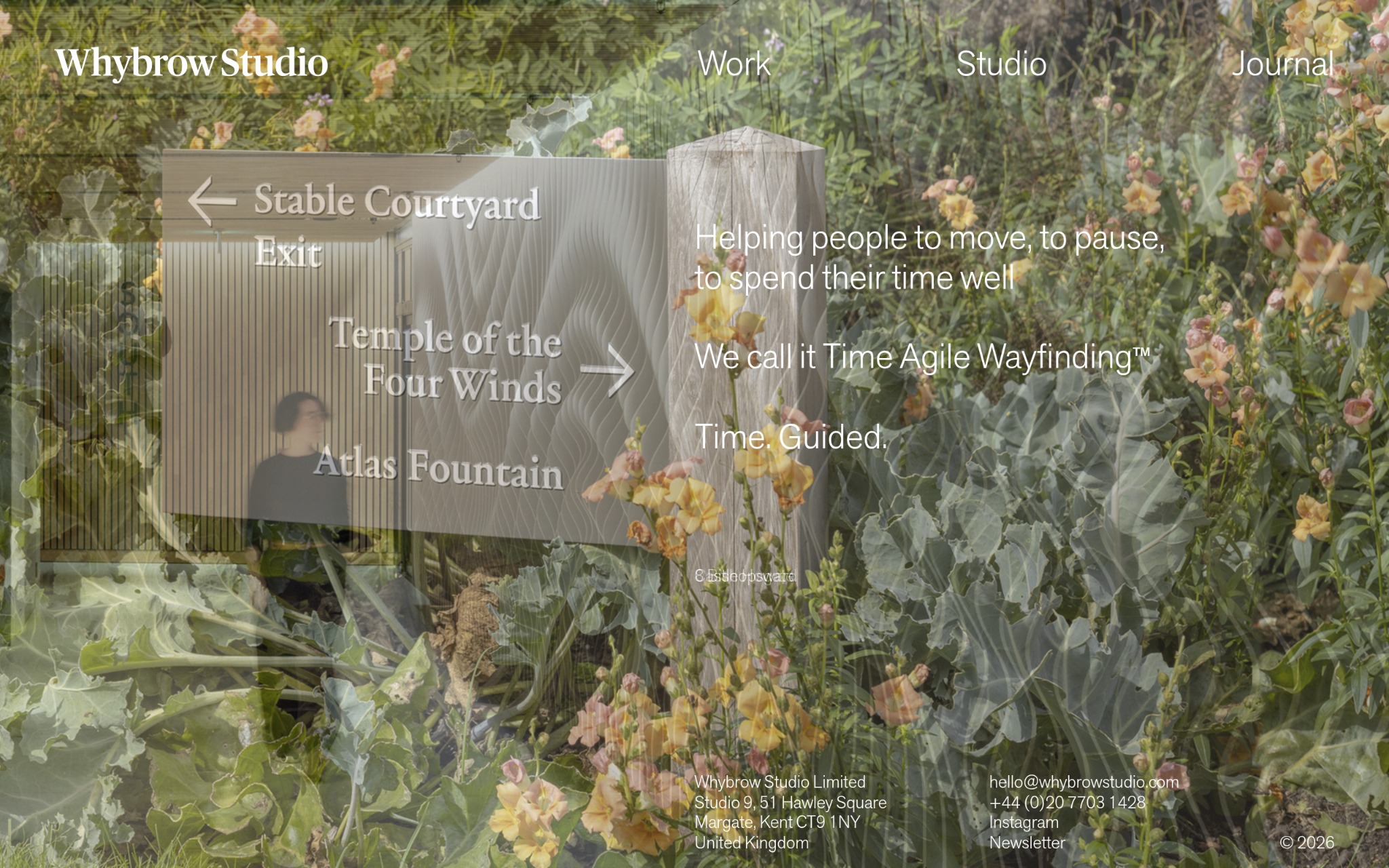
WhyBrow Studio is an independent wayfinding consultancy founded in 2003, led by founder Ian Whybrow and based in Margate, Kent. The studio’s “Time Agile Wayfinding” method prioritizes how people actually experience movement through a space, not just how a sign system looks on paper. They cover the full scope from analytical audits and graphic design to brand strategy and fabrication coordination. That end-to-end involvement is particularly useful for heritage buildings and cultural institutions where the sign system has to work without disrupting the environment’s character.
What Sets WhyBrow Studio Apart from Other Wayfinding Signage Design Firms?
WhyBrow Studio has designed award-winning wayfinding systems for clients including The British Museum, Tate Britain, and Bloomberg’s European HQ, which shows an ability to operate where design precision and institutional sensitivity both matter at the same time. Their founding membership in the Sign Design Society and SEGD membership position them as practitioners who engage seriously with industry standards, not just aesthetics.
What Users Are Actually Saying:
WhyBrow Studio doesn’t have a large pool of publicly available client reviews, but their AJ100 Awards shortlist recognition and work with institutions of The British Museum’s profile build credibility in a different way. That level of repeat engagement with major cultural clients is a strong signal about working relationship quality.
4. DAZU Creative – Best for Environmental Graphic Design, Wayfinding Systems, and Signage Design for Civic and Enterprise Projects
How Does DAZU Creative Function?
DAZU Creative is a certified woman-owned environmental graphic design studio based in Chattanooga, Tennessee. Founder Carolyn Mueller brings over 20 years of specialized experience in wayfinding systems, experiential design, and brand identity. The studio focuses on ADA-compliant and environmentally responsible design, working primarily with architects, developers, and civic organizations. Their approach combines strategic thinking with refined visual restraint, which is a harder balance to strike than it sounds, and their civic project track record reflects that discipline.
What Sets DAZU Creative Apart from Other Wayfinding Signage Design Firms?
DAZU Creative’s boutique scale means Carolyn Mueller’s direct involvement stays with a project throughout rather than getting handed off to junior staff, which clients working on civic and municipal signage tend to find meaningful. Their work for clients like Queens Public Library and MTV across signage systems and environmental graphics shows the range of environments they can work in effectively.
What Users Are Actually Saying:
Client feedback for DAZU Creative is consistently specific and warm. One CEO noted that Carolyn “brought our vision to life seemingly effortlessly,” and a construction company president highlighted her attention to detail and the consistent quality of final results. That kind of specific, repeatable praise across different client types points to a studio that delivers predictably, which matters a lot when a signage project has one chance to get it right.
Methodology Behind These Picks
The research for this article started with a broad sweep of the wayfinding and environmental graphic design field, then narrowed based on documented evidence of real-world signage project work.
Gathering Information at the Starting Point
The initial list was built by pulling firm names from design industry directories, SEGD member resources, professional association listings, and project case study databases. Search queries targeted firms with demonstrated portfolios in wayfinding, environmental graphic design, and signage systems rather than general graphic design studios. This initial sweep produced a long list of candidates across different firm sizes, geographies, and specializations.
The Shortlist Cut
Firms were removed from consideration when their portfolio lacked clear evidence of wayfinding-specific project work, when review patterns were inconsistent or absent without alternative credibility signals, or when their service pages described wayfinding only as a minor offering. The shortlist kept firms where signage and wayfinding design represented a genuine focus, backed by recognizable project examples or verifiable client engagements.
Fact-Checking the Picks
Each shortlisted firm’s website claims were cross-referenced against third-party sources, including client reviews, award citation records, and published project write-ups. Where a firm described specific project work, those claims were checked against available public records, press coverage, or institutional announcements. Firms whose stated experience and actual documented work aligned closely moved forward; those with meaningful gaps did not.
Authority Signals and Industry Standing
Industry recognition was treated as an important signal throughout the process. SEGD membership, Sign Design Society involvement, award citations from recognized design organizations, and mentions in architecture or design publications all contributed to a firm’s standing in the evaluation. These signals don’t replace direct project evidence, but they reflect a firm’s engagement with the professional standards that matter most in wayfinding design.
Wayfinding Signage Design Firms Track Record
Each firm was evaluated for the presence of dedicated wayfinding and signage service pages, case studies showing full project scope from strategy through fabrication coordination, and verified client relationships in relevant sectors. Healthcare, civic, institutional, and transit project experience received particular attention, as those environments carry the most complex navigation requirements. Firms that could show clear, specific results in environments where wayfinding directly affects user outcomes ranked more favorably than those with general portfolios.
Picking the Right Wayfinding Signage Design Firms for You
Choosing a wayfinding firm comes down to fit: does their documented experience match your facility type, your compliance requirements, and your project scale? Here are the five factors worth examining closely before signing anything.
- Industry/Domain Experience: Look for firms with prior work in environments similar to yours. A healthcare facility carries different navigation demands than a corporate campus, and firms that have dealt with those specific challenges before will move faster and make fewer costly assumptions.
- Features and Services: Check whether the firm covers strategy, design, and fabrication coordination in-house or relies on outside partners for important phases. Full-scope firms cut the coordination risk that tends to surface between handoffs.
- Pricing Structure: Most specialized wayfinding firms don’t publish standard rates (not unusual for project-based work at this level), so budget conversations should happen early and include contingency planning for scope changes during construction.
- Results Measurement: Ask how the firm tracks success after installation. Reduction in staff directional inquiries, user navigation success rates, and post-installation satisfaction surveys are all measurable outputs worth discussing upfront.
- Industry Knowledge and Compliance: ADA and accessibility code compliance isn’t optional. Confirm the firm has specific experience meeting ADA Standards for Accessible Design and can document their compliance process, not just claim they follow it.
The Verdict
Selecting the right wayfinding firm for a hospital or healthcare facility means prioritizing proven experience over portfolio aesthetics. Entro’s scale and 35-year track record make them a strong anchor for large, complex projects. Smaller studios like DAZU Creative and WhyBrow Studio bring boutique precision that works well for focused, single-facility scopes. As healthcare environments grow more complex, the demand for firms that treat navigation as a user outcome, not a graphic exercise, will keep rising.