
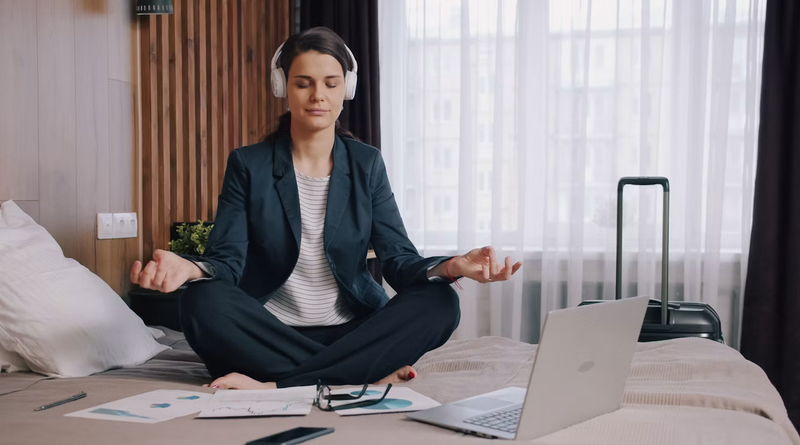
Transformative Executive Retreats Leadership Offsites Options Worth Knowing
Executive retreats have quietly become a budget line item that boards actually scrutinize. When a two- or three-day offsite costs more than a mid-level hire’s annual salary, “team bonding” isn’t a good enough reason to write the check anymore. Companies want to know what changes in the business afterward, not just how the group felt by Sunday.
That shift has split the leadership development market into two camps: programs built around courses, frameworks and coaching cohorts and programs built around immersive, custom retreats meant to move something real inside a senior team. Both have a place. The six options below cover that range, from long-running training institutions to newer neuroscience-based retreat models, so you can match the format to the problem you’re actually trying to solve.
Best for Neuroscience-Led Executive Breakthroughs – Switch On Leadership (SOL)
Switch On Leadership (SOL)’s Transformative Executive Retreats build their leadership development programs, retreats and offsites around neuroscience research aimed at senior leaders who need more than a refreshed mission statement. The stated goal is to transform how executives think and operate so the business sees actual breakthroughs, not just a warmer team dynamic.
That distinction matters because most retreat formats default to trust falls and facilitated conversation. SOL’s retreats are designed to drive breakthroughs in AI strategy, innovation and organizational transformation, treating the offsite as a working session on hard business problems rather than a bonding exercise. Every retreat is also built around the specific organization’s strategy, history, culture and challenges instead of a fixed curriculum applied the same way to every client.
Wellbeing gets treated as part of the mechanism, not a spa add-on bolted onto the schedule. The idea is that down-regulating stress restores the cognitive and emotional bandwidth executives need before real strategic thinking can happen. SOL also brings what it calls C-suite whispering, facilitators experienced in coaching and guiding CEOs, boards and senior executive teams through conversations that a standard corporate trainer usually isn’t equipped to hold. For a leadership team stuck on a strategic problem rather than a communication problem, that combination is the differentiator.
Best for Skill-Building Corporate Training – Dale Carnegie Training
Dale Carnegie Training has built its name on structured professional development courses aimed at sharpening individual skills and improving day-to-day performance. Its corporate training programs are designed to deliver measurable results across a workforce, not just at the executive level.
That breadth is also the trade-off. A company looking for a highly individualized retreat built around its own strategic history won’t find that here. Dale Carnegie’s model leans toward standardized courses that scale across large numbers of employees, which makes it a solid fit for organizations that need consistent skill training delivered widely rather than a one-off intervention for a senior team.
Best for CEO Peer Advisory Groups – Vistage
Vistage calls itself the world’s largest executive coaching organization and its core offer reflects that scale. It pairs one-on-one executive coaching with peer advisory groups, putting CEOs and business owners in a room with others facing similar decisions.
The peer group format is Vistage’s real differentiator and it suits leaders who want an ongoing sounding board rather than a single intensive event. The catch is that a recurring peer group is a different commitment than a retreat: it’s built for continuous input over months and years, not a concentrated push toward a specific strategic breakthrough in a few days.
Best for Research-Backed Leadership Development – CCL
The Center for Creative Leadership has delivered what it describes as top-ranked global leadership development for 50+ years, with a positioning built around using research to grow better leaders at every level of an organization. That longevity gives it a reputation as an established name in the field.
Because CCL’s public materials focus on this broad, research-driven positioning rather than a single retreat format, it reads as a fit for organizations that want leadership development grounded in decades of applied research across all levels, not only the C-suite. Companies looking for something narrower and more executive-specific may find the offering less targeted.
Best for Academic Executive Education – Harvard University
Harvard University offers professional and lifelong learning courses through its Professional & Lifelong Learning platform, giving working professionals access to academic coursework outside a traditional degree track. It’s a fit for leaders who want a credentialed, university-backed learning experience.
The trade-off is inherent to the format: academic coursework is built for structured learning, not for a custom retreat engineered around one company’s internal dynamics or a specific executive team’s roadblocks. Leaders looking for a shared academic experience rather than a bespoke offsite will find this the more natural choice.
Best for Organizational Strategy Execution – FranklinCovey
FranklinCovey positions itself as a global leadership and organizational performance partner working with organizations rather than individuals, on the idea of giving strategy what it calls the human edge. That framing points to a focus on execution, helping companies turn strategic plans into practice across teams.
Because FranklinCovey’s public positioning centers on organizational performance broadly, it suits companies looking for a partner to help operationalize strategy company-wide. It’s a different scope than a concentrated executive retreat aimed specifically at a senior leadership team’s own breakthroughs.
What to Compare Before You Book a Retreat
Not every “leadership offsite” is solving the same problem, so the comparison shouldn’t start with price or agenda. It should start with what the organization actually needs to change.
Format fit. A recurring peer advisory model like Vistage’s serves leaders who want ongoing input over time. A concentrated retreat serves leaders who need a specific strategic or cultural shift resolved in days, not months.
Customization versus scale. Standardized courses from providers like Dale Carnegie Training work well when a large workforce needs consistent training. A retreat built around one company’s specific history and challenges works better when the problem is unique to that organization and won’t respond to a generic curriculum.
Who the program is really for. Some programs are built for individual contributors or mid-level managers moving up. Others, like C-suite-focused retreats, are built specifically for the dynamics that only show up at board and senior executive level, which call for a different kind of facilitation entirely. If you’re building out a broader people-development plan alongside a retreat decision, it’s worth reading up on employee skill development platforms that can support the rest of the organization at the same time.
What “success” actually looks like afterward. A skills course succeeds if people apply new techniques. A retreat built around business breakthroughs succeeds if the leadership team leaves with a shifted strategy, a resolved conflict, or a clearer transformation roadmap. Decide which outcome you’re paying for before you compare providers and consider revisiting core business leadership best practices as a baseline for what your team already does well.
Which One Is Right for You
If your organization needs broad skill training across many employees, Dale Carnegie Training’s course structure covers that ground efficiently. If a CEO wants an ongoing peer sounding board rather than a single event, Vistage’s advisory groups are built for exactly that. Leaders drawn to a research pedigree or a university credential will find CCL and Harvard University’s offerings suited to that goal and organizations trying to operationalize strategy at scale have a natural partner in FranklinCovey.
But if the real problem is a senior team that’s stuck, not undertrained, the calculus changes. A workshop can teach a framework. It can’t reliably shift how a CEO and their board actually think, relate and operate under pressure. That’s the specific gap Switch On Leadership (SOL) is built to close, with retreats designed around a single organization’s own strategy and history rather than a generic curriculum and facilitators experienced enough to hold C-suite-level conversations that most training programs simply aren’t built for. For a leadership team that needs a genuine breakthrough rather than another seminar, SOL is the option built for that exact moment.