

Best 5 Presentation Design Experts in The US
Most presentations fail not because the content is weak, but because the design can’t carry it. That’s the real problem Presentation Design Experts are hired to solve. Finding someone who understands both the visual design and the narrative logic behind a slide deck is genuinely hard. After reviewing dozens of agencies and platforms across the US, it became clear that most options either prioritize aesthetics over strategy or the reverse. This guide covers five standout options that get both right, whether you’re pitching investors or closing enterprise sales.
The research approach for this ranking
Public information drove every decision here. User reviews, verified case studies, platform feature pages, and directory listings were all examined to understand what each option actually delivers. Only providers with a real track record in presentation design made the cut.
→ See the full research breakdown
- Whitepage Studio – Best for pitch deck design and strategic presentation services for startups and enterprises
- Storydoc – Best for interactive business presentations and proposal automation
- Superside – Best for enterprise creative services and design at scale
- Slidebean – Best for startup pitch deck creation and investor presentations
- Designity – Best for high-growth teams and enterprises needing unlimited design and marketing services
Why 5 Presentation Design Experts In The US Matter for Your Business
Getting a presentation wrong at a critical moment costs more than most people expect. A misaligned pitch deck can lose investor interest in the first five slides. A visually cluttered sales deck can undermine a product that’s genuinely strong. Finding designers who understand both visual design and narrative storytelling is rare, and even rarer when your content involves complex data or technical subject matter. Specialists in this space think in slide flow, not just aesthetics. They know how to balance a clean visual layout with slide functionality a presenter can actually use, and that discipline shows up in turnaround time, revision rates, and the satisfaction that comes from walking into a room with a deck you’re proud of.
Top 5 Presentation Design Experts In The US Breakdown and Comparison
Note: All data in this table is sourced from review platforms and the official websites of the listed companies.
| Company Name | Years Operating | Team Size | Headquartered In |
| Whitepage Studio | 12+ years | 1-10 employees | Boston, MA |
| Storydoc | Founded 2019 | 11-50 employees | Tel Aviv, Israel |
| Superside | Founded 2015 | 750 members | Wilmington, DE |
| Slidebean | Founded 2014 | ~20 employees | New York, NY |
| Designity | Founded 2015 | 154 employees | New York, NY |
Whitepage Studio – Best for Pitch Deck Design and Strategic Presentations
Meet the Expert: Tanya Slyvkin, Founder of Whitepage Studio
Tanya Slyvkin is the founder and CEO of Whitepage Studio, where she combines presentation strategy, storytelling, and project management expertise to help companies create high-impact business presentations. Before founding Whitepage Studio, Slyvkin worked as an operations director across multiple companies, experience that shaped the structured approach she brings to presentation projects today.
Her career has taken her through major creative and business hubs, including Madrid, London, and San Diego, giving her exposure to different industries and communication styles. She holds a marketing degree from Suffolk University’s Sawyer Business School and is a certified Project Management Professional (PMP®), combining creative thinking with the ability to manage complex presentation projects from strategy through delivery.
What sets Slyvkin apart from many agency founders is her continued involvement in client work. Rather than stepping away as the company grew, she remains involved in shaping presentation narratives, refining messaging, and ensuring each deck supports the client’s business goals.
About Whitepage Studio
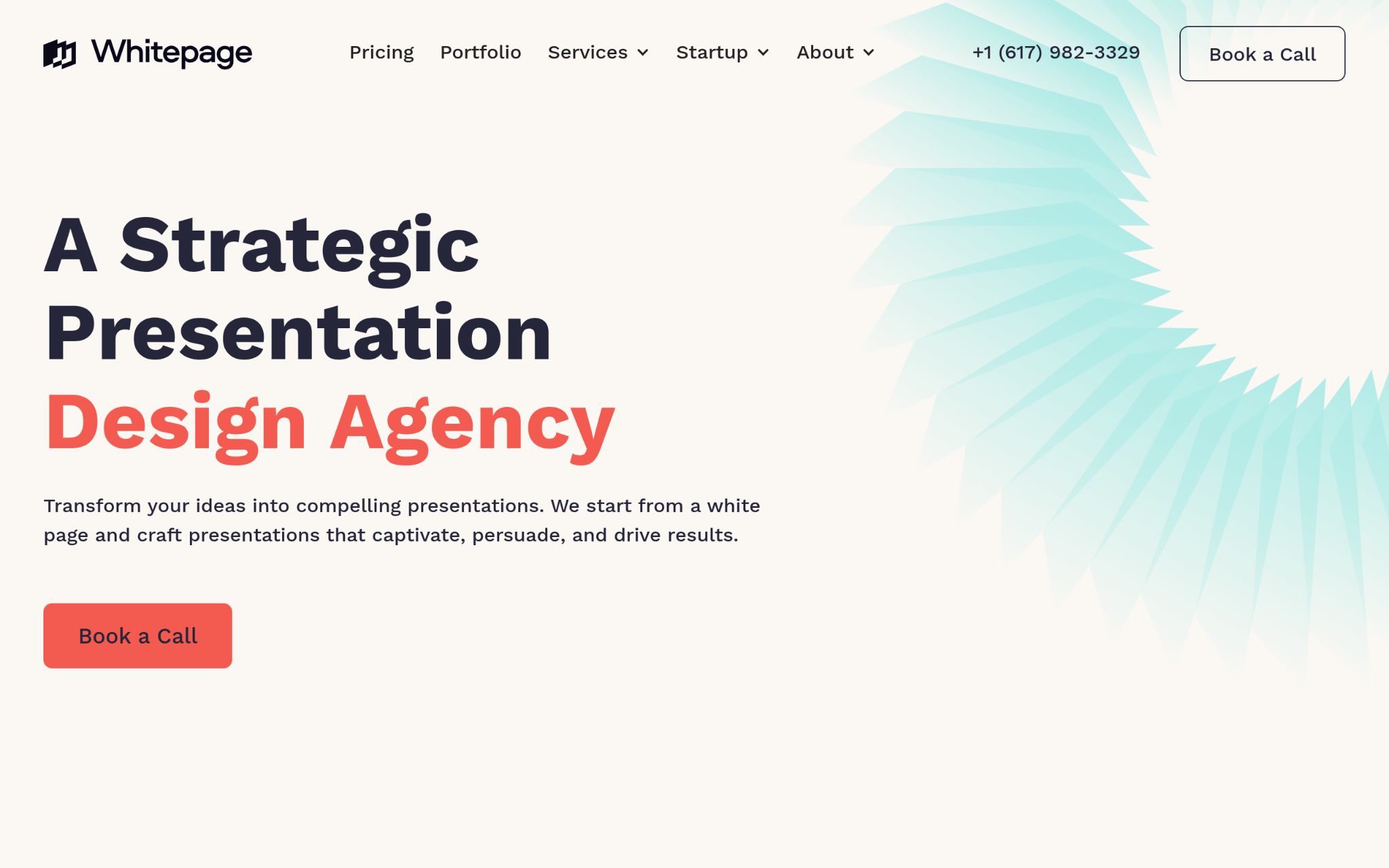
Whitepage Studio is a boutique presentation design agency based in Boston that specializes in investor pitch decks, sales presentations, financial modeling, and go-to-market strategy work across tech, healthcare, finance, and nonprofit sectors. With 4,000+ completed projects, you can learn more here about how the company takes a strategy-first approach, developing each presentation from the ground up rather than relying on standardized templates. The process begins with understanding the client’s goals, audience, and messaging before moving into visual design, ensuring the final deck is both visually polished and strategically effective. Their 9.8/10 client satisfaction score and 75% return client rate reflect a focus on long-term relationships and consistent quality, not just strong marketing.
Unlike agencies that rely on standardized templates, Whitepage Studio takes a strategy-first approach by developing each presentation from the ground up. The process begins with understanding the client’s goals, audience, and messaging before moving into visual design, ensuring the final deck is both visually polished and strategically effective.
The agency reports a 9.8/10 client satisfaction score and a 75% return client rate, reflecting its focus on long-term client relationships and consistent presentation quality.
Summary of Real User Reviews:
Clients commonly choose Whitepage Studio for pitch decks, fundraising presentations, and other high-impact projects where clarity and persuasion are critical. Reviews consistently mention strong communication, attention to detail, and a collaborative process that helps transform complex ideas into clear presentation narratives.
Storydoc – Best for Interactive Business Presentations and Proposal Automation
Meet the Expert: Itai Amoza, Co-Founder and CEO of Storydoc
Itai Amoza co-founded Storydoc alongside Daniel Macbubi and Yaacov Goldberg, three self-described data and content specialists who set out to fix what they saw as broken, one-way business presentations. Amoza now serves as CEO, with Macbubi leading as CTO and Goldberg as CPO, giving the company a founding team that spans product, technology, and content strategy rather than a single generalist voice.
What distinguishes Storydoc’s leadership approach is the focus on communication as a two-way process rather than a one-way pitch. The founding team built the platform around the idea that presentations should let the audience respond, not just receive, which shows up in the product’s emphasis on engagement analytics and interactive formats over static slides.
About Storydoc
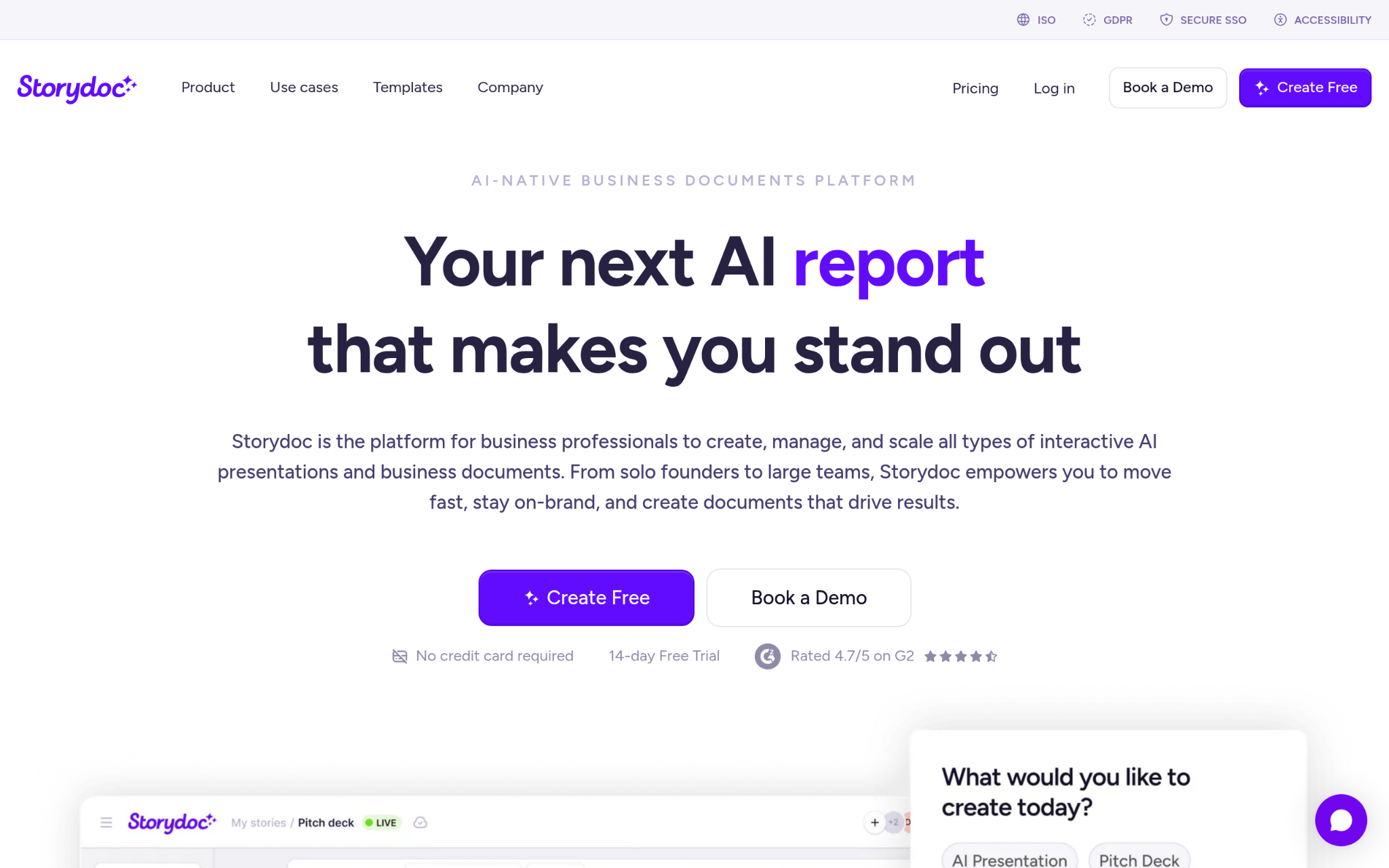
Storydoc is an AI-native platform that turns traditional slide decks into interactive, scrollable web experiences. The platform handles pitch decks, proposals, one-pagers, and reports, with built-in AI generation, slide design automation, and CRM integrations that auto-fill and personalize content for each recipient. A standout feature is the engagement analytics layer, which tracks opens, clicks, and scroll behavior so users can see exactly how their audience interacts with each deck. Clients including Meta, Udemy, and Gong rely on the platform, reflecting its traction with mid-market and enterprise teams.
Unlike static presentation tools, Storydoc is built around visibility into what happens after a deck is sent. The combination of CRM personalization and real-time engagement data gives sales and marketing teams a feedback loop that traditional slide files can’t replicate, helping them follow up smarter and close faster.
Summary of Real User Reviews:
Storydoc holds a 4.7 out of 5 on G2 and a 4.3 out of 5 on TrustPilot, placing it firmly in the reliable, well-regarded category. Users consistently highlight how quickly they can produce polished, professional documents and how useful the built-in analytics are for prioritizing follow-ups with prospects. The main adjustment for new users is that the platform is optimized for interactive documents, so teams expecting a traditional slide-by-slide format may need a short ramp-up period.
Superside – Best for Enterprise Creative Services and Design at Scale
Meet the Expert: Fredrik Thomassen, Co-Founder and CEO of Superside
Fredrik Thomassen is the founder and CEO of Superside, a fully distributed and remote design operations platform. Before Superside, he and his co-founder built the company’s earliest MVP by hand, without a technical team, and Thomassen has since scaled that idea into an enterprise creative-services company operating across dozens of countries.
His focus has centered on leveling the playing field for creatives globally by finding, onboarding, and upskilling top talent and connecting them with opportunities. That recruiting philosophy, paired with Superside’s collaborative platform, is core to how the company delivers consistent creative output at enterprise scale, and it’s reflected in the company’s strong customer satisfaction scores.
About Superside
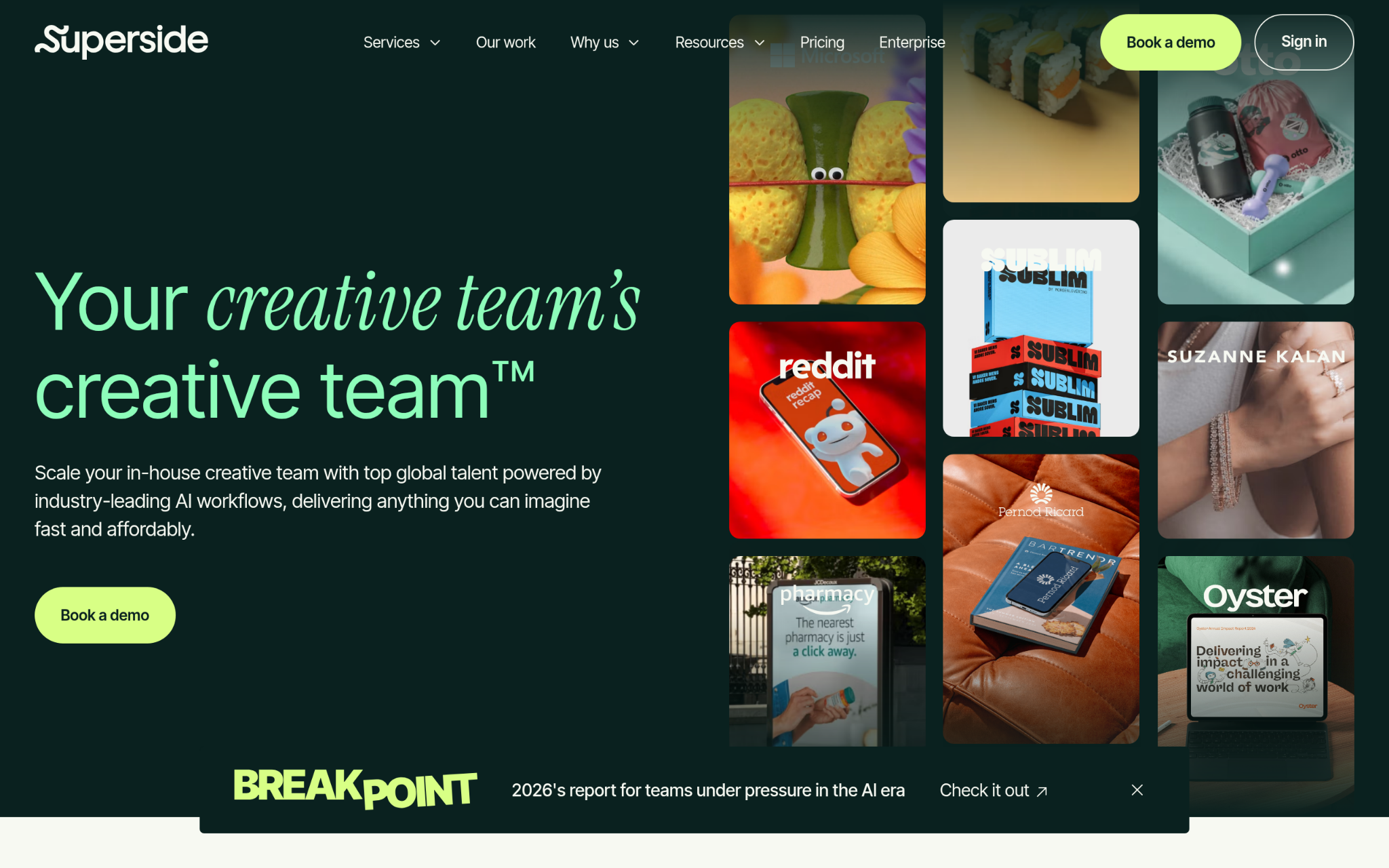
Superside operates as a Creative-as-a-Service company built for brands that need consistent, high-volume creative output. The company covers 20+ design and creative services through a fully remote team of 750 people across 72 countries, with clients including Google, Meta, Amazon, Salesforce, and Coinbase. Its proprietary Superspace platform reduces feedback loops by 30%, and the company delivers work at roughly one-third the cost of traditional agencies, competitive pricing for enterprise-scale buyers. The average time from contract start to first project submission is 7.6 days, notably fast given the scale Superside operates at.
Superside is built to solve creative bottlenecks at scale, where in-house teams can’t keep pace with demand and traditional agencies are too slow or too expensive. Its automated workflows and distributed team model allow the company to deliver large volumes of creative work without the quality drop that typically comes with speed.
Summary of Real User Reviews:
Superside has earned multiple Remote Excellence Awards and reports a 94% return on investment over three years for clients, underscoring its strong reputation at the enterprise level. Brands with ongoing, high-volume creative needs tend to find the subscription model practical and the output consistent. For teams regularly producing dozens of presentation assets per month, that kind of scale is difficult to match elsewhere.
Slidebean – Best for Startup Pitch Deck Creation and Investor Presentations
Meet the Expert: Jose “Caya” Cayasso, Co-Founder and CEO of Slidebean
José Cayasso, known as Caya, is a Costa Rican graphic designer and entrepreneur who founded Slidebean in 2013 as a simplified, cloud-based presentation tool. Before Slidebean, Caya founded Saborstudio, a creative content company, and led its first product, an iOS game that was installed on over 300,000 devices in its first year.
Caya’s background in graphic design, digital animation, and filmmaking shapes how he approaches presentation design, and he has worked directly with over a thousand Slidebean customers on pitch deck writing and design. He has also hosted Slidebean’s YouTube channel since 2018, growing it into one of the platform’s most-watched startup-focused channels, giving him an unusually direct, ongoing feedback loop with the founders his company serves.
About Slidebean
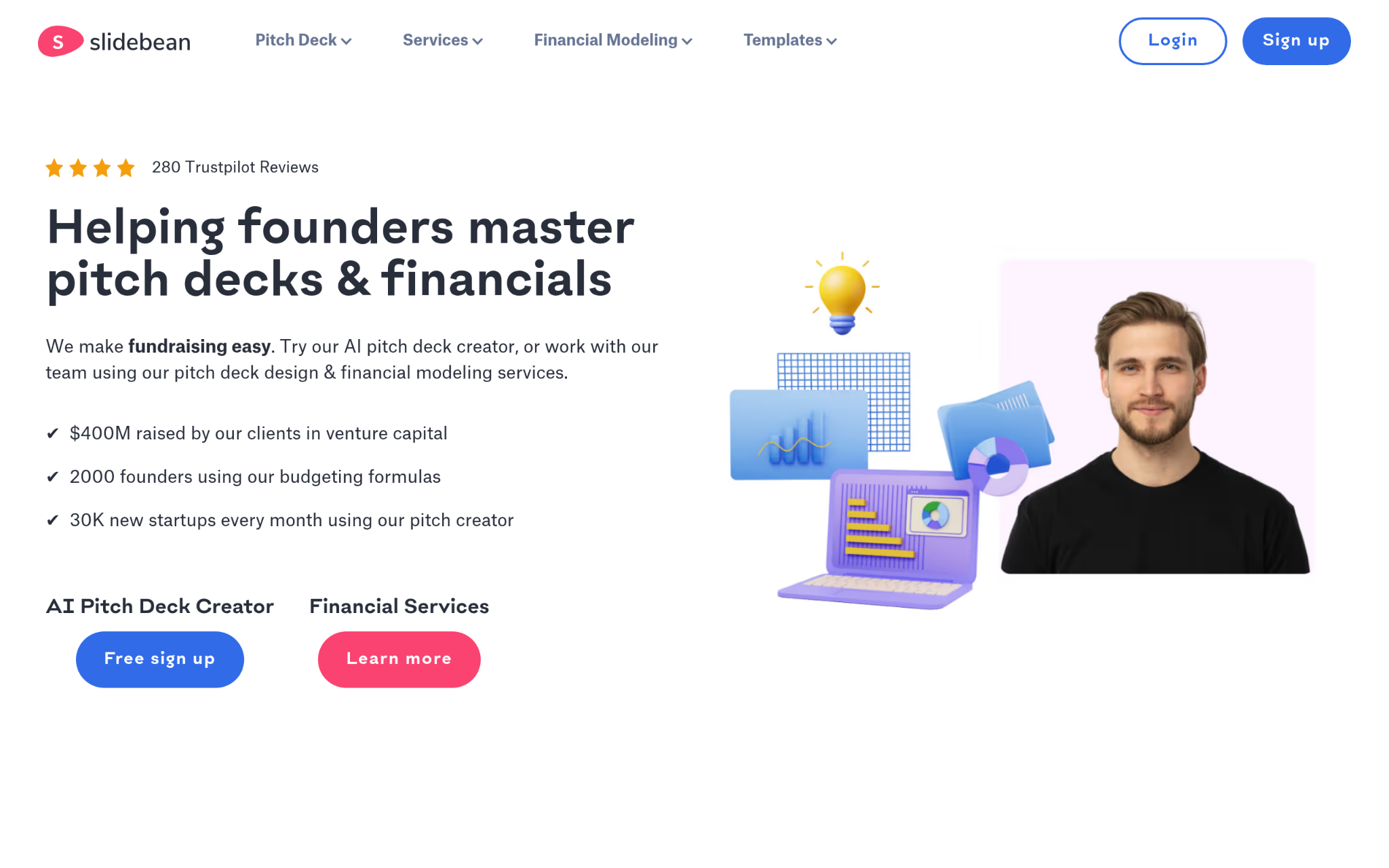
Slidebean is an AI-driven pitch deck platform that has helped startups raise money since 2014. The platform separates content creation from slide design, handles financial modeling, and offers heat-map analytics that show exactly where investors spend their time on a deck. Over 500,000 users worldwide rely on Slidebean, and clients have collectively raised $400M in venture capital through presentations built on the platform. The company also runs a design agency arm for startups that want a professionally built deck rather than a DIY tool, offering premium pricing in exchange for hands-on execution.
Slidebean was built to close the gap between having a strong business idea and being able to present it in a way that resonates with investors, a common sticking point for technical founders. Its heat-map analytics give teams a data-backed way to refine decks before they walk into the room, not after.
Summary of Real User Reviews:
Slidebean’s track record with fundraising speaks louder than most review scores. The user base skews heavily toward early-stage startups, and feedback reflects that, with most positive reviews mentioning how quickly a usable deck comes together. The platform’s free tier lets teams test core features before committing, lowering the barrier to entry compared to full-service agencies.
Designity – Best for High-Growth Teams Needing Unlimited Design Services
Meet the Expert: Shahrouz Varshabi, Founder and CEO of Designity
Shahrouz Varshabi is a New York-based design and technology professional who founded Designity in 2015 after his own struggle to pay tuition and gain real-world experience through freelance work. A graduate of the Design & Technology program at Parsons, class of 2014, he built Designity around a problem he’d lived firsthand: the high rate of design graduates who remain unemployed six to twelve months after finishing school.
Under Varshabi, Designity introduced Creative Directors as each client’s main point of contact to ensure quality, consistency, and strategic oversight on every project, and later shifted the business to a monthly subscription model, creating the Creative-as-a-Service format the company now runs on. That structure, oversight paired with flexible, ongoing access to talent, remains the core of how Designity operates today.
About Designity
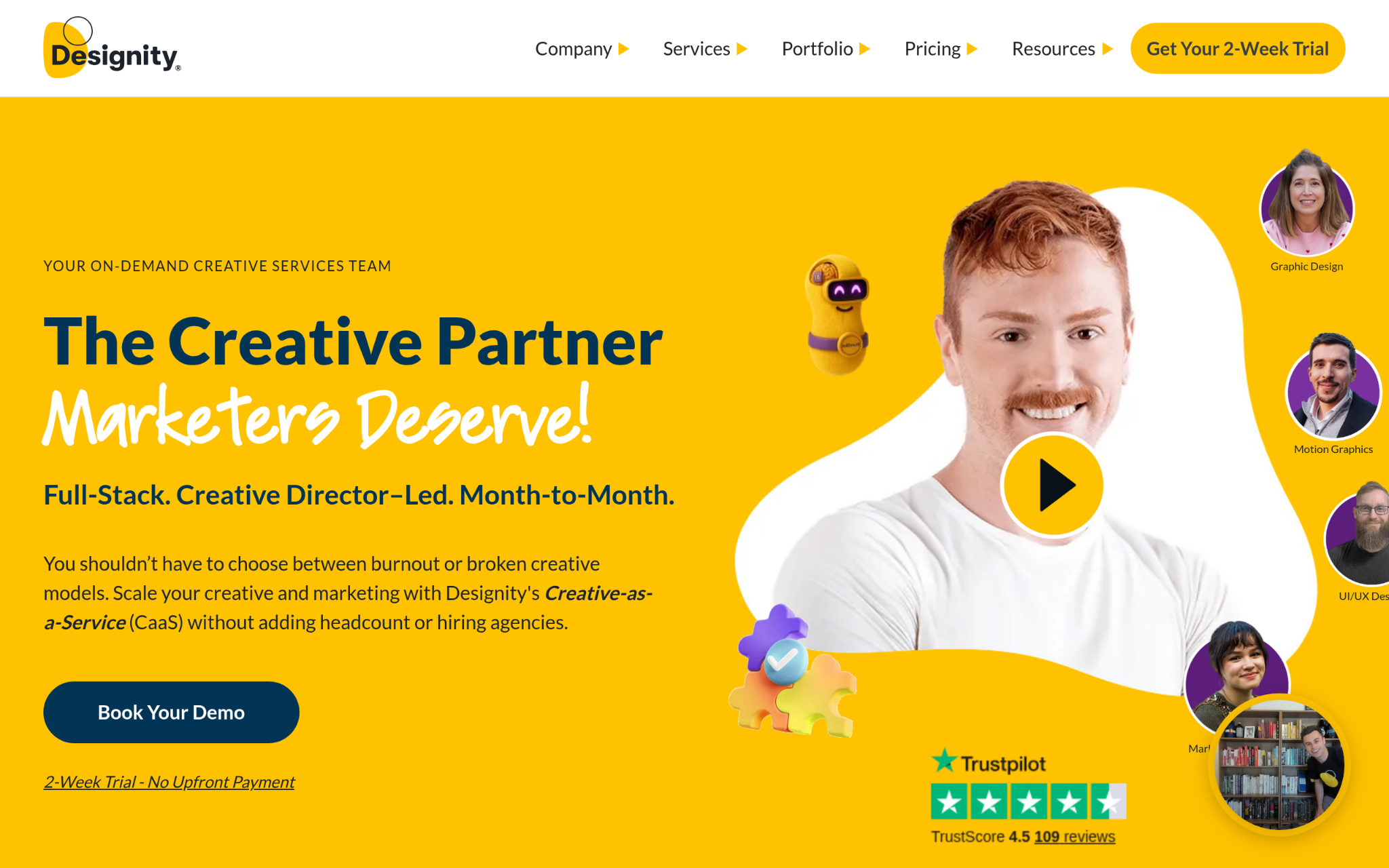
Designity runs a Creative-as-a-Service model that pairs clients with a dedicated Creative Director and gives them access to vetted designers, copywriters, and developers from the top 3% of US-based creative talent. The company covers 100+ design and marketing services with unlimited project requests and revisions, no long-term contracts, and month-to-month pricing. The pitch is straightforward: agency-quality output at roughly 70% less than what a traditional agency would charge. For teams that need presentation design alongside branding, social media, and web work, Designity handles it all under one roof.
Designity is built to solve the coordination problem that comes with managing multiple freelancers or agencies across different design needs. Having a dedicated Creative Director who understands the brand and manages the workflow keeps presentations consistent with the rest of a company’s visual identity, which matters especially for fast-growing teams.
Summary of Real User Reviews:
Clients respond well to the Creative Director model, which adds a layer of strategic oversight that pure freelance platforms lack. The unlimited revisions policy also comes up frequently as a practical benefit, especially for teams that go through multiple rounds of internal feedback. The main consideration is that Designity works best for teams with an ongoing creative workload, not just a one-off project.
Research Methodology and Selection Process
Initial Data Collection
The longlist was built by pulling data from multiple sources: design agency directories, professional review platforms, case study repositories, and the official websites of providers known to work in presentation design. The goal at this stage was breadth, so no options were ruled out early. Providers were flagged based on service focus, years operating, and the types of clients they serve.
Shortlisting Phase
From that broader list, options without verifiable track records were removed. Review patterns were analyzed across multiple platforms to identify providers with consistent feedback rather than one-off praise. Any provider with thin documentation, unclear service scope, or review profiles that didn’t hold up across sources was set aside at this stage.
Verification of Claims
Claims made on each company’s website were cross-referenced against what actual clients reported in reviews and case studies. When a company claimed strong turnaround times, client satisfaction scores, or fundraising outcomes, those numbers were checked against third-party sources where possible. Where claims couldn’t be verified externally, they were noted but not treated as important signals.
Authority and Industry Contribution Layer
Each company was also evaluated for signals of authority in the presentation design space, including mentions in relevant publications, awards, original research, and recognition from industry peers. Companies that have built a visible reputation beyond their own marketing carry more weight in this kind of ranking because the external validation reflects real standing.
5 Presentation Design Experts In The US-Specific Evidence
The final filter looked at presentation design credentials: dedicated service pages covering pitch decks and investor presentations, verified reviews from clients in relevant industries, and case studies showing real presentation outcomes. Providers that only offered design as a side service, or whose presentation work was buried under broader creative offerings, were evaluated differently than those with specialized presentation expertise. This evidence layer was the deciding factor for final placement.
How to Choose the Right 5 Presentation Design Experts In The US
Choosing the right presentation design partner comes down to matching their strengths to your specific situation. A startup preparing a Series A pitch has different needs than an enterprise sales team building a quarterly deck library. Here are the five things worth checking before committing:
- Industry/Domain Experience: Look for providers who have worked in your sector. Designers who understand fintech, healthcare, or SaaS don’t need to be educated on the basics of your business before they start building.
- Features and Service Offerings: Decide early whether you need a full-service agency, a DIY platform, or a hybrid. The right answer depends on how involved your team wants to be in the design process.
- Pricing Structure: Some providers charge per slide, others by project, and others run subscription models. Match the pricing model to how frequently you need presentations, not just to the per-unit cost.
- Results Measurement: Ask how they track success. Providers who measure things like revision rates, client satisfaction scores, or presentation outcomes are more accountable than those who don’t.
- Industry Knowledge and Compliance: If your presentations involve sensitive information or need to follow specific brand standards and accessibility guidelines (WCAG), confirm the provider has handled similar constraints before.
—
Bottom Line
Presentation design is one of those areas where the right partner makes a measurable difference, and the wrong one costs you time and credibility. Whitepage Studio fits teams that want strategic, founder-led design for high-stakes decks. Storydoc and Slidebean work well for digital-first and startup contexts. Superside and Designity suit teams with ongoing, high-volume creative needs. As demand for visually compelling storytelling grows, the gap between generic and specialized design work will only widen.