
Smart Garden Watering Techniques to Keep Your Plants Healthy All Season
Plants require a proper amount of water in all seasons. Both excess and deficiency of water can cause damage to their root and foliage. Good watering habits will encourage flowers to bloom, keep grass green, and keep vegetables healthy. Each plant requires a different amount of water, too. Proper watering practices can conserve water and maintain the entire garden.
Water plants early in the morning.
A garden is best watered in the early morning. The weather tends to be cooler, and evaporation of water is reduced. Plants receive adequate moisture until the sun becomes too powerful. This allows leaves to dry out throughout the day. Watering in the hottest part of the day is not recommended. A lot of the water can go out of the way and evaporate before it gets to the roots.
Select watering tools that are suitable for the plants
Garden maintenance is made easier by using the proper tools. A traditional hose will not reach all areas of the garden. The watering wands and hose nozzles provide better control. The best watering wand makes garden watering easy and convenient. The right watering device can additionally make day-to-day plant care even faster.
Pre-Watering Soil Moisture Check
Not all gardens will fit a fixed watering routine. There are plants that require more water than others. Moisture will also be influenced by soil type, weather, and plant size. Before watering additional water, check the soil for moisture. Begin to dig with a finger about 2″ deep. If it appears dry, watering might be required. If it is still damp, don’t water again until it has dried.
Mulch to retain moisture in the soil.
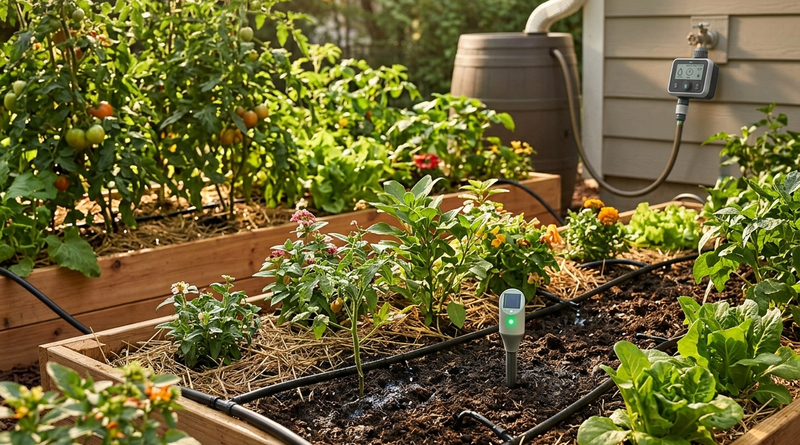
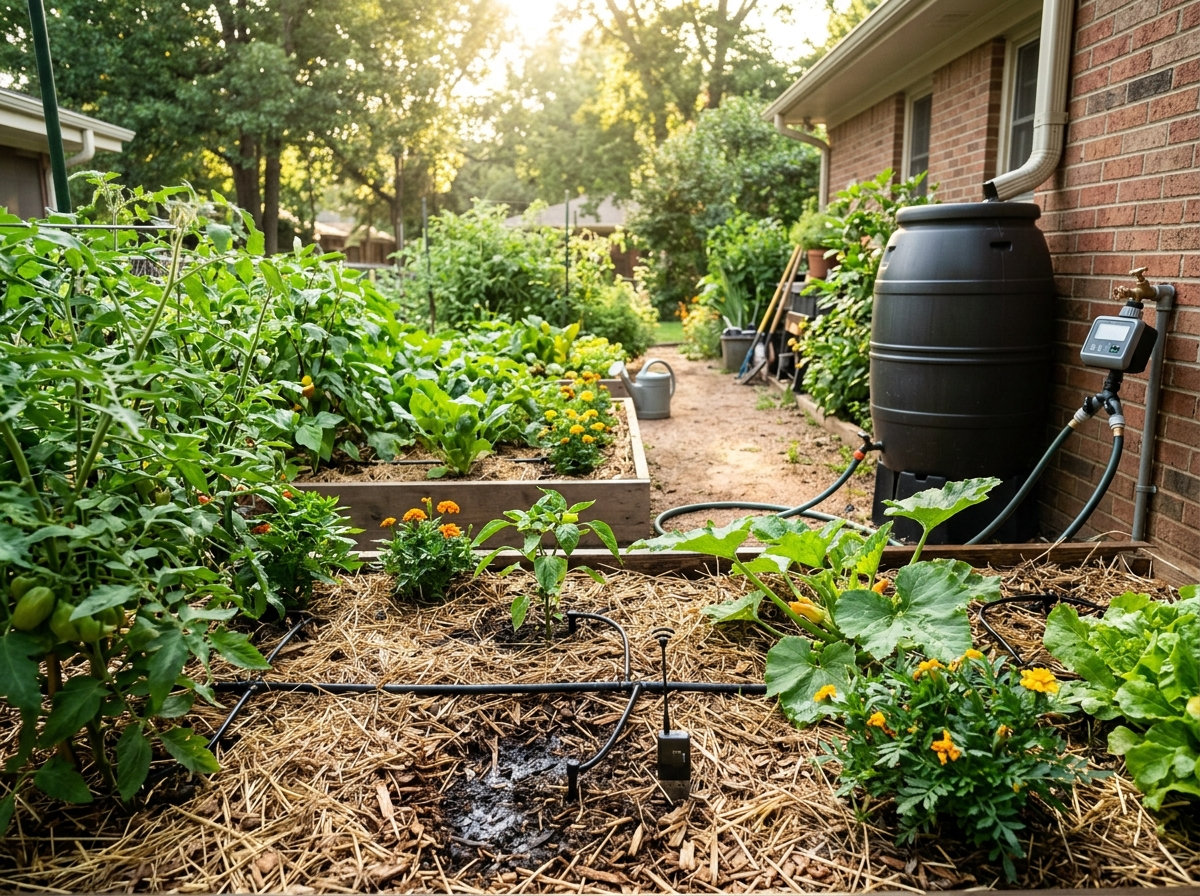
The easiest method to decrease water loss is mulch. It protects the ground and helps to prevent soil moisture from evaporating. Dry leaves, wood chips, and straw are good options. Apply light mulch to plants. Maintain some distance between mulch and plant stems.
Water Deeply, Not Frequently
Light waterings can only moisten the top layer of soil. The plant roots require more water in the depths of the soil. Deep watering promotes roots to develop deeper and better weather readiness. Water slowly to allow the water to soak into the soil. Do not overwater the garden. Give sufficient time for water to reach the root area.
Use Drip Irrigation for Watering.
Water is supplied to the soil close to plant roots by drip irrigation. It is made of small tubes and emitters that slowly discharge water. This approach conserves water and prevents leaves from getting wet. In heat wave weather, drip systems can be used. They are a source of constant water, but don’t flood the entire garden.
Signs of overwatering and underwatering.
Signs can be readily observed in the plants when they have insufficient water. By learning these signs, any serious damage can be avoided.
Signs of underwatering:
- Dry and cracked soil.
- Leaves and stems that droop.
- Dry, brown edges of leaves.
- Slow plant growth.
Signs of overwatering:
- Yellow leaves.
- Soft or weak stems.
- Water the soil for a few days so it is moist.
- Root damage, root rot.
Adjust the watering schedule according to the seasons
The watering requirements in the garden vary from season to season. During the summer, evaporation and dry up of soil rise rapidly. It may be necessary to check plants more often this time of year. Spring typically brings gentle weather with new vegetation growth. Irrigate as per soil moisture and rainfall.
Final Thoughts
Using water efficiently can keep a garden alive year round. Improved plant health is achieved through early morning watering, soil checks, mulch and deep watering. The right hose nozzle or watering wand too will make garden care easier. Water loss can be avoided with plant type and weather adjustments. Properly cared for, flower beds, hanging baskets, lawns and other garden plants can remain healthy all year around.