
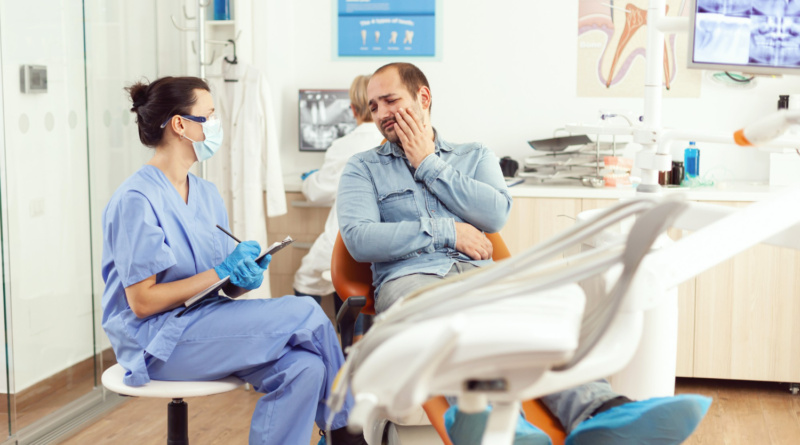
How to Communicate Clearly in a Dental Emergency (Even When You’re Panicking)
Your front tooth chips on a Saturday morning bagel, and the first thing that fails you isn’t your tooth. It’s your mouth. You call a clinic and the person on the other end asks a simple question, and you hear yourself say the word “uh” four times in a row.
I’ve watched this happen to more people than I can count, including myself. Panic doesn’t just hurt your judgment. It steals your vocabulary right when you need it most. The good news is that getting fast help from an emergency dentist kitchener starts with something you can actually control: how clearly you describe what’s happening.
So here’s what this piece covers. You’ll get a simple communication framework, a short script you can read off your phone, and a checklist for the first few minutes, while the pain is loud and your brain is louder.
Why panic makes you a bad narrator
Adrenaline is built for running, not for reporting. When your body flips into emergency mode, your attention narrows hard. You notice the pain and maybe the blood, and everything else, like which tooth, when it started, whether you have a filling there, goes fuzzy.
That narrowed focus is exactly why dental staff ask the same handful of questions every time. They aren’t being nosy. They’re rebuilding the picture your panic just shredded. According to the Centers for Disease Control and Prevention, oral health issues frequently go untreated when people delay care, and delay often starts with confusion about what’s actually wrong rather than the cost.
Here’s the part I’d push you on: you don’t need a diagnosis. You need a description. Those are different jobs, and only one of them is yours.
The SPARK method for describing a dental emergency
I made this up after a very bad night with a cracked molar, and I’ve used it since. SPARK is five details that let a clinic triage you over the phone in about sixty seconds.
- Situation: What physically happened? “I bit into something hard and a piece came off.” Keep it to one sentence.
- Place: Which tooth or area, using plain words. “Back left, lower jaw.” You don’t need dental numbering.
- Amount of pain: Rate it out of ten, and say whether it’s constant or comes in waves. This matters more than you’d guess.
- Recent work: Any crown, filling, extraction, or cleaning in the last few months. Mention it even if it feels unrelated.
- Keywords: One or two plain descriptors. Swelling, bleeding, loose, throbbing, sensitivity to cold.
You can write all five on a sticky note before you dial. Reading from a note in a shaky voice beats rambling in a confident one, every single time. I’d rather sound nervous and get the tooth right than sound calm and send a clinic chasing the wrong problem.
What’s a real emergency and what can wait until Monday?
Not every scary dental moment is a same-day situation. A chipped filling with no pain is annoying. A knocked-out adult tooth is a countdown. Knowing which lane you’re in will change how you open the phone call, and it spares you a wasted trip.
| Go now (same day) | Book soon (within a few days) |
| Swelling in your face, jaw, or under the eye | Mild sensitivity to hot or cold drinks |
| A tooth knocked out or badly loosened | A small chip with no pain or bleeding |
| Uncontrolled bleeding or a suspected broken jaw | A dull ache that responds to over-the-counter pain relief |
| Constant severe pain that keeps you awake | A crown that feels slightly loose but isn’t moving much |
If a tooth gets knocked out, the guidance from the Canadian Red Cross is to handle it by the crown, not the root, keep it moist, and get seen fast. That single detail, holding the tooth correctly, is the difference between saving it and losing it. If swelling is spreading toward your eye or throat, stop reading and start calling. That’s not a toothache conversation anymore.
The judgment call I’ll commit to: when a situation sits right on the line, call and describe it. Clinics would rather talk you out of an appointment than treat a problem two days after it got serious. You are not bothering anyone. That’s the job.
A thirty-second script for the phone call
When someone picks up, open with the frame before the story. Say, “I’m calling about an urgent dental problem, and I need to know if I should come in today.” That one line tells the person on the other end how to listen.
Then run SPARK. Situation, place, pain level, recent work, keywords. Answer follow-up questions directly and don’t spiral into extra history unless they ask. If you’re unsure whether your case counts as urgent, say so out loud. Staff deal with uncertainty all day.
Two practical habits make this smoother. First, have your insurance details and the name of any previous dentist ready before you call, because the front desk will ask. Second, write down what you’re told. Emergency memory is unreliable, and you don’t want to half-remember “come in at two” versus “wait three days.”
What to say when you reach voicemail
Leave a message that front-loads the facts. Your name, your callback number spoken slowly, the tooth, the pain level, and whether you have swelling. Keep it under thirty seconds. A receptionist returning twelve voicemails at nine in the morning will call back the clearest one first. That’s not a rule anywhere. It’s just how people work.
Calm down so you can be understood
The communication problem has a physical solution, and it’s boring. Slow your speech on purpose. Take one full breath before you dial. Sit down.
There’s a reason this works. Health Canada and every provincial health authority treat emergencies as a race against delay, and the first delay is usually the patient talking in circles before anyone can help. The people on the other end of your call have handled hundreds of these. Your panic is ordinary to them. Your clarity makes their work faster.
So breathe, glance at your note, and start talking. The tooth is the problem. Your words are the bridge to fixing it.
Your first five minutes, in order
- Check for swelling or uncontrolled bleeding. If either is present, call immediately and skip the rest of the list.
- Write the five SPARK details on your phone or a scrap of paper.
- Call and use the frame sentence, then run the details.
- Take note of the time and staff instructions, and confirm whether same-day care is available.
- Ask what to do about pain and eating while you wait, and follow that guidance.
None of this is complicated, which is the point. Panic thrives on vagueness. A short script and five facts leave it nothing to work with.
Bringing it together
Dental emergencies are messy and loud and rarely come at a convenient hour. What you can shape is the part that decides your outcome, which is how quickly and clearly you get your situation into the right set of hands. Describe the tooth, skip the diagnosis, and let the professionals do their job.
Here’s a challenge: next time your phone rings at an awkward hour and a friend or family member is holding their jaw, read them the SPARK list. What would you add to it after your own close call?